
Duke Exploration Ltd (ASX:DEX) has processed new geophysical data to rank drill targets at its flagship Bundarra copper property in central Queensland.
By modelling historical, airborne electromagnetic findings, the base and precious metal explorer detected conductivity highs that correlate with known mineralisation and copper in soil anomalies, as previously predicted.
As well as the geophysics update, Duke has tabled preliminary observations from diamond drilling at Bundarra’s Quorn and Isens targets.
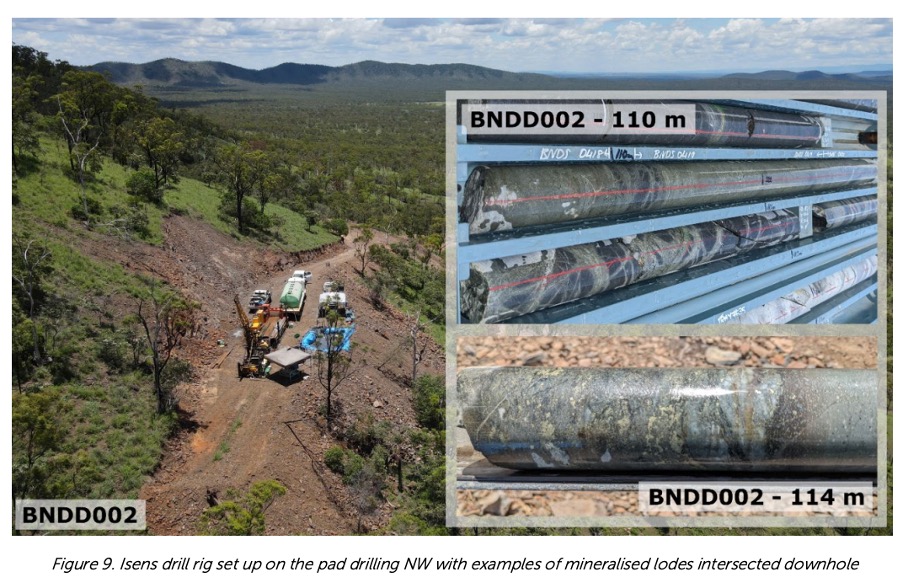
One of the holes at Quorn hit visible copper mineralisation, while the drill bit at Isens intersected a copper sulphide-bearing alteration zone down-dip from historical workings.
“The next significant step”
Speaking to the progress to date, Duke managing director Philip Condon said: “The completion of the historic VTEM data remodelling, using up-to-date technology, represents the next significant step in Duke’s expanded Bundarra resource development strategy, building on the recently completed and very successful Bundarra pluton-wide geochemical soils survey.
“The interpretation of the results and integration into the exploration model is now generating further focused and refined target identification and prioritisation, as planned.
“The next very exciting stage is the drill testing of the generated primary targets, which has begun with the Quorn and Isens holes having been completed and sent for assay, and three diamond holes remain to be drilled on the Rogers prospect.
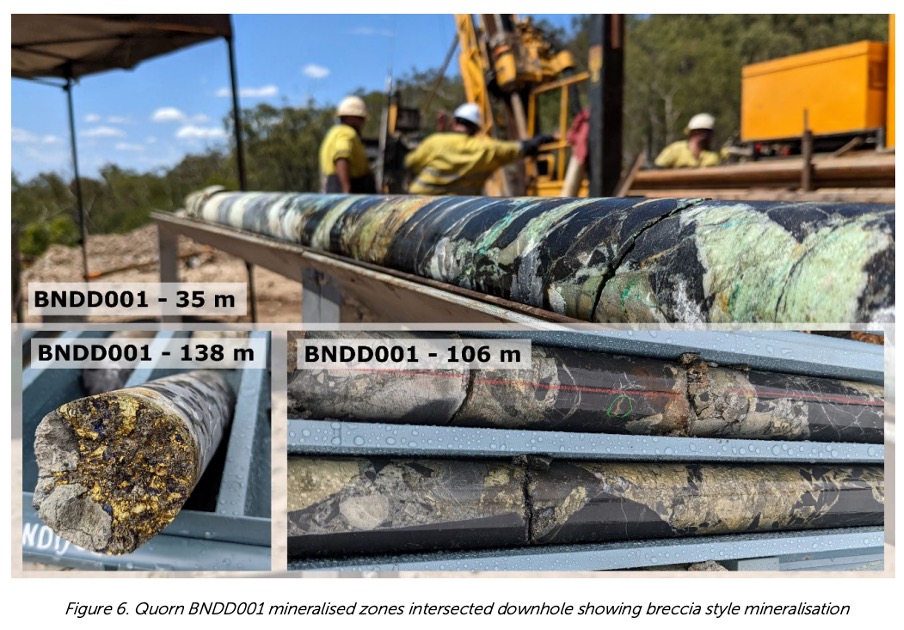
“Our initial diamond drill hole at Quorn is very significant as it confirms the potential for bulk-style breccia hosted copper mineralisation in the Bundarra area in addition to the vein styles seen in the same prospect and at Mount Flora.
“This is a very important and positive outcome of our revised strategy in action, as there are now two distinct styles of mineralisation that have been identified and confirmed to be present at Bundarra.
“Duke will continue to advance the understanding of geology and mineralisation at Bundarra with mapping and drill testing of targets into quarter one of 2022.”
Modelling geophysical data
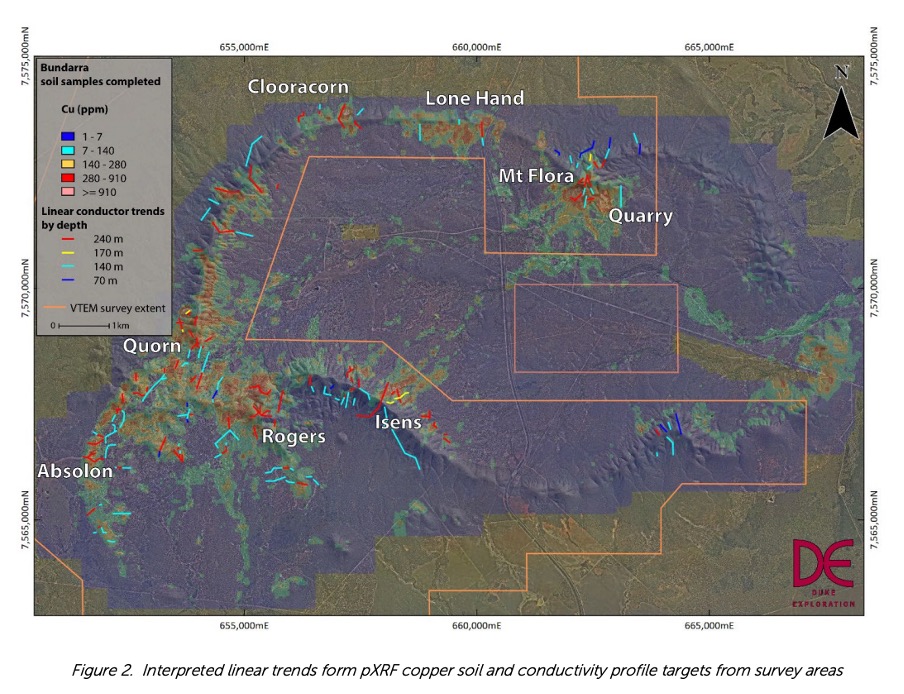
Duke has interpreted historical data from a Versatile Time-Domain Electromagnetic Survey, executed over the Bundarra site in 2011.
Ultimately, contemporary modelling helped the explorer incorporate this newly processed geophysical data into a prospectivity model for the copper property.
At the flagship Mount Flora deposit, for example, Duke noted a higher conductivity response is correlated with mineralisation in fresh rock roughly 70 metres below the surface.
All up, 39 kilometres worth of linear conductive trends were identified through Duke’s targeting analysis, from which 19 kilometres were associated with anomalous copper in soil.
Notably, the majority of conductive trends that are associated with copper in soil anomalies remain untested by drilling.
As a result, the large scale of the combined geophysical and geochemical anomalism provides excellent exploration potential.
Duke plans to unlock this potential as it explores 74 prospects at Bundarra, 10 of which are first priority targets.
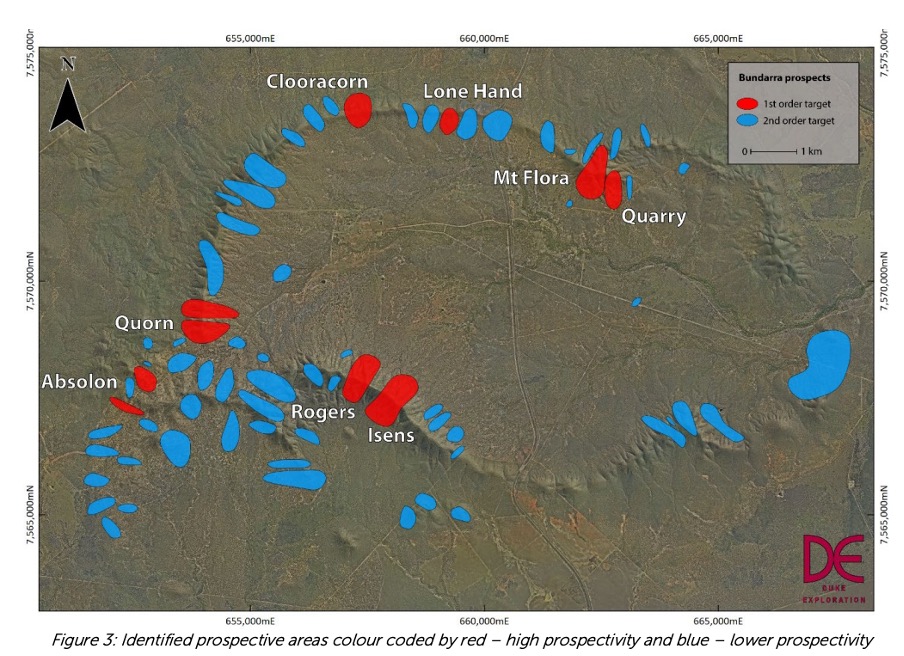
Geological mapping and analysis over the highest-ranked prospects will facilitate drill planning for early 2022.
Preliminary Quorn and Isens findings
Simultaneously, Duke is executing a five-hole, 880-metre drill program over Bundarra’s Quorn, Isens and Rogers targets.
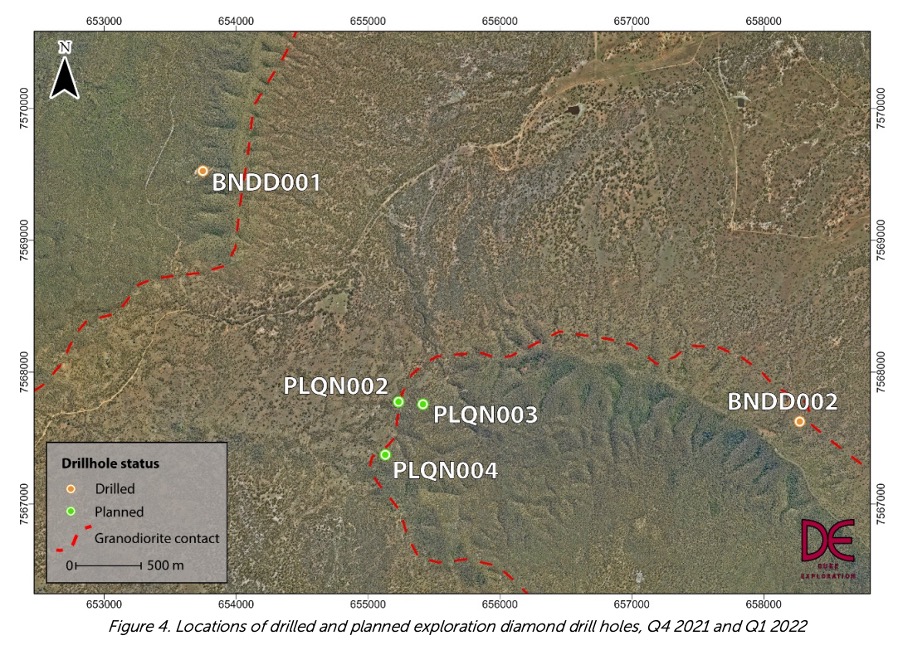
So far, two holes — one each at Quorn and Isens — have been completed, with three holes pending at the Rogers property, slated for completion in January 2022.
At Quorn, the recently drilled diamond hole followed up previous drilling undertaken by the Duke team.
It also confirmed two distinct mineralisation styles and orientations at the target that can be seen in the outcrop.
Meanwhile, the first hole drilled into the Isens prospect was targeted at the down-dip extension of mineralisation, which was exposed in historic workings to the northwest.
Although it’s still early days, this drill hole has confirmed the mineralisation style and orientation of the Isens prospect.
Ultimately, results from this recent drilling campaign mark another step forward as Duke discovers additional copper and silver resources at Bundarra to that already found at Mount Flora.
The scale of the mineral system at the two recently drilled prospects and the number of new targets around the pluton suggest that a near-surface, long-life mining operation may be present at Bundarra, particularly when the other electrical geophysical targets are included.
Forward work program
Looking ahead, the drill program testing Duke’s exploration targeting method will resume in early January.
In the meantime, core from the first two holes has been sent to the ALS Townsville lab with assay results expected in early February.
Once it completes the next phase of drilling, Duke’s exploration strategy will commence, involving drill testing of several high priority targets around the pluton.
Down the track, Duke plans to complete further exploration at the Bundarra property.
Activities include:
- Further detailed ground checking and geological mapping in vicinity of priority targets;
- Diamond drill testing of best conductivity anomalies; and
- Further diamond drilling in Quorn area.