
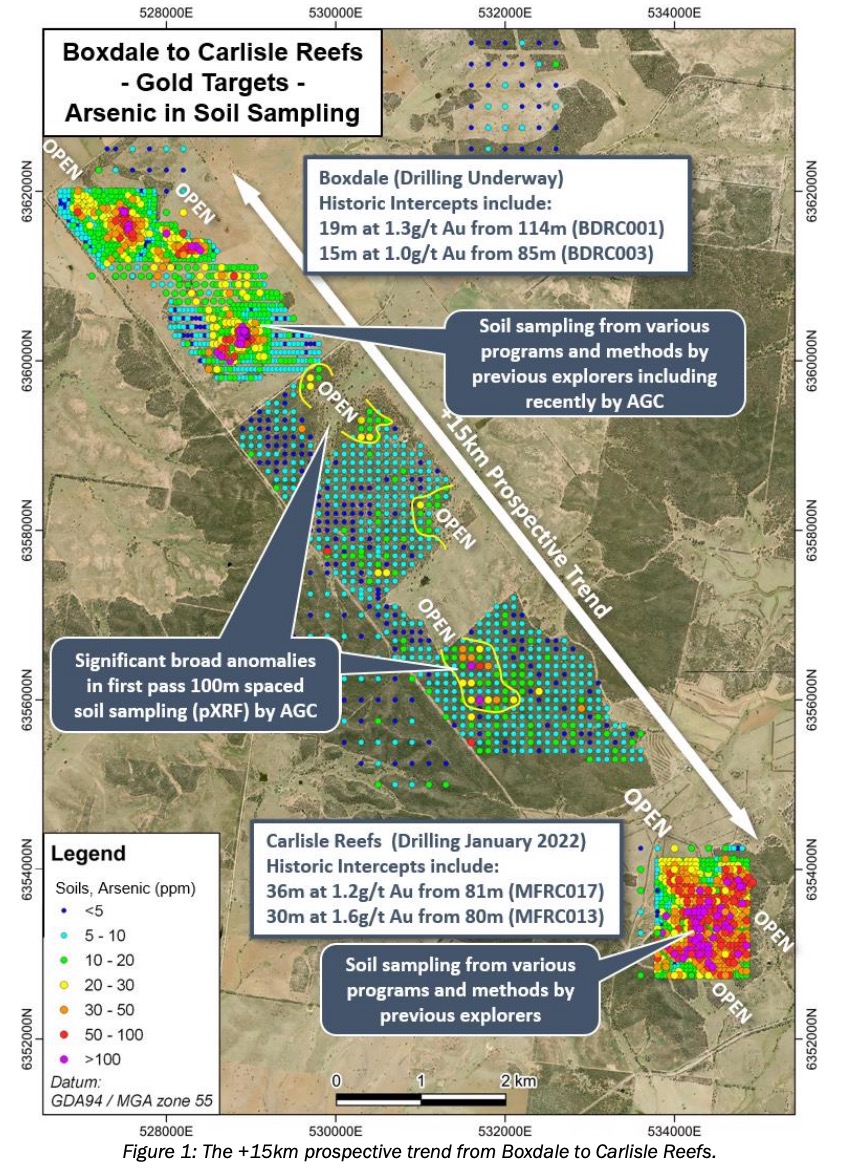
Australian Gold and Copper Ltd (ASX:AGC) has started turning the soil on precious metals mineralisation within the 15-kilometre-long Boxdale-Carlisle Reefs gold targets at the Moorefield Project in central New South Wales.
The gold and copper explorer kicked off reverse circulation (RC) drilling and a ground magnetics survey after a historical data review defined new gold targets.
All in all, the ASX-lister intends to drill 15 holes covering 1,500 metres across three large gold targets, targeting mineralisation along a 4-kilometre arsenic trend.
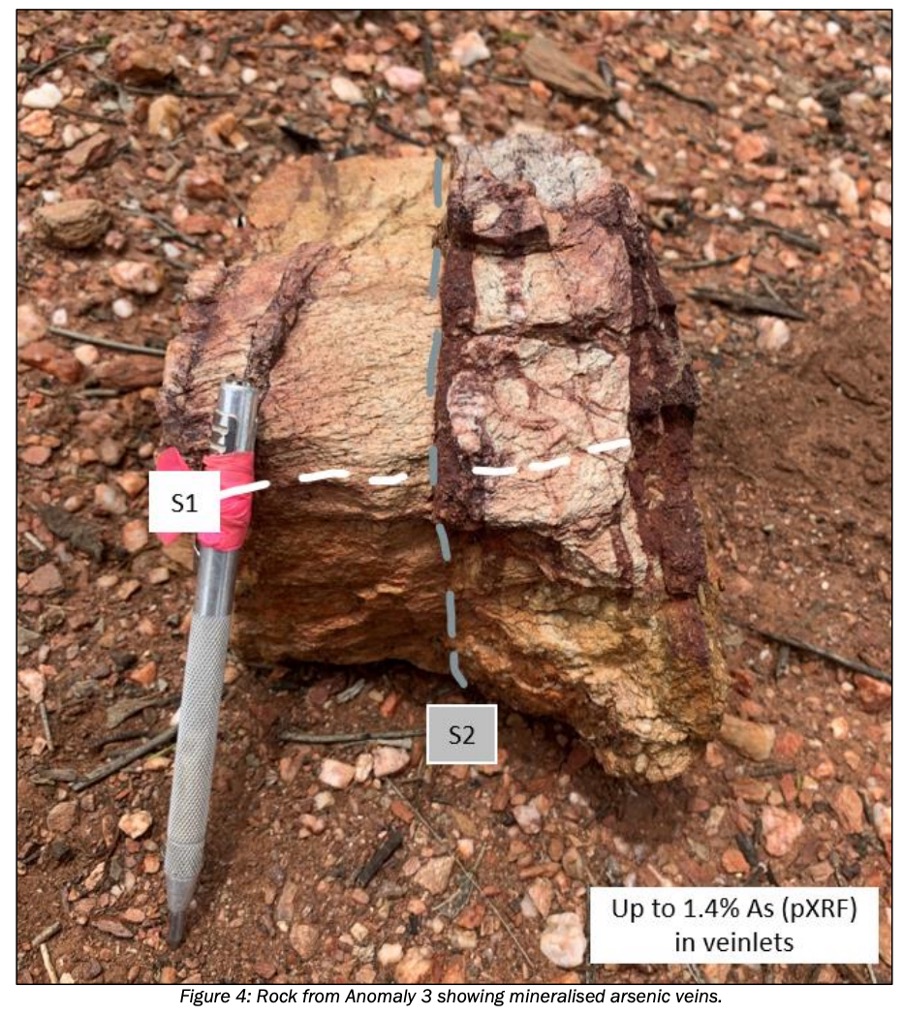
AGC is targeting orogenic gold deposits, where gold mineralisation is linked to arsenic and hosted in brittle fractures within the rock.
Such deposits include the world-class, multi-million-ounce Victorian gold deposits - the biggest being Bendigo and Fosterville, run by Kirkland Lake Gold.
Turning back time
AGC’s data review included analysis of the historical soil and shallow auger sampling and RC drilling by previous explorers Goldfields Ltd and Magmatic Resources Ltd (ASX:MAG).
Field work for the review included field mapping, transport cover and drainage mapping to understand where soil sampling is ineffective, relogging of Goldfield’s RC chips and AGC’s own soil sampling campaign to tighten the drill targets.
Historical drilling has shown great promise — in 2011, an RC campaign returned as much as 9.55 g/t gold over a 1-metre intersection.
Historical float sampling has also returned up to 10.2 g/t and strong gold-arsenic in soils.
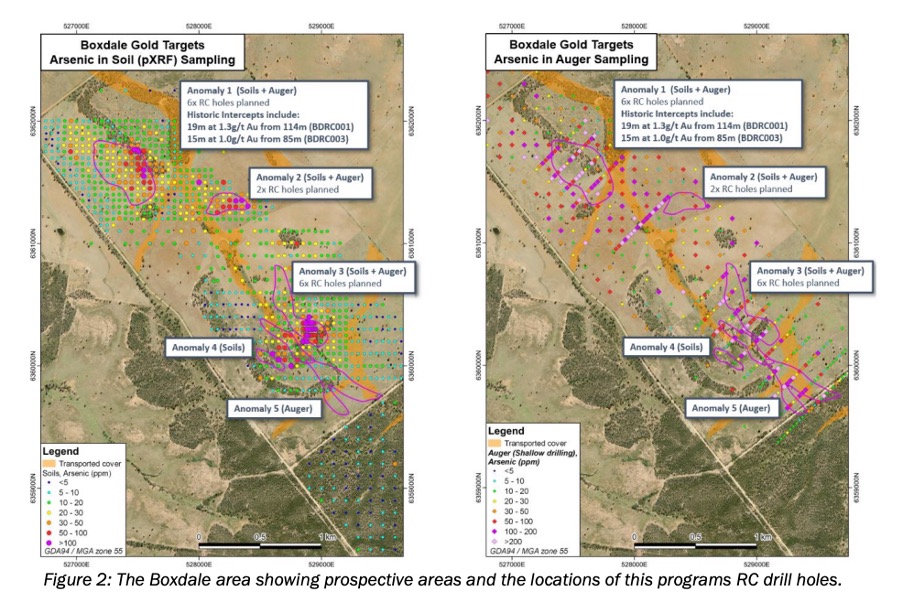
Thanks to the review, the three targets being drilled in this round of drilling are Anomaly 1 to Anomaly 3.
Boxdale Anomaly 1
Anomaly 1 runs for 500 metres and is defined by 10 drill holes, returning strong gold grades up to 9.55 g/t over 1 metre.
Importantly, the target has returned high levels of arsenic during soil and in auger sampling.
The anomaly was first drill tested in 1972 as oxide copper minerals were noticed in a historic mine working.
The best drilling was produced by mining giant Goldfields Ltd, with four RC holes ranging to 200 metres in depth.
Some of the best intersections include:
- 19 metres at 1.28 g/t gold from 114 metres, including 4 metres at 4.3 g/t from 120 metres and 1-metre at 9.55 g/t from 123 metres;
- 2 metres at 1.9 g/t from 130 metres;
- 2 metres at 1.2 g/t from 32 metres;
- 3 metres at 1.0 g/t from 59 metres, including 1-metre at 2.2 g/t from 60 metres;
- 15 metres at 1.0 g/t from 85 metres, including 6 metres at 2.1 g/t from 92 metres; and
- 1-metre at 3.3 g/t from 68 metres.
Boxdale Anomaly 2
Anomaly 2 is 350 metres in length, although it has the potential to join with Anomaly 1 given the auger sampling results under transported cover.
Anomaly 2 boasts Boxdale’s highest gold in rock float samples — 8.3 g/t and 10.2 g/t — and provides encouragement for drill testing.
Only one historical RC hole was drilled here by Goldfields Ltd, which did intercept low gold grades and a maximum of 0.54 g/t.
Given the size and tenor of the surface geochemistry, follow up drilling is warranted.
Boxdale Anomaly 3
Anomaly 3 is now 400 metres long and has no previous RC drilling.
Elevated gold and arsenic auger sampling have now been infilled by soil sampling by AGC geologists, which has greatly increased the confidence of the target, its direction and lengthened its size.
In addition, Anomaly 3 was originally only a two-point auger anomaly.
Next steps
Drilling is prioritised over Anomaly 2 and 3 due to firmer track access from the wet weather. This program should be completed before the Christmas break.
Meanwhile, Anomaly 1 and Carlisle Reefs are scheduled to be drilled in January.
Drill pads at Carlisle Reefs have been prepared ready for a quick start in 2022.