
Krakatoa Resources Ltd (ASX:KTA) is firmly focused on systematic exploration at the Mt Clere Project and Dalgaranga Project in WA, along with the Belgravia Project and Rand Project in NSW.
The projects are leveraged to precious metals and critical elements in low-risk jurisdictions, with Krakatoa at various stages of exploration at the projects.
Rand Project
The company recently uncovered rare earth oxides (REO) hosted within ionic clay through analysis of shallow aircore drilling at the Rand Project in the Riverina region of New South Wales.
A reassessment of assay samples from drilling revealed notable rare earth element (REE) intersections, including:
- 11 metres at 1,223 parts per million (ppm) total rare earth oxides (TREO) from 43 metres; and
- 7 metres at 1,285ppm TREO from 42 metres within 28 metres at 598ppm TREO from 38 metres to end of hole (EOH).
Analysis of the REO using week acid solution (WAR) returned weakly bound, highly soluble REEs, characteristic of ionic absorption REE deposits and offering a potential 86% recovery rate using WAR over the intrusive basement and up to 77% recovery from metasediments.
First discovery of clay-hosted REE within this area of NSW
Krakatoa CEO Mark Major said at the time: “We are excited with the recent rare earth element reconnaissance assay results.
“The review of the initial assay results identified anomalous REEs within the multi-element program on many of the aircore samples.
“The full hole analysis has shown significant widths of REE concentrations and more recent weak acid testing indicates a high level of readily mobile REE exist.
“This is the first discovery of clay-hosted REE within this area of NSW.
“The company has significantly expanded its landholding over the already large area via applications of additional tenure with similar geophysical signatures and underlying geology.”
Additional aircore drilling is being planned in the first quarter of 2022 subject to regulatory approvals and land access, where more extensive exploration over the various intrusives within the granted landholding will be tested.
Mt Clere Project
The Mt Clere Project is about 200 kilometres northwest of Meekatharra, within the Narrayer terrane, Gascoyne Region, Western Australia.
The Narryer Terrane is thought to represent reworked remnants of greenstone sequences that are prospective for intrusion-hosted nickel-copper-cobalt-PGE's (platinum group elements).
Chalice Mining Ltd (ASX:CHN, OTCQB:CGMLF)’s recent nickel-copper-PGE Julimar discovery, near Perth in the similarly aged Southwest terrane, has renewed exploration interest in the Narryer terrane.
Mt Clere also contains significant opportunities related to REE, via the previously identified widespread monazite sands concentrated within the drainage networks of the northern tenure.
Other valuable heavy minerals such as zircon (to 60%), and ilmenite (to 29%) with lesser rutile, leucoxene, and xenotime, were historically recovered in samples from the same area, favourable for large placer resources of easily recoverable material.
VTEM Max geophysical survey
Krakatoa commenced an extensive helicopter-borne Versatile Time Domain Electromagnetic (VTEM Max) geophysical survey in November over a large proportion of the southern tenements at Mt Clere and three discrete targets in the north.
A total of 1,936 line kilometres will be flown over areas identified over the Narryer Terrane which show structural complexity, and where strong magnetic anomalies and surface nickel and chromium geochemical results indicate that these areas are prospective for intrusion-hosted nickel-copper-cobalt-PGE's and possible gold.
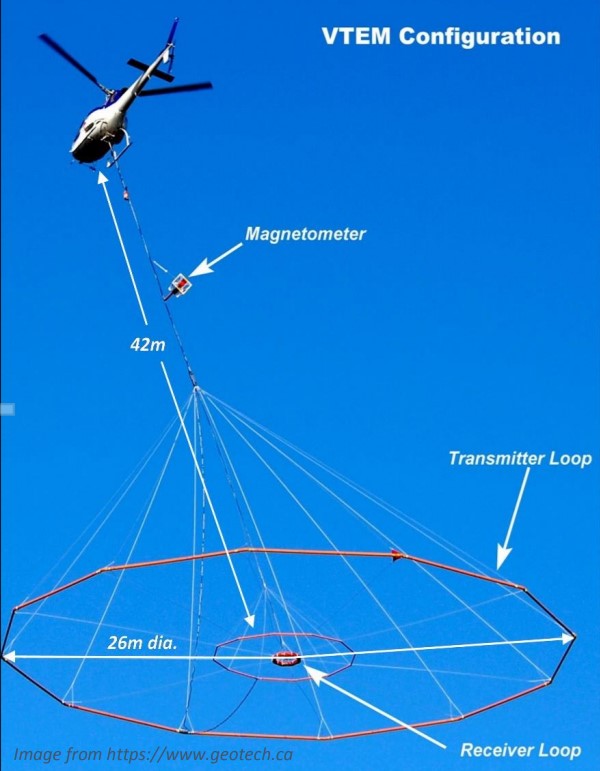
Major said: “We are pleased to have finally commenced this large survey.
“It is a major component of our systematic exploration approach for discovering the next Ni-Cu-PGE system in a similar setting to that of Julimar.
“We are hoping to identify significant indications of potential mineralisation which will typically show as strong conductors floating in a substantial area of non-conductive rock.”
Belgravia copper-gold porphyry project
The Belgravia Project covers an area of 80 square kilometres and is in the central part of the Molong Volcanic Belt (MVB), Lachlan Fold Belt, NSW.
It contains the same rocks (Fairbridge Volcanics and Oakdale Formation), or their lateral equivalents, that respectively host the giant Cadia-Ridgeway mine 35 kilometres south and Alkane Resources' Boda discovery 65 kilometres north.
Historical exploration at Belgravia has failed to adequately consider the regolith and tertiary basalt (up to 40 metres thick) that obscures much of the prospective geology.
The project contains six targets with considerable exploration potential for porphyry copper-gold and associated skarn mineralisation.
Maiden diamond drilling program
Krakatoa completed its maiden diamond drilling program at the Sugarloaf copper-gold porphyry target with the Belgravia Project in November.
Sugarloaf is 7 kilometres southeast of Golden Cross Resources (ASX:GCR) Copper Hill Porphyry Deposit (890,000 ounces of gold and 310,000 tonnes of copper).
Krakatoa intersected intrusive, sulphide bearing rocks in drill hole SDD001 and propylitic alteration and sulphides in both SDD001 and SDD002.
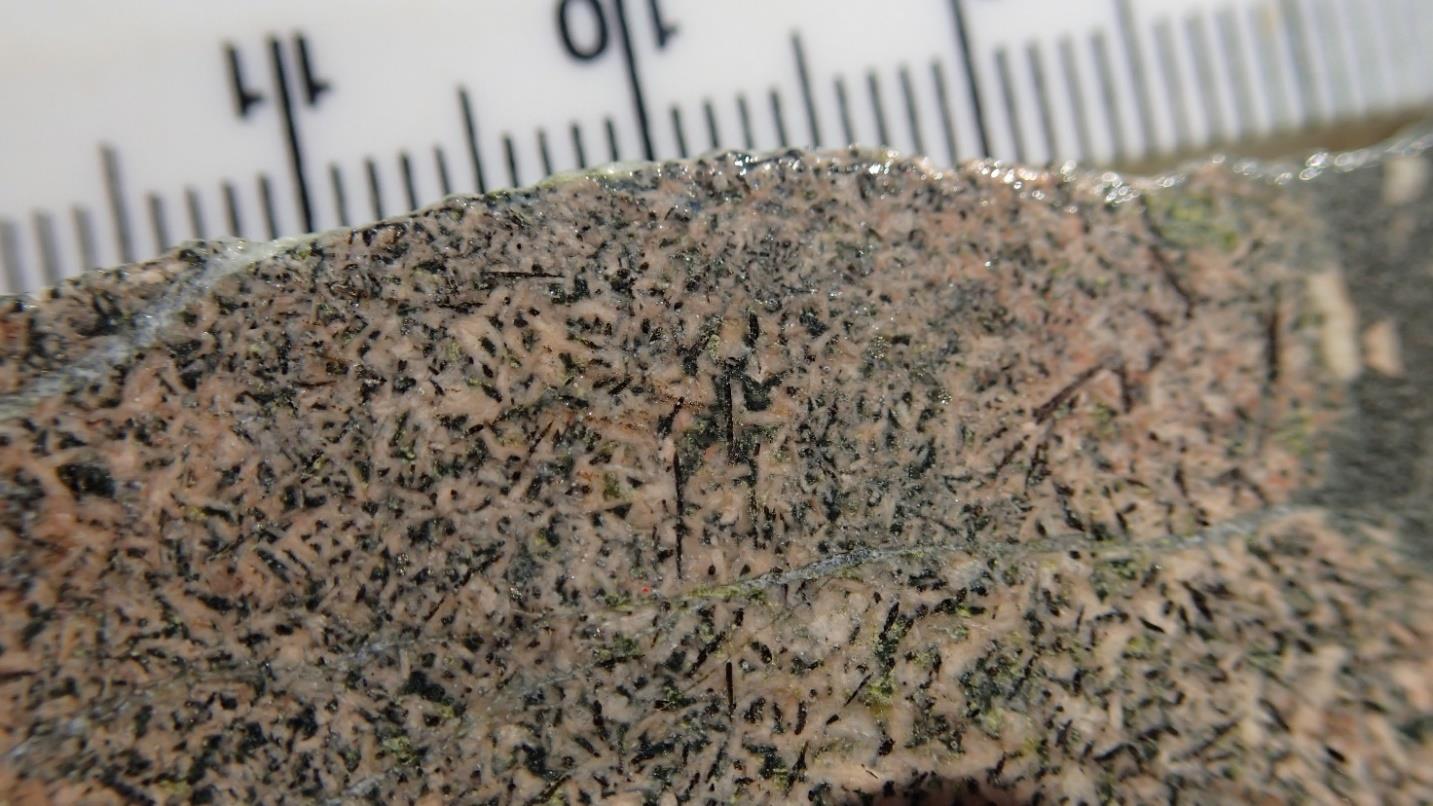
Sulphide-bearing, hornblende microsyenite at 118 metres in SDD001.
All core samples have been submitted to ALS Global for multi-element and hyperspectral analysis with results awaited.
Krakatoa CEO said following the completion of drilling: “We are pleased to have completed this important, initial phase of this porphyry hunt.
“This drilling program was a fact finding and information gathering exercise; the data obtained from the diamond core will provide invaluable information to ascertain what level of system lies below the current drillholes and to guide future drilling.”
Dalgaranga critical metals project
Krakatoa’s Dalgaranga Project is 70 kilometres northwest of Mount Magnet in Western Australia and sits within the Dalgaranga Greenstone Belt.
The Dalgaranga Greenstone Belt is about 50 kilometres long and up to 20 kilometres wide and contains gold mineralisation (Dalgaranga gold mine), a zinc deposit (Lasoda), graphite deposits, and occurrences of tantalum, beryllium, tin, tungsten, lithium and molybdenum related to pegmatites.
In November, Krakatoa completed a review of all historical drilling and announced a maiden Exploration Target at Dalgaranga.
The Exploration Target has been estimated at between 1,470,000 to 3,185,000 tonnes containing rubidium, lithium and niobium, tantalum, tin and tungsten.

Major said at that time: “The Exploration Target is exciting and could become an important boost to the Company’s growth plans.
“If drilling can prove a portion of the Exploration Target, then we will have a sizable critical metals resource base for future mining studies.
“If you couple this with depth potential around the mine area and opportunity of additional sources within the undrilled pegmatite swarms to the south and elsewhere, we could be looking at something considerably more substantial.”