
Sovereign Metals Limited (ASX:SVM)’s further bulk scale metallurgy test-work from Kasiya Rutile Project in Malawi has returned metallurgical results described by the company as "outstanding" and which consolidate its view of the quality of the project.
It has produced premium-grade rutile via a simple and conventional process flow sheet.
The successful graphite by-product test-work adds valuable product stream to the operation, enhancing the commercial potential of the globally significant rutile project.
Test-work has confirmed that rutile and graphite mineralisation at Kasiya is highly amenable to processing via conventional metallurgical flowsheets utilising “off the shelf” components.
The strong results have been demonstrated over two separate bulk programs on samples representative of run-of-mine grade mineralisation at Kasiya.
It is producing world-class specification rutile products ranging from 95.0% to 97.2% titanium dioxide with low impurities stand-out metallurgical recoveries ranging from 94% to 100%.
Sovereign is ramping up product marketing with significant interest received from tier 1 rutile off-takers in the pigment, titanium metal and welding industries.
Further interest from end-users
Sovereign Metals managing director Dr Julian Stephens said: “Consistently achieving premium rutile specifications with standout recoveries via conventional “off the shelf” processing methods reinforce the robustness of metallurgical and processing performance of the Kasiya rutile mineralisation ahead of the upcoming scoping study.
“These continued very high-quality product specifications should generate further interest from end-users across the titanium sector as the global structural deficit in natural rutile supply continues to widen.”
Rutile marketing and offtake
The premium chemical parameters of the rutile produced indicate the product should be suitable for all major natural end-use markets including titanium dioxide pigment feedstock, titanium metal and welding sectors.
Demand and pricing for natural rutile are both very strong as the global structural deficit in supply continues to widen.
Graphite by-product
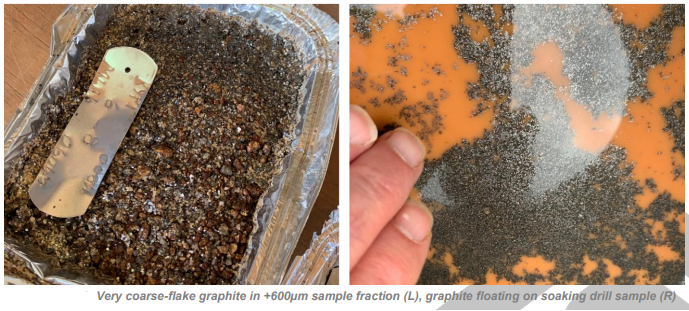
Coarse-flake graphite has been identified throughout the Kasiya rutile deposit with recent assays received confirming grades averaging about 1% total graphitic carbon (TGC) within the rutile MRE area.
Gravity separation was effective at concentrating graphite to a “light mineral pre-concentrate” due to its low specific gravity (around 2.2 t/m³) at circa 6.3% TGC.
The test-work at SGS Lakefield in Canada to confirm that the graphite gravity preconcentrate can be upgraded into a coarse flake graphite by-product via a conventional graphite flotation flowsheet was extremely successful.
A very coarse-flake graphite concentrate at 96.3% TGC was produced.
The overall graphite recovery from the raw sample to product was 62%.
Scoping study
Given the very successful results achieved via a simple and traditional flowsheet, the company now intends to incorporate a coarse-flake graphite by-product in the upcoming scoping study.
Sovereign is now well advanced with the study, which is targeting a large-scale natural rutile operation to fill part of the major existing supply deficit with the purest and most environmentally sustainable titanium feedstock.
The majority of technical disciplines have now been completed with the JORC MRE, mining optimisation and capital and operating cost estimations currently being finalised.
The company looks forward to presenting the results in the coming weeks, which will incorporate the results achieved in the recent rutile and graphite by-product test-work programs.
Additionally, the premium chemical parameters of the rutile produced indicate the products should be suitable for all major natural end-use markets including titanium dioxide pigment feedstock, titanium metal and welding sectors.