
Artrya Ltd (ASX:AYA) has rung the bell and hit the local share market following a $40 million initial public offering.
The Perth-based healthcare stock made its ASX debut just after midday on Friday, ringing in its public status with a $105.6 million implied market capitalisation.
Under its pioneer offer, Artrya issued just in excess of 29 million shares to new and existing investors at $1.35 apiece.
Lead manager and underwriter Bell Potter Securities beat the drum for Artrya in May this year, raising a $15 million war chest from institutional investors.
Fresh from its ASX debut, AYA’s mission is simple: it’s out to more accurately and less invasively detect signs of heart disease with the power of artificial intelligence (AI).
The newly-minted medtech aims to shine a light on the underlying cause of heart attacks, raising the bar on the clinical detection and diagnosis in the cardio world.

Artrya is getting to the heart of AI.
ASX debut
Speaking on Artrya’s ASX debut, managing director and co-founder John Barrington AM told Proactive the transition to public company came with considerable velocity.
“We've assembled a world-class team and delivered a world-class product in such a short period of time.
“We were very fortunate to find the talent in Western Australia - to develop this here is great for our state.
“We’re addressing a global need. There's 9 million people who die every year of coronary artery disease.
“And the solutions to that really haven't changed over 50 years.
“This is a groundbreaking product that will address a global problem.”
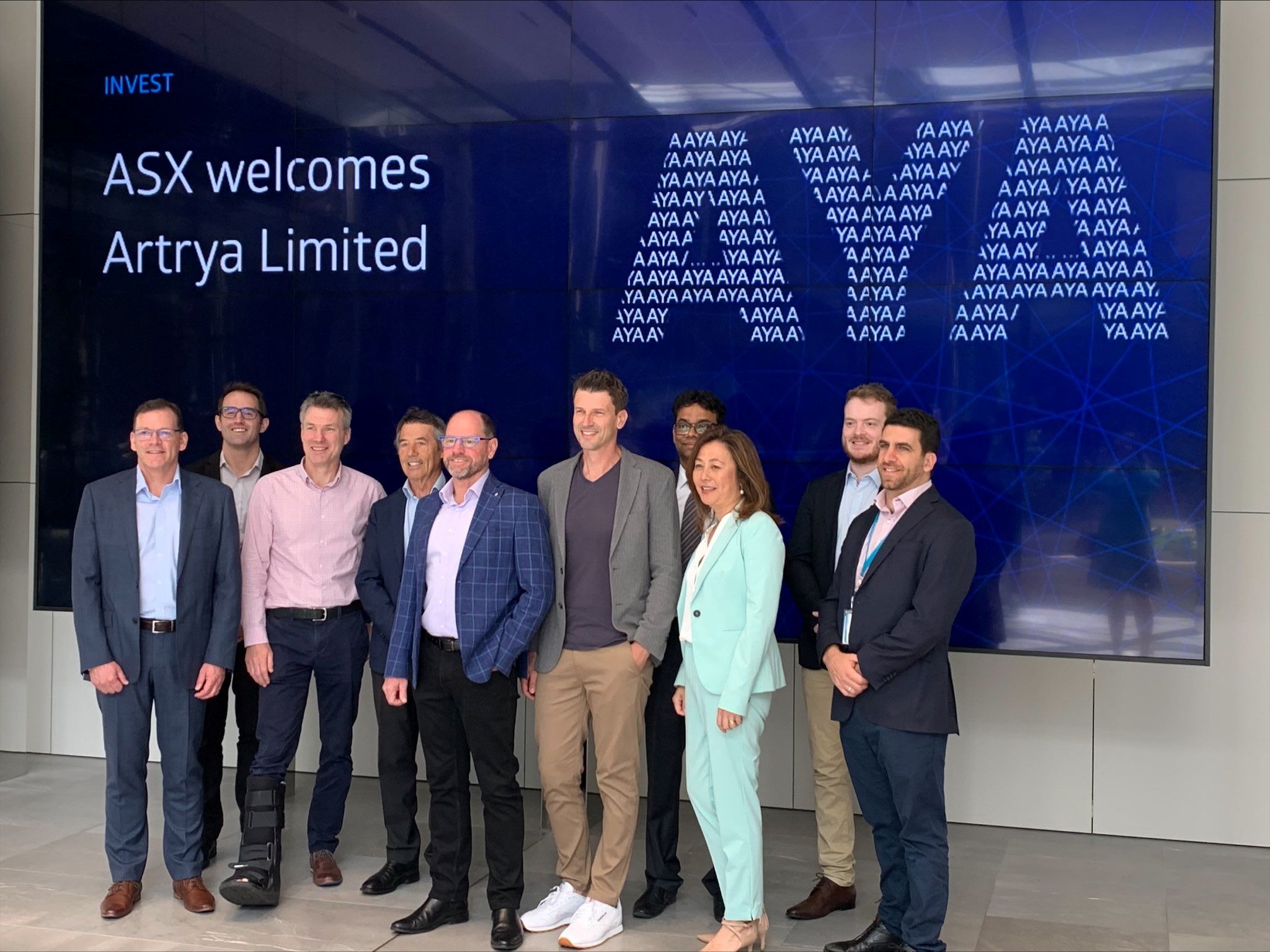
The ASX has welcomed AI company Artrya to the boards.
Combatting a silent killer
Ultimately, Artrya is developing AI-powered imaging software to combat one of the world’s deadliest diseases.
According to Heart Research Australia, heart disease is the country’s single leading cause of death and is estimated to kill one Australian every 28 minutes.
What’s more, damage to the heart’s major blood vessels, known as coronary artery disease (CAD) claims nine million lives worldwide every year.
Artrya non-executive chair Bernie Ridgeway says of those nine million cases, the majority have no warning signs of a heart attack.
“As the prevalence of CAD rises due to an ageing population, global health systems will have to deal with more CAD cases,” he explained in Artrya’s prospectus.
Artrya’s heart beats for AI
Now, Artrya’s Salix Coronary Anatomy (SCA) solution is on a mission to change how the world sees CAD, as well as rapidly improve how clinicians detect and diagnose the heart disease.
In fact, the platform is the only holistic, non-invasive solution that allows clinicians at the point of care to easily assess CAD.
Essentially the software-as-a-service Salix technology harnesses AI to pinpoint vulnerable plaque, stenosis and any other key biomarkers that could underly heart disease.
Ridgeway stated: “Named for its propensity to rupture and cause heart attack, vulnerable plaque is difficult and time-consuming to identify manually.
“As a result, vulnerable plaque, a leading cause of heart attack, is rarely reported.”
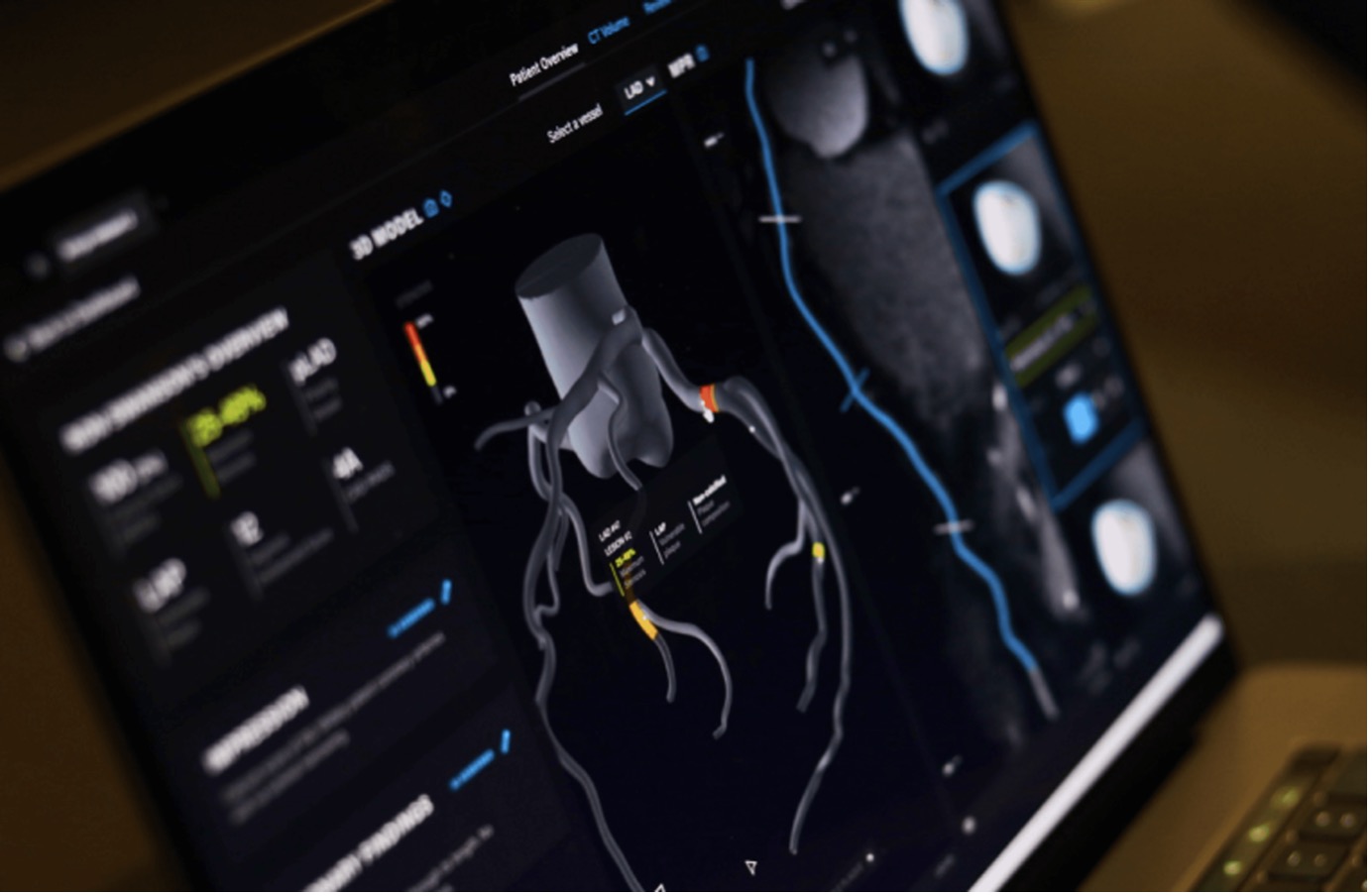
Artrya’s technology analyses cardiac CT scans to rapidly, accurately and non-invasively detect CAD.
Proactive technology
Artrya’s AI solution was born on Australian soil.
The medtech’s research on Salix was developed and validated through collaborations with the University of Western Australia, the Harry Perkins Institute of Medical Research in Perth and the University of Ottawa Heart Institute, Canada.
It’s also attracted public capital — in 2020, the Australian Government awarded Artrya $1 million in funding through its BioMedTech Horizons Program.
What’s important to note is that Artrya is beyond the guinea-pig stage: already, Australia’s Therapeutic Goods Administration has signed off on AYA’s technology.
In November last year, SCA was included on the Australia Register of Therapeutic Goods as a Class 1 Medical Device, meaning it poses very low risk in therapeutic settings.
From here, Artrya has kicked off commercial pilots, introducing the SCA technology to Australian customers like Envision Medical Imaging in Perth.
Looking ahead, it’s also pursuing expansion opportunities in the United States, Canada and the UK, while Artrya expects first revenue from its SCA product in 2022.
Who’s at the helm?
Executives John Barrington AM and John Konstantopoulos are behind the ASX’s new joiner.

Key members of the Artrya team.
They put their heads together in May 2019 and formed the Artrya business, aiming to bring tech to market that could lead to a heart disease diagnosis before it’s too late.
Their answer is the Salix product suite, a range of AI-powered solutions that analyses cardiac CT scans to rapidly, accurately and non-invasively detect CAD.
Complementing SCA is Artrya’s Salix Coronary Flow (SCF) solution, which is currently in development.
Essentially, SCF measures coronary blood flow without the need for invasive procedures that are normally associated with this assessment.
By delivering a whole-of-heart assessment at the point of care from a single CCTA scan, the SCF solution can save time and cost to patients, healthcare providers, insurers and national health systems.
A growing market
AYA is going public as it prepares to engage a market with strong growth potential.
“Artrya has positioned Salix to disrupt the global market for CCTA scans and ICA procedures,” the medtech reported in its prospectus.
“An estimated 20 million cardiac CT scans are expected to be performed annually in North America and Europe by 2025.
“In North America alone, cardiac CT procedures are forecast to rise 76% from 11.1 million to 19.5 million between 2021 and 2025.”
According to Artrya, growing demand is being driven by global population growth and ageing societies.
“These factors increase the CAD burden on national healthcare systems and the need for imaging services,” the company explained.
“The global shortage of specialist physicians compounds the pressure on radiologists.
“Moreover, the global burden of CAD is forecast to increase, with COVID-19 causing cardiac injury during and after acute infections.
As COVID continues to capture the world’s attention and demand for cardiac CT scans heats up, it stands to reason that AI-driven solutions like Salix could enjoy a strong uptake in teleradiology applications.
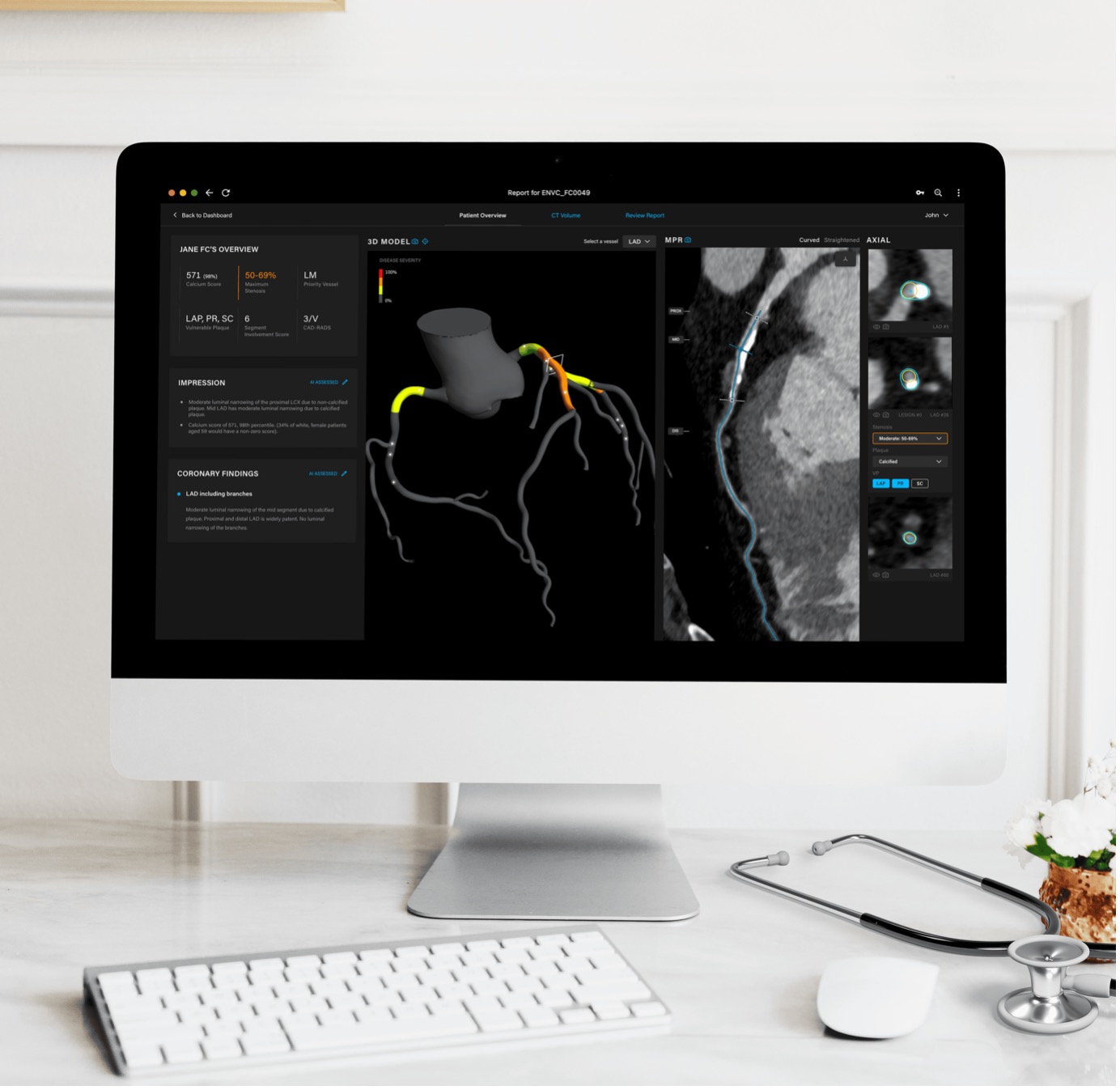
The Salix product suite can help identify vulnerable plaque, a key trigger for heart attacks.
The bottom line
As a fully-fledged ASX-lister — and the latest to go public amid a biotech boom — Artrya promises it will save lives with its AI heart tech.
Signing off in the prospectus, non-executive chair Bernie Ridgway said Artrya had achieved many milestones since its incorporation.
“The company was formed because its founders believed methods of CAD detection were old fashioned and had not progressed for decades,” he explained.
“They saw an opportunity to use the power of AI to solve this problem – and save lives by helping people avoid a heart attack and possible death.”