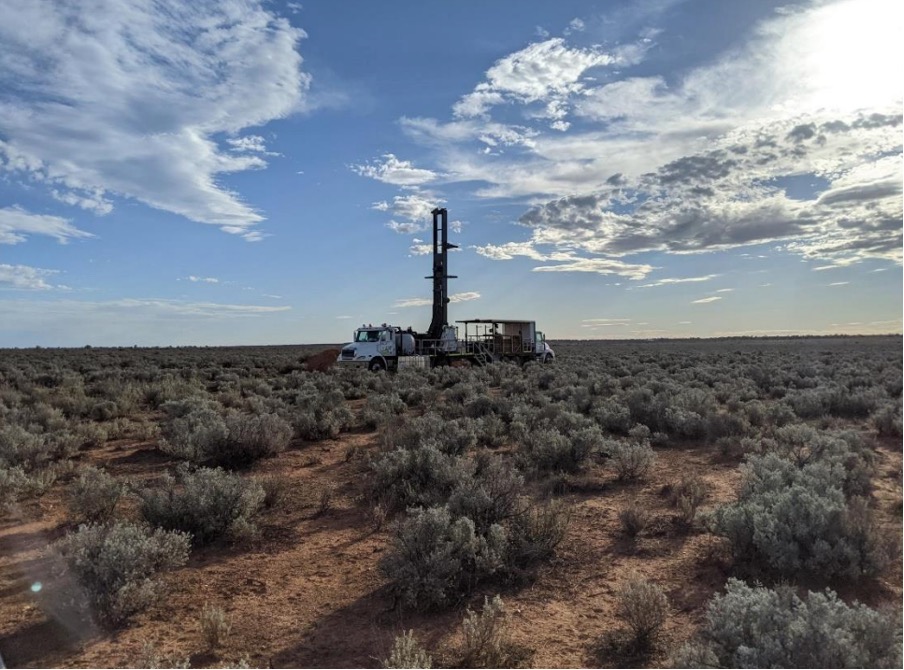
Alligator Energy Ltd (ASX:AGE) has embarked on a drilling campaign over the Samphire Uranium Project, which lies south of Whyalla in South Australia.
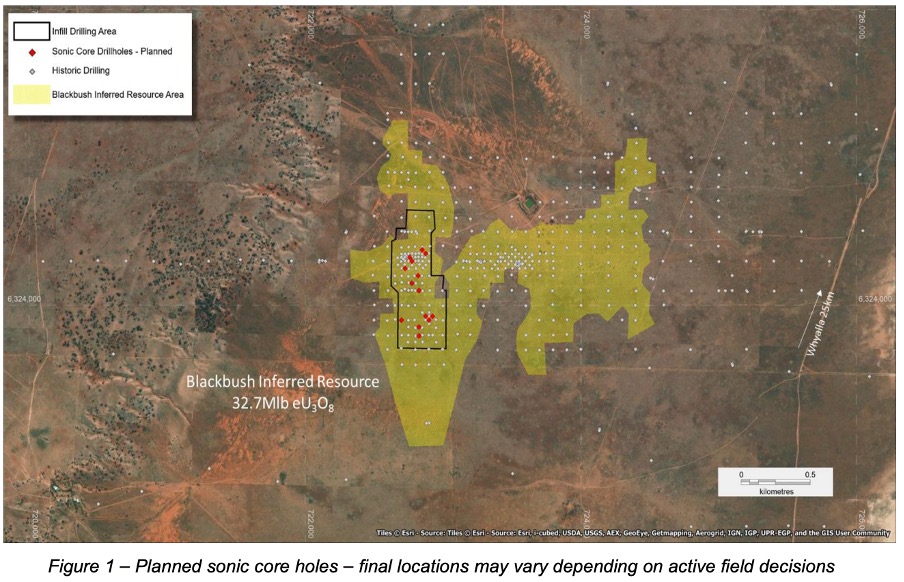
During the program, the ASX-lister will drill up to 14 holes to extract sediment core from a uranium-bearing zone at the Blackbush deposit.
Ultimately, the holes are designed to add to Alligator’s geochemical data in the hopes it will bolster confidence in Samphire’s JORC-compliant resource.
Following the sonic core drill holes, AGE plans to complete up to 40 rotary mud holes — designed to improve resource confidence and frame-up possible extension work.
A program for the ages
Commenting on the program, Alligator CEO Greg Hall said: “We are very pleased to be finally commencing this important drilling program, the first on the Samphire Project since around 2012.
“As this is Alligator’s first drilling program in the area, it has been important that we work with the pastoral leaseholders to ensure minimal impact on ground during our operations, and this has meant the soft ground following recent heavy rains was not suitable for the drills and equipment to drive over.
“More showers are forecast in the area over the coming week, and the team will work around this to maintain drilling wherever possible.
“I thank our very new geological team for their rapid work to prepare for this program, and the patience shown by them and the drilling crew in ensuring we undertake this work in a professional manner.”
Turning the soil on uranium opportunity
As it embarks on this next exploration chapter, all the necessary infrastructure and the AGE team is now in place.
It comes after the drill rig and drillers arrived on site on November 11 — after some delay from a previous program and necessary cross border COVID access requirements — and the unseasonal rain through the north impacted the ability to get onto the pastoral lease.
As sonic core is extracted, it will be photographed, vacuum sealed and chilled to maintain its integrity and entrained groundwater.
Once the core is received, samples will be shipped off to a lab for further inspection.
However, with high workloads and assay delays across the nation, Alligator only anticipates results six to eight weeks from submission.
Cores from selected holes will also be sent to the Australian Nuclear Science and Technology (ANSTO) office, where scientists will undertake updated uranium leach and IX extraction test-work.
This will feed into Alligator’s resource modelling and inform a scoping study, which is pencilled in for the first half of next year.
Following the sonic core drilling, up to 40 rotary mud holes will be drilled.
A uranium logging technology known as PFN and a gamma probe will obtain the uranium results.
Ultimately, this later batch of drill holes is designed and located to improve resource confidence and firm up potential extensional work.