Chimeric Therapeutics Ltd has produced positive clinical data from its Phase 1 CLTX CAR T cell trial, revealing a 75% disease control rate at the lowest dosage level.
Two abstracts on CLTX CAR T therapy have been released for presentation at the Society for Neuro-Oncology (SNO) 27th annual scientific meeting.
Abstract CTIM-29, 'Clinical evaluation of chlorotoxin-directed CAR T cells for patients with recurrent glioblastoma' provides insight into the initial clinical data for CLTX while abstract EXTH-10, 'Exploration of a novel toxin-incorporating CAR T cell: how does chlorotoxin recognize glioblastoma cells?' expands on the translational understanding of Chlorotoxin (CLTX) activity.
“Highly encouraging”
Chimeric Therapeutics CEO and managing director Jennifer Chow said: “These initial CLTX CAR T clinical data, while early, are highly encouraging as they demonstrate that CLTX CAR T cells are eliciting disease control in recurrent glioblastoma even at the lowest, sub-therapeutic dose level.
“Achieving disease control in 3 of the 4 patients treated at this first dose level, along with the generally well-tolerated safety profile that was demonstrated, provides us with great enthusiasm for progressing the trial through the higher dose levels and dual routes of administration.”
The clinical data released in abstract CTIM-29 is from the ongoing CLTX CAR T phase 1 clinical trial in patients with MMP2+ recurrent or progressive glioblastoma. MMP2 overexpression is associated with brain tumour malignancy and metastasis formation.
Clinical data
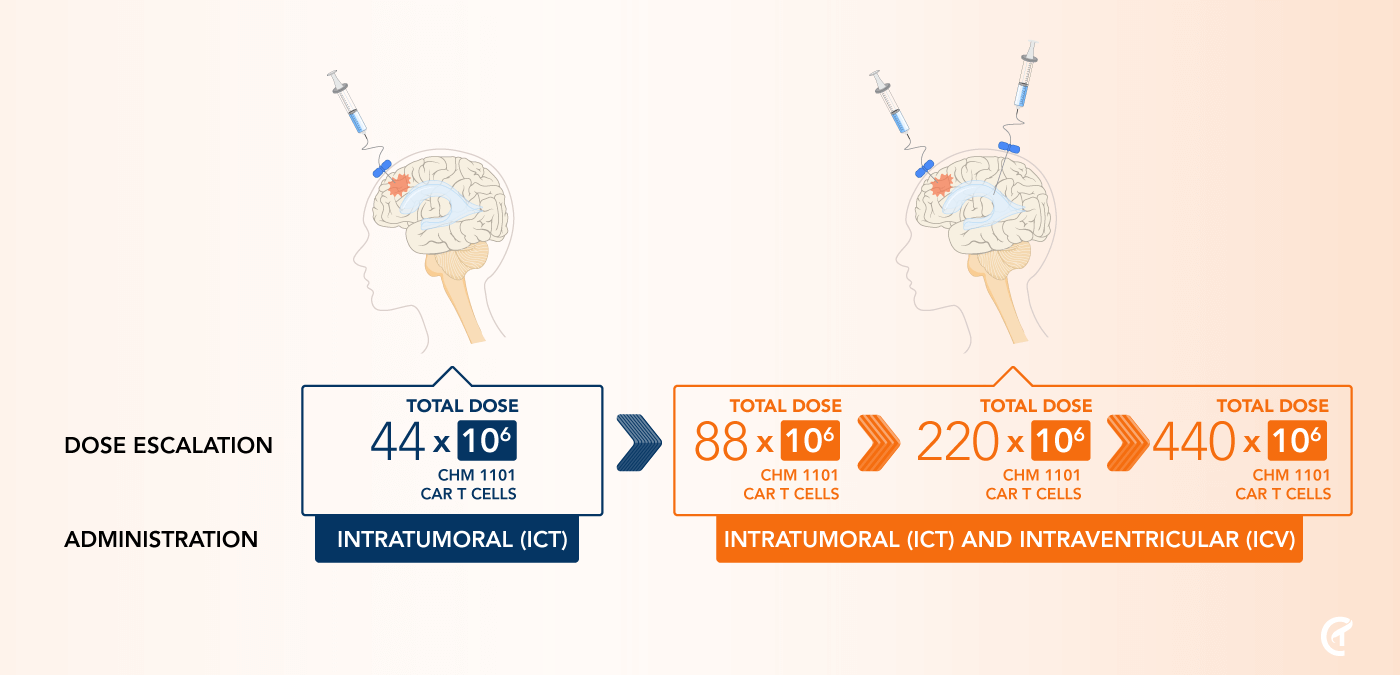
The data focuses on the four patients enrolled in dose level 1 of the trial, treated with 44 X 106 CLTX CAR T cells through a single route of intratumoral administration.
Dose escalation in this trial is planned across four dose levels to a total dose of 440 X 106 CLTX CAR T cells administered through dual intratumoral and intraventricular (IV) routes of administration.
A disease control rate of 75% was observed within patients treated at dose level 1, three out of the four patients treated achieved a best response of stable disease assessed by RANO (response assessment in neuro-oncology).
The CLTX CAR T cells were generally well tolerated and none of the patients experienced dose-limiting toxicity. One patient experienced a grade 3 cerebral edema, an adverse event commonly observed in patients with glioblastama which could possibly be attributed to the CAR T cells.
Any adverse events experienced during clinical trials must be treated as a potential outcome of treatment until causation can be ruled out.
Liquid biopsy detected persistent CLTX CAR T cells in the tumour cavity throughout treatment, confirming bioactivity of the cells and suggesting that CLTX CAR T cells are not immunogenic (an immune response that can impact the persistence and efficacy of the CAR T).
EXTH-10
The translational data available in abstract EXTH-10 focuses on the precise composition and structure of the cell surface complex recognized by CLTX CAR T, confirming that the correlation between MMP-2 expression and CLTX binding supports the rationale for exploring MMP-2 as a correlative marker for response to CLTX CAR T in Phase 1 studies.
Additional insight may be provided on November 19 when the abstracts are fully presented at the SNO meeting.
About the clinical trial
Chimeric Therapeutics is a clinical-stage company with a focus on research related to the usage of cell therapy for the treatment of cancer.
The company is developing CAR T cell therapies for solid tumours based on scientific research conducted by the US CAR T experts at the City of Hope Cancer Centre in Los Angeles.
Chimeric’s CLTX-CAR T technology incorporates chlorotoxin, a peptide derived from scorpion toxin, as a novel CAR tumour recognition domain.
The CLTX CAR T phase 1 clinical trial is currently in progress at a single site in California with plans to expand to a multi-site trial in 2022. The design is a single-arm, open-label trial in patients with MMP2+ recurrent or progressive glioblastoma.
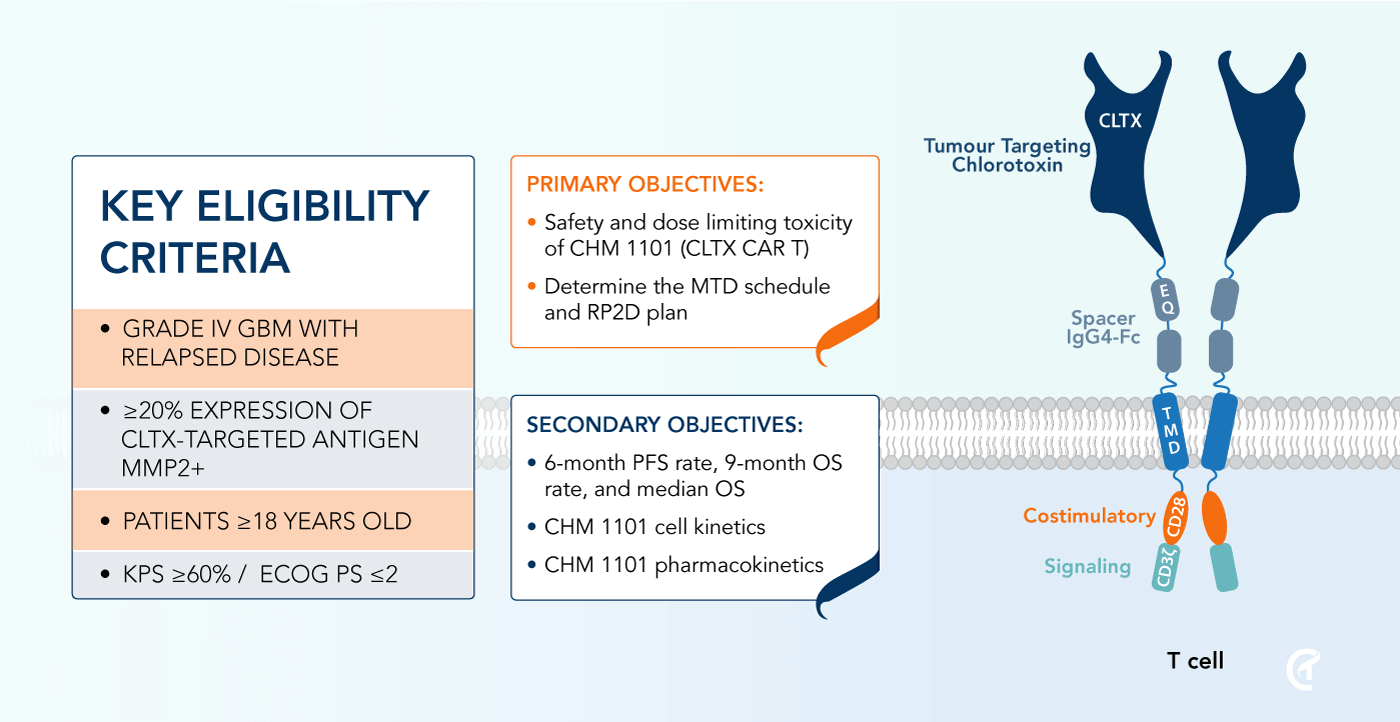
The primary endpoints of the trial are to assess the safety of CLTX CAR T cells, determine the maximum tolerated dose schedule and a recommended Phase 2 dosing plan. Secondary endpoints include bioactivity and efficacy measures.
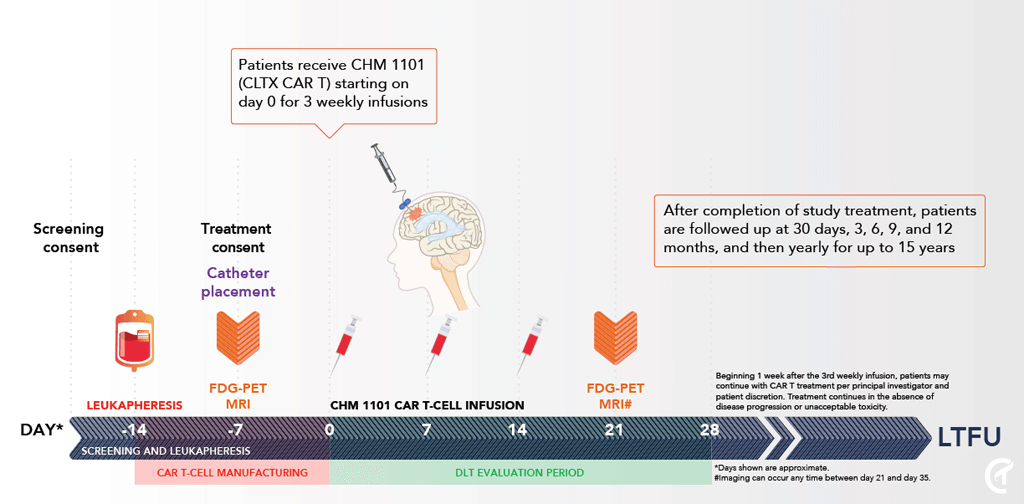
The trial is designed with 4 dose levels ranging from 44 X 106 to 440 X 106 CLTX CAR T cells and studies both single and dual routes of administration of cells. Dose level 1 was completed with no dose-limiting toxicities in April 2021.