
Stellar Resources Ltd (ASX:SRZ) has reported multiple wide tin zones from the maiden hole in its phase one drilling program at the Heemskirk Tin Project in Tasmania.
The technology metal explorer unearthed a series of high-grade tin hits from hole ZS140, roughly 240 metres down-dip from an existing mineral resource at Heemskirk’s Severn deposit.
Severn is the largest of four deposits that make up the flagship Heemskirk Tin Project, and it remains open at depth, meaning Stellar is keen to better understand its scope.
The ASX-lister has completed four holes at its cornerstone project to date, while two more are underway.
Interestingly, one of those is a second drill hole at Severn, where handheld XRF results have already reported generally higher tin readings compared to the maiden hole.
With its nine-hole, phase one drilling program well and truly underway, Stellar is also on the lookout for new zones of high-grade tin mineralisation around its nameplate asset.
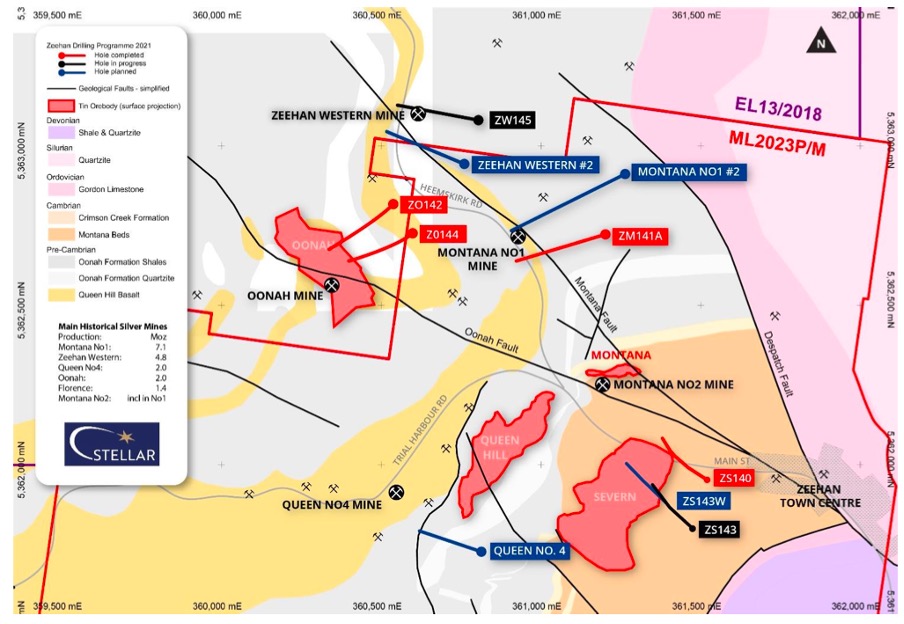
Map outlines Heemskirk’s four tin deposits in red, along with surrounding historic silver-lead mines, and pinpoints the completed, in progress and planned drill holes in red, black and blue.
The best is yet to come
Speaking to the drilling campaign, Stellar Resources executive director Gary Fietz said results to date had been very encouraging.
“Assay results from our first Severn hole, ZS140, have confirmed multiple wide zones of tin mineralisation located well below the depth of the current resource.
“Our second hole at Severn, ZS143 which is currently still in progress, has already intersected zones of mineralisation below the depth of the current resource where, based on logging and handheld XRF readings, we expect the tin mineralisation to be better than in the first Severn hole ZS140.
“Our drilling below historical silver-lead mines at Montana No 1 and Oonah has also been very successful with mineralisation observed and presence of tin, and in some cases silver, lead and zinc, confirmed by anomalous handheld XRF results in all holes to date.”
Broader drilling program
As it conducts its phase one drilling program, Stellar is on the hunt for new zones of high-grade tin mineralisation.
The campaign kicked off in June this year, with two rigs turning the soil across the Heemskirk tenure.
There are two parts to the phase one program, which will cover nine holes for roughly 4,900 metres.
The first stage includes two drill holes on the Severn property, targeting depth extensions below the mineral resource.
The remaining seven holes fall under a separate depth extension program, designed to investigate below some of the key, nearby historical silver-lead-zinc mines.
Typically, these camps boast historically mined ore grades ranging between 20 to 100 silver ounces per tonne.
Up to October 28, Stellar had covered just more than 3,000 metres of ground in the phase one program.
Promisingly, mineralisation has been observed in all holes to date, with the presence of tin confirmed by anomalous handheld XRF results in all (except the most recent hole, which has just commenced).
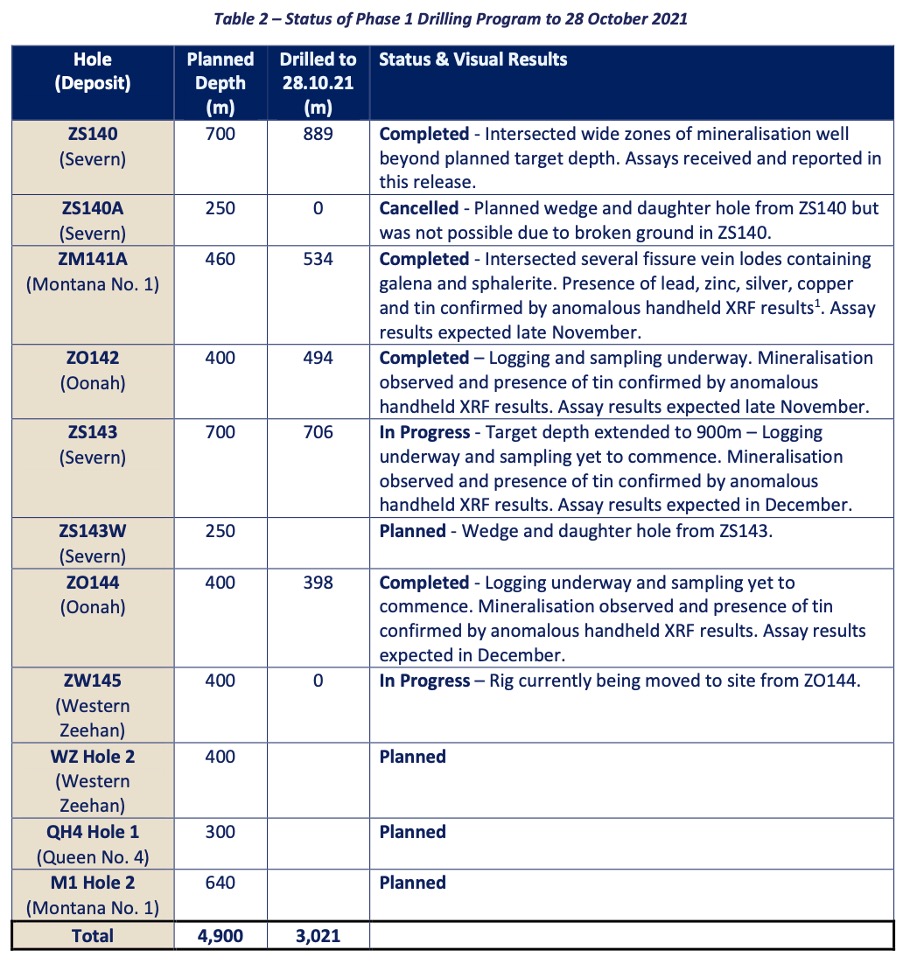
An in-depth description of each holes’ status is tabled below:
The (first) results are in
Assay reporting season is off to a bang, with results from the program’s first drill hole confirming multiple, wide zones of tin mineralisation.
Highlights include:
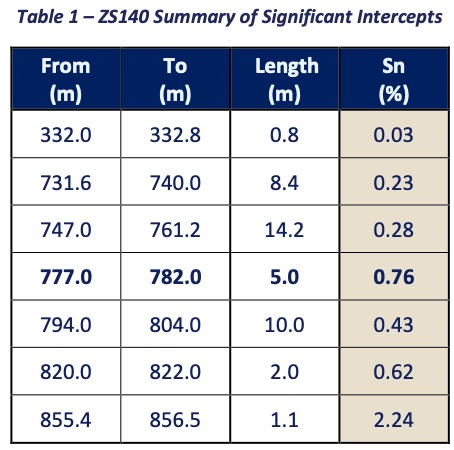
- 5 metres at 0.76% tin from 777 metres;
- 10 metres at 0.45% from 794 metres, including 3 metres at 0.87% from 797 metres; and
- 1.1 metres at 2.24% from 855.4 metres.
The hole also intersected a 0.8-metre fissure vein, hitting 332 metres at 4.09% zinc, 0.45% lead and 11 g/t silver.
A detailed summary of the tin results is tabled below:
Turning the soil at Heemskirk
As results begin to trickle in, Stellar has wasted no time in the field, with the second Severn drill hole — ZS143 — currently 706 metres deep and counting.
The intervals to date include:
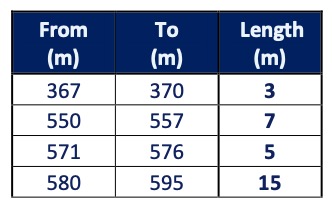
Because it contains more visible pyrrhotite — a mineral commonly associated with cassiterite occurrences at the Severn deposit — Stellar is optimistic this hole could hold even more promise than its predecessor.
The hole also contains more visible cassiterite (tin oxide) and Stellar has been recording higher handheld XRF readings than the maiden Severn hole.
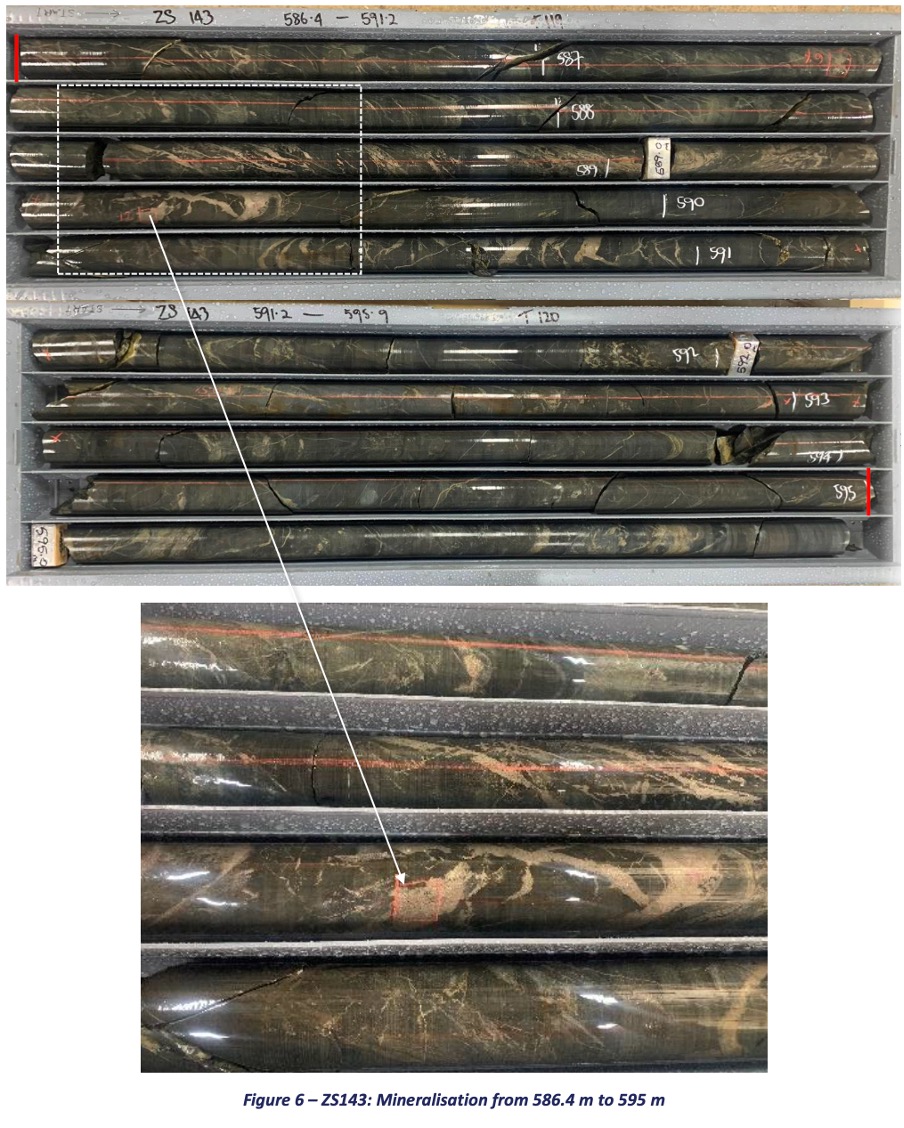
Meanwhile, two other holes have been completed under the seven-hole historical silver-lead-zinc mine depth extension program.
Near the Oonah deposit, drill hole ZO142 was completed to 498 metres deep — extended thanks to intersections beyond the anticipated depth — and logged mineralisation and anomalous tin in handheld XRF over the following intervals:
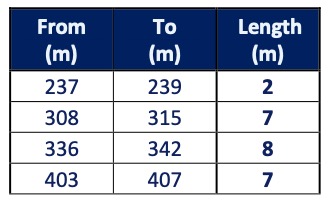
The nearby ZO144 hole was completed in late October, reaching 398 metres deep.
Logging recently got underway, while sampling activities are yet to commence.
Mineralisation has also been observed, and the presence of tin confirmed by anomalous handheld XRF results, in this hole.
Assays from ZO144 are anticipated next month.
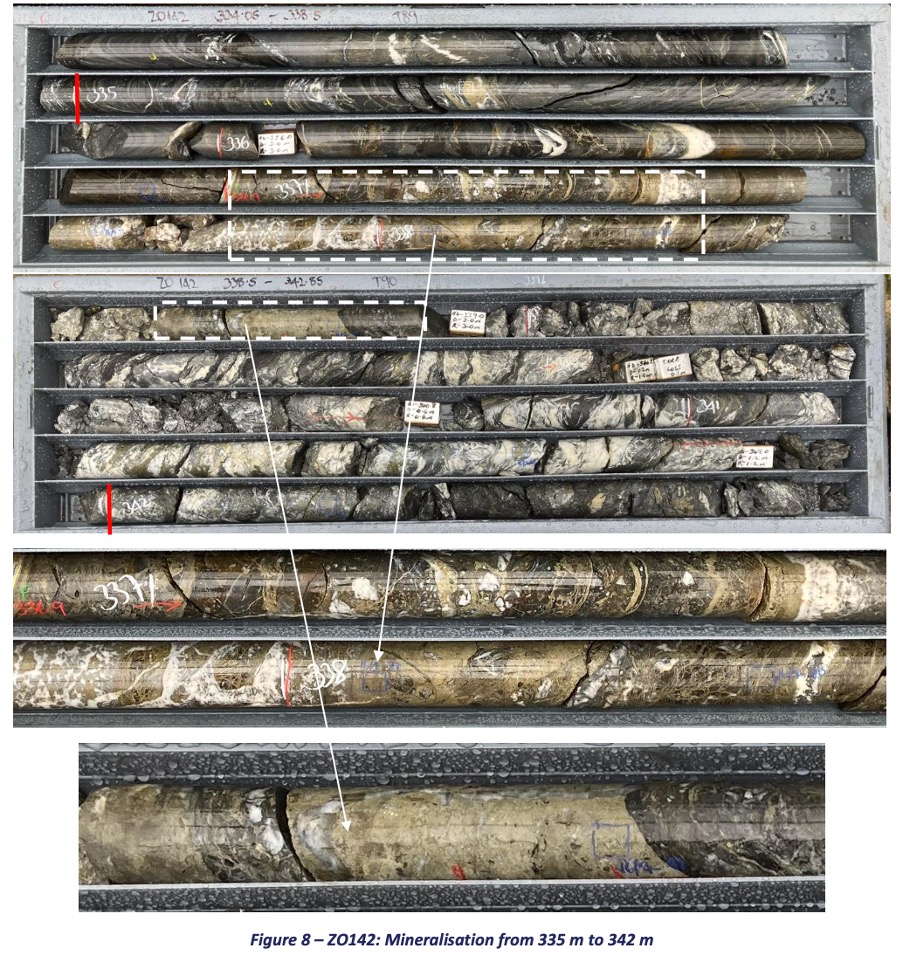
Finally, near the Montana No. 1 deposit, drill hole ZM141A was completed to 534 metres deep.
Lead, zinc, silver, copper and tin occurrences were previously confirmed, but assay results are pending and expected later this month.