
Chase Mining Corporation Ltd (ASX:CML) has received SAM (sub-audio magnetics) geophysics survey results from the Junction Prospect within the Croydon North EPM 27001 in Northern Queensland.
This follows the signing of an option agreement last week to acquire 100% of Prophet Resources Pty Ltd, which holds six granted exploration permits for minerals (EPMs) covering more than 500 square kilometres including the Croydon North EPM 27001.
Chase is planning to drill two targets within the Junction Prospect based on the results of the SAM survey.
Major structural junction
Prophet Resources’ primary Exploration Target is for gold mineralisation under shallow cover associated with a major structural junction evidenced in regional magnetic data.
The Junction Target may cover a structurally complex and altered system of rocks with associated potential mineralisation of the local Croydon gold vein style and or IOCG style.
The geophysical signatures, proximity to apparent major linear features, the presence of Proterozoic basement and an under explored area under shallow cover sediments north of a significant goldfield, all combine to give a high prospectively to the project area.
Interpretation of the SAM survey by Geophysical consultants RAMA GeoScience (RAMA) has delineated two well defined geophysical targets (Target T1 and Target T2) that are the focus for drilling by the of end 2021.
Target T1
To investigate the 3D structure of the T1 magnetic features, an unconstrained 3D inversion of the VRMI data was completed.
This confirms the T1 target as a north dipping magnetic zone, elongate in the EW direction, with a sharp (faulted) southern margin.
The top of the T1 target appears to be at about 100 metres depth.
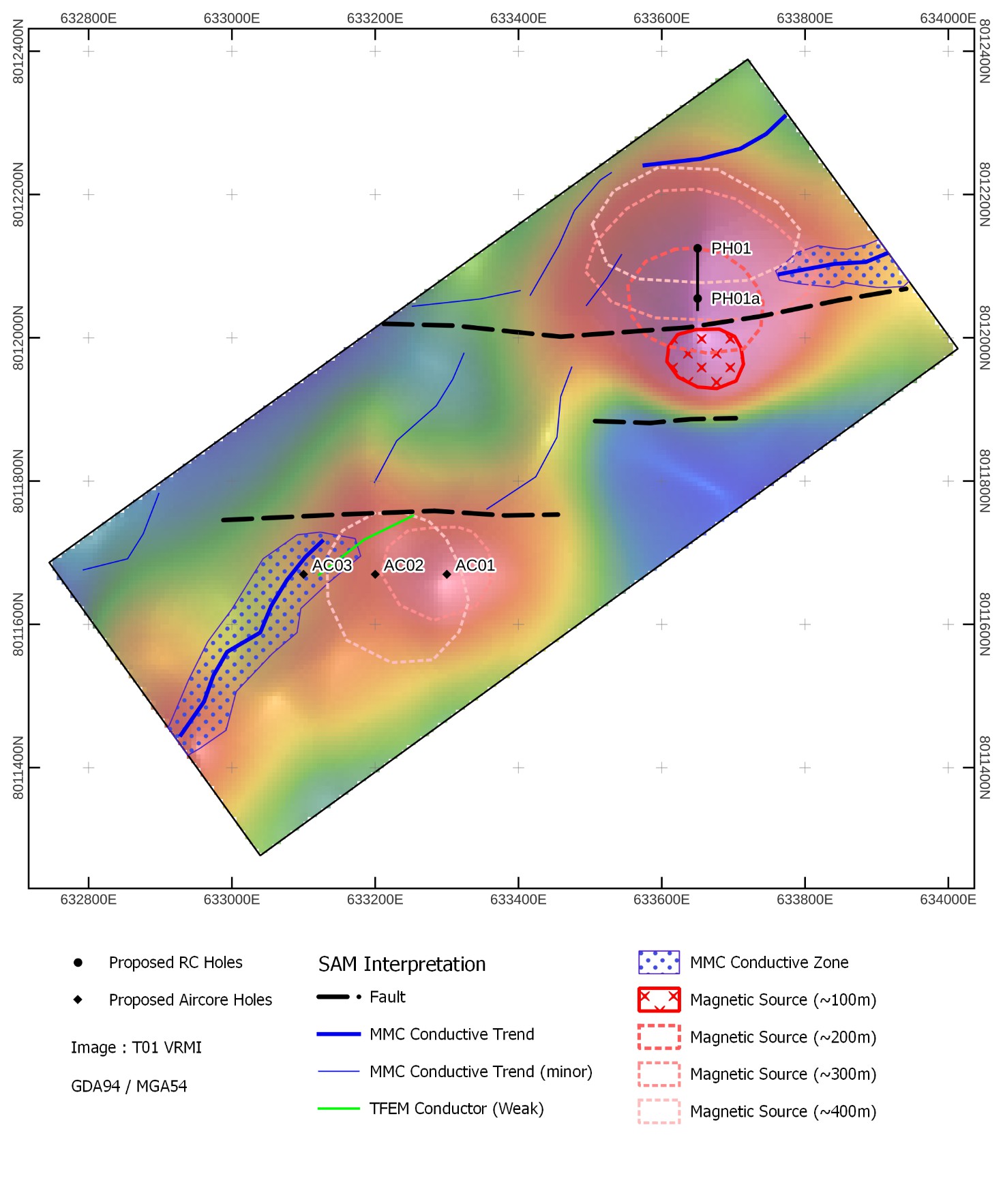
Figure 1. Junction Target T01: SAM Interpretation and proposed drilling.
Figure 1 shows a simple interpretation of the T1 SAM data illustrating the features discussed above.
Drillholes PH01 (angled) and PH01a (vertical) have been designed as options to test the source of the main T1 magnetic anomaly
Three shallow holes to test for basement geochemical anomalism across the MMC (magnetometric conductivity) response and secondary magnetic feature in the SW of the T1 survey area are also proposed.
Target T2
An unconstrained 3D inversion of the TMI (total magnetic intensity) data was completed to investigate the geometry of the main T2 magnetic anomaly.
The model suggests the magnetic source is a tabular body with NE strike and steep SE dip. The top of the source is within 100 metres of the surface.
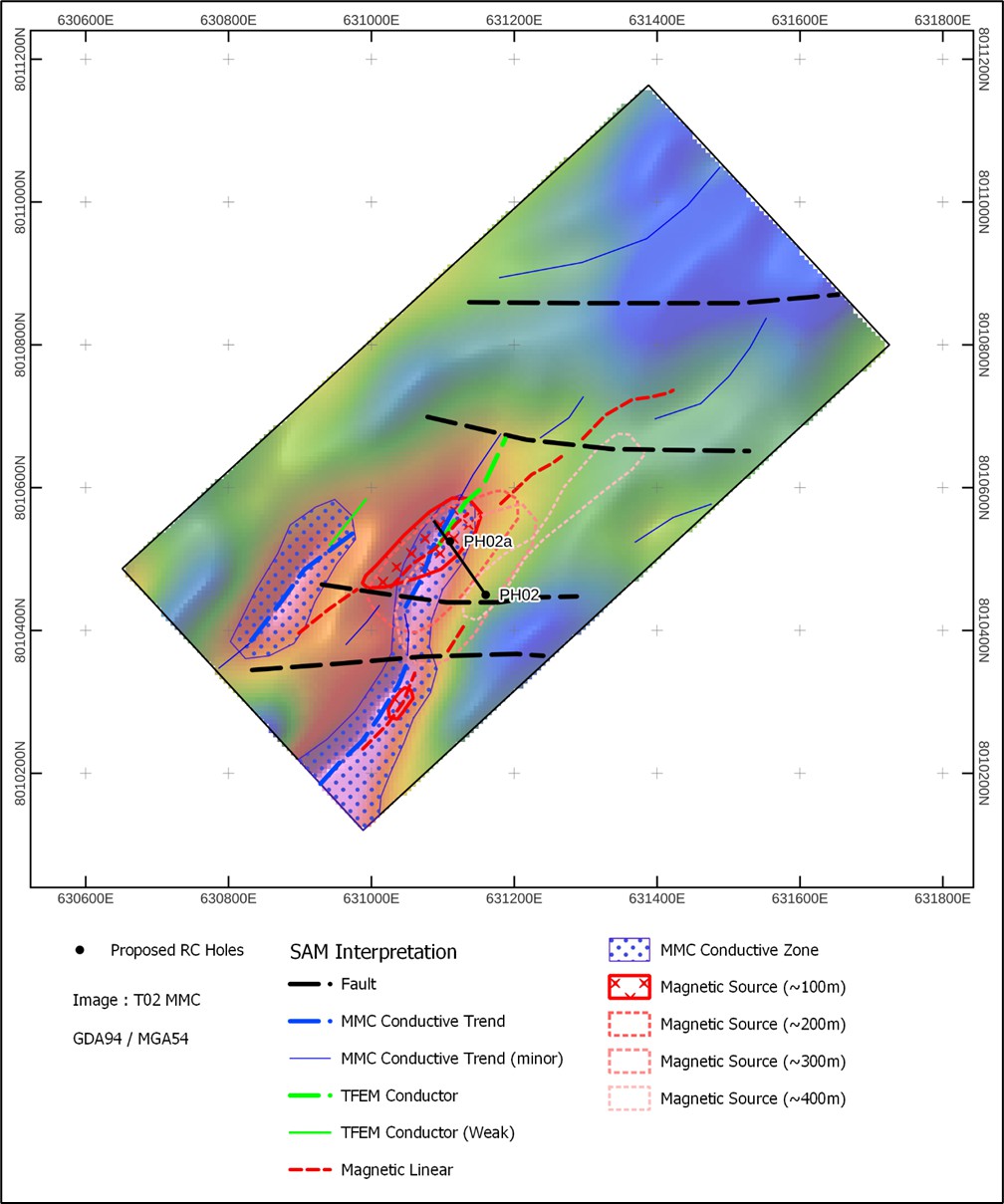
Figure 3. Junction Target T02: SAM Interpretation and proposed drilling.
Figure 3 shows a simple interpretation of the T2 SAM data illustrating the features discussed above.
The coincidence of the T2 magnetic source, MMC conductive trend, and TFEM (transient electromagnetic) conductor suggests this is a good target for possible mineralisation.
Drillholes PH02 (angled) and PH02a (vertical) have been designed as options to test the source of the coincident magnetic, MMC, and TFEM anomaly.
Target T3
The MMC and TFEM data for T3 map two strong linear and extensive conductive zones which are coincident with the magnetic linears.
These zones are well defined and continuous across the entire survey.
These features most likely represent extensive stratigraphic units or dykes containing carbonaceous shales.
Given they are also magnetic it is possible the shales contain (or are associated with) pyrrhotite.
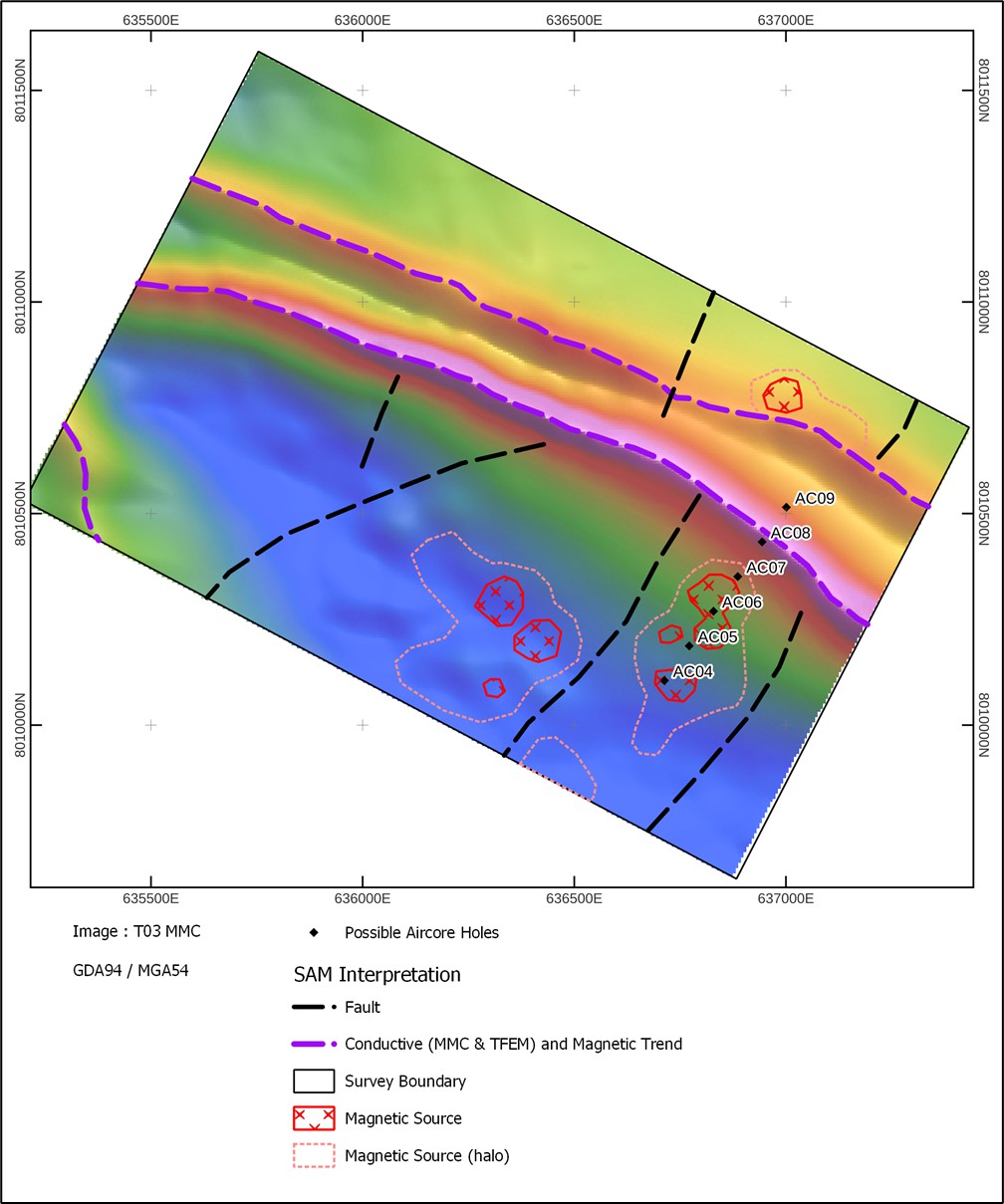
Figure 5. Junction Target T03: SAM Interpretation.
Figure 5 shows a simple interpretation of the T3 SAM data illustrating the features discussed above.
Possible follow up could consist of basement sampling (Aircore/RAB) of the noisy magnetic zones adjacent to the main NW structure to test for mineralisation or a geochemical signature.
An indicative program of three (AC07-9) to possibly six (AC04-9) 100 metres spaced shallow holes has been designed as a possible first-pass test of basement geochemistry.
It has been recommended by RAMA that any hole drilled to test targets T1 and T2 be cased with PVC after drilling so that downhole electromagnetic survey can be completed to investigate for off-hole conductive sources (massive sulphides).