
- Net zero – an explainer
- How do we draw down on emissions?
- What else can we do
- Australia goes to Glasgow
Oh, to be a fly on the wall of the coalition’s net-zero emissions negotiations.
The dissension. The arguments. The differences between National and Liberal party policies and politics. The general incompatibility of two parties that must work together to get the numbers to form government.
Those incompatibilities would have been laid bare as the two parties faced a daunting task to reach agreement on climate action.
Eventually they did.
We’ll never know who voted for or against. And we don’t yet know exactly what the policies are or what the coalition had to give up to get the deal done.
There are really only three things we do know.
- Technology will play a major role in the transition from fossil fuels to green energy solutions and ultimately the net-zero target.
- Scott Morrison will go to Glasgow this week with a plan that could curry favour back with the royals.
- Matt Canavan is not a happy camper.
With Australia now committed to net zero emissions by 2050, it’s a good time to look at what the term net zero means and how we get there.
Net-zero – an explainer
Put simply, net-zero is the removal of as much greenhouse gas from the atmosphere as is emitted. In which case, the net amount added is zero.
Effectively, it is a balance between what goes in and what comes out. As the Climate Council of Australia so eloquently puts it, “no more greenhouse gas can be added to the atmosphere in any given year than is taken out”.

The important thing to note is that net-zero does not mean there are no emissions. Turning off fossil fuels, will not stop climate change.
Carbon dioxide, which naturally occurs in the earth’s atmosphere, is the main contributor to climate change.
It’s not going anywhere.
If that’s the case, what can we do. Is net zero even achievable?
The short answer is yes.
Again, it comes back to finding the balance between emissions and removal. Once that has become habit, the longer-term goal will be to reduce greenhouse gases to pre-climate change levels by drawing down past emissions.
How do we draw down on emissions?
Technology is key … and planting new forests.
If you believe the world is in dire straits and ready to blow due to warming, then the mad scientists out there may just be the planet’s saviours.
If you have a more moderate opinion on the effects of climate change, it’s still those mad scientists that will help the world achieve net-zero emission targets.
The transition to renewable energy to facilitate emission downgrades or removal can’t happen overnight. That would throw economies into disarray.
Technology, however, can speed things up.
Drawdown technologies such as direct air capture will be crucial.
Part of Australia’s plan will be to spend A$300 million in carbon capture use and storage (CCS) technologies.
This is the process of capturing carbon dioxide before it enters the atmosphere and transporting and storing it for as long as possible – which could be centuries or even millennia.
This technology has its detractors, including the Climate Council of Australia, who say “CCS will never be a ‘zero-emissions’ solution, particularly where it’s attached to highly-polluting coal and gas projects”.
It works by capturing, transporting and storing greenhouse gas emissions and injecting the captured greenhouse gases back into underground geological formations or using them to create commercial products.
Australia plans to invest more than A$300 million in CCUS over 10 years including in the A$250 million CCUS Hubs and Technologies program to support CCUS deployment at scale:
- The Technologies Stream will help fund the research, development and commercialisation of CCUS technologies and identification of viable CO2 storage sites.
- The Hubs Stream will help fund the design and construction of shared CCUS infrastructure between co-located CO2 emitters.
The other A$50 million goes to a CCUS Development Fund which supports six new CCUS technology projects.
Carbon capture and storage, including carbon sinks, which are reservoirs that absorb Co2 and can be natural or artificial, is only one solution. Other technologies will assist: wind power, electric vehicles, solar power are just the tip of the iceberg.
Here’s a few you may not have heard of:
- FuelGems. Helps vehicles and saves fuel.
- Climeworks. Captures and recycles CO2 emissions.
- Terramera. Reduces food waste and pesticide use.
- CarbonCure. Helps the concrete industry go green.
Artificial trees could be another solution. The merit of this technology is being studied by three Stanford graduates including Kendra Kuhl (pronounced Cool – of course it is). Mad scientists, take your hat off.
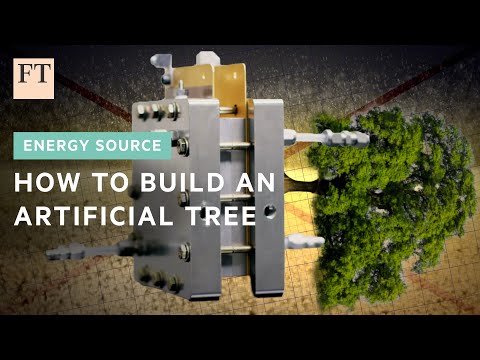
There is plenty of technology to lean on, but one thing worth noting here is that to create the technology mining is still required. Materials are required. Steel, lithium etc… so eliminating the mining industry isn’t a solution, but giving miners the technologies to help them reduce their emissions is.
What else can we do
EnergyFlex co-director Garry Harding, a former Defence aerospace engineering consultant believes if we don’t change when we emit, Australia has no hope of reaching its 2050 goals.
It is also worth pointing out that Australia is only committed to reaching net-zero, this is not passed in law unlike the UK and France, which are just two of a number of countries to have set legally binding targets on achieving net-zero greenhouse gas emissions.
“At the moment, our Government has no viable way of ever achieving much-lauded emission targets,” Harding says.
“The world is changing how we generate power, so we also need to change when and how we use it.
“Everyone from householders to big industry emitters can dramatically cut emissions and soaring energy bills by using more renewable energy from the sun when it shines – and that’s during the day and not at night, when coal is needed to fire the grid. By shifting operations to daytime, we can do more with less damage.
“Australia boasts an abundance of solar and wind power so if we became energy smart and we all increase energy use during the day, when renewable energy is generated and cheap, and use less energy at night, when it’s more much more expensive and harmful to the environment, we can halve the cost of energy and save the planet without affecting production.
“Flexibility of consumption and a focus on daytime operations are by far the biggest and simplest levers we have against climate change – it’s our secret weapon yet few people know it exists. Flexible production simply means industry going faster when we are generating natural power and slower when we aren’t.
"We are urging our Government to regulate and incentivise when energy is used rather than focusing on how much is used. And we want our Government leaders at the Glasgow climate conference to advocate the world does the same.”
Australia goes to Glasgow
This week Prime Minister Scott Morrison announced plans to achieve net-zero emissions by 2050, however, the modelling to support the plan will not be released until a later date.
The Government will spend more than A$20 billion in 'low emissions technologies', including carbon capture and storage, by 2030 and is expected to generate between A$60 billion and A$100 billion in 'co-investment'.
Delivering 'ultra-low-cost solar' is also on the agenda.
Australia is currently on track to cut emissions by 30 to 35% by 2030.
“We’re getting it done on emissions reduction,” the PM said.
“Australians want action on climate change ... but they also want to protect their jobs and their livelihoods.
“They also want to keep the cost of living down and they also want to protect the Australian way of life, especially in rural and regional areas.”
Morrison has called the Government’s plan an energy, trade and economic plan, not just an environmental plan. There will be no new taxes and the plan promises to drive down the costs of new Energy Technologies (ASX:EGY) as well as energy itself.
Companies developing clean hydrogen, solar, energy storage, low emissions steel and aluminium, carbon capture and storage, and soil carbon, as well as emerging technologies will benefit.
Hydrogen will be key to electricity, transport, industry, mining, manufacturing and agriculture sectors.
The government will spend big on the following:
- A$300 million in carbon capture use and storage;
- AS$2 billion for the critical minerals projects;
- A$464 million for clean hydrogen industrial hubs;
- A$1 billion in the recycling modernisation fund;
- A$550 million in the modern manufacturing strategy;
- A$3.5 billion in the national water grid;
- A$1.4 billion in the building better regions fund;
- A$5 billion for the drought fund; and
- A$6.4 billion for training.
The Government will take this plan to COP26, a United Nations climate summit hosted in Glasgow, Scotland, where world leaders will discuss the state of the climate.
It’s a two-week-long summit featuring world leaders, representatives from climate organisations, business, academia and has been hailed as one of the most important climate meetings of the decade.
For our PM, non-attendance would have been embarrassing, hence the rush through of its 2050 and why we have no real specific detail as yet.
The good news is there is now a plan.
It is tempered by the fact the plan is not legally binding.
However, the country looks to be moving in the right direction.
Even, if you don’t look at it from a sustainability viewpoint, it is an economic imperative.
According to Facts and Factors market research report, the Global Clean Energy Technologies (ASX:EGY) Market size and share revenue is expected to grow from US$283.9 billion in 2020 to reach US$423.7 billion by 2026, at 6.9% annual CAGR growth during forecast period of 2021-2026.
Clean technology is lucrative.
Look out for the next articles in this three-part series covering why nuclear isn’t in the discussion and why it should be, followed by the rise of hydrogen.