
Alicanto Minerals Ltd (ASX:AQI) has surged as much as 70% on unveiling a world-class zinc and silver intersection within a new zone at the Sala Project in Sweden.
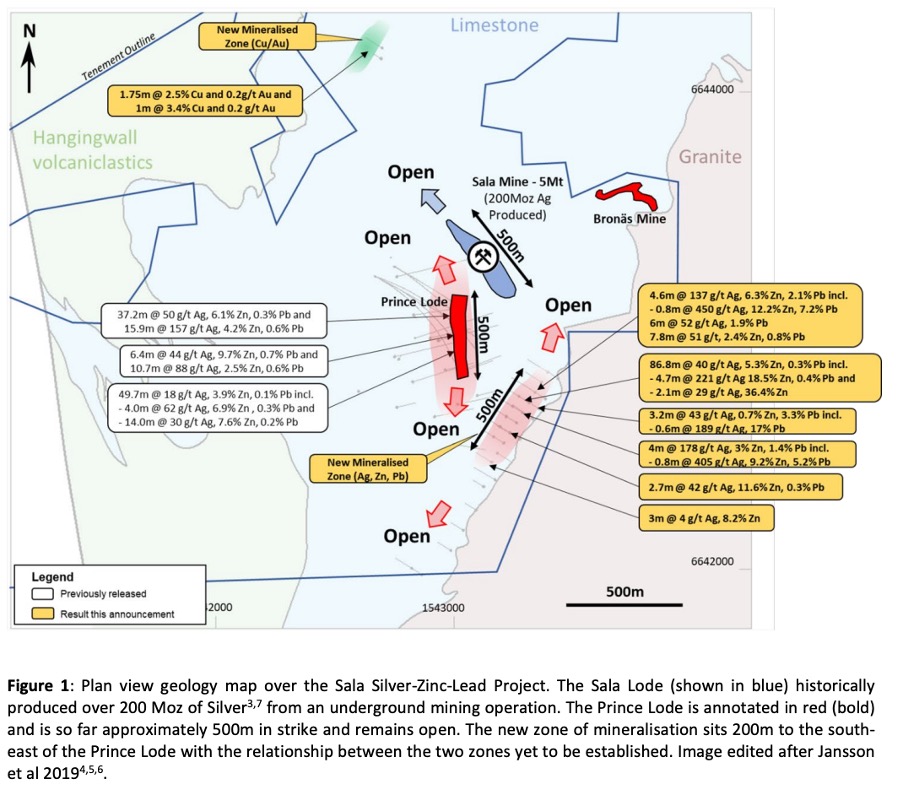
The multi-element explorer focused primarily on Sweden discovered 87 metres at 5.3% zinc and 40 g/t silver thanks to newly acquired shallow, historical drilling data on the property.
These results come soon after the Swedish Geological Society released never-before-seen historical assays on Sala, one of with includes a staggering 6,812 g/t silver, and prompted investors to drive shares up to as much as A$0.22, 70% higher than the previous close.
Other results also demonstrated high silver, zinc and lead intersections, as well as a pioneer copper and gold hit.
More broadly, though, they outline a new zone of mineralisation at Sala, just 200 metres southeast of the iconic Prince Lode structure.
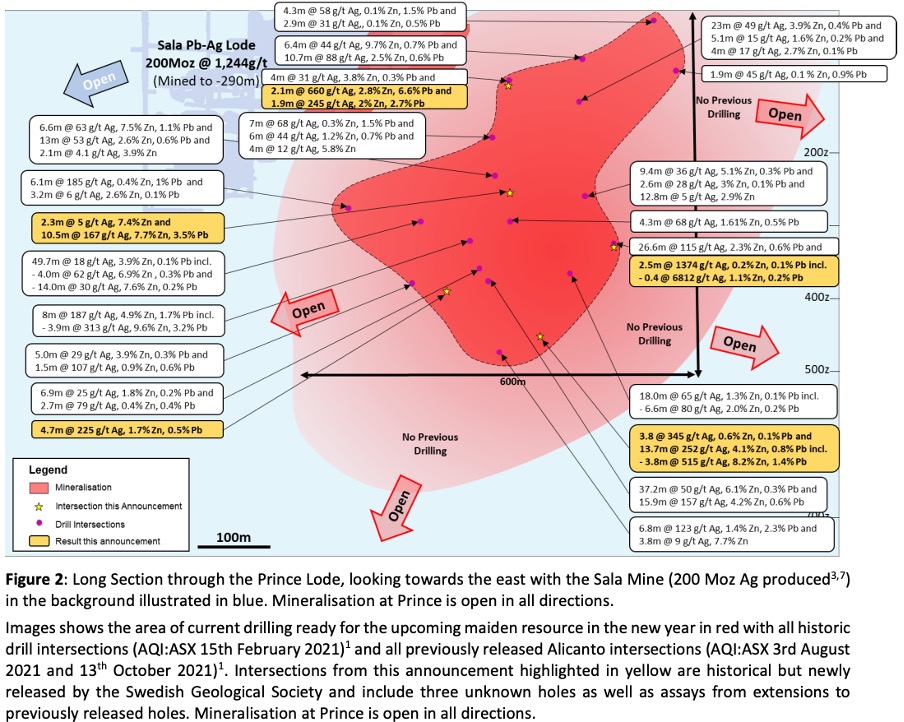
As drill rigs continue to procure modern results, the historical hits will underpin Alicanto’s maiden mineral resource estimate for Sala, which it hopes to release in the first quarter of 2022.
“World-class mineralised system”
Speaking to the results, Alicanto managing director Peter George said the historic assays were highly valuable to the company and its exploration strategy.
“The grades and widths of the mineralisation are spectacular and many of the intersections sit within the area we are currently targeting for our maiden JORC-compliant resource.
“Not only will this data save us 5,000 metres of drilling, time and money, but the strength of the results will also help underpin our resource estimate.
“When combined with the 200 million ounces of silver produced historically and the exceptional results we have been generating from our own drilling, it is clear that Sala is a world-class mineralised system with immense exploration upside.”
Not-so-new results
The erstwhile Sala assays came in after Alicanto secured historical drilling and assay data from as far back as the 1970s.
The results span 12,225 metres and 57 holes, representing the first time this historical data has been compiled by a single company.
Overall, the historical results prove up the known, high-grade mineralisation sighted across Alicanto’s maiden resource target area at Sala.
It also demonstrates the continuity of the mineralised system, which remains open in all directions.
Further, a new, previously unknown zone — hosting the 87-metre zinc and silver intersection — marks a big step forward at Sala, further increasing its exploration upside thanks to its proximity to the Prince Lode.
The results are in
Some of the best shallow, historical assays include:
- 86.8 metres at 5.3% zinc and 40 g/t silver, including 2.1 metres at 36.4% zinc;
- 0.8 metres at 450 g/t silver, 12.2% zinc and 7.2% lead; and
- 2.7 metres at 42 g/t silver, 11.6% zinc and 0.3% lead.
Other results from the newly available data also contain what Alicanto describes as “spectacular” massive sulphide intersections within its resource target area.
These include:
- 2.5 metres at 1,374 g/t silver, including 0.4 metres at 6,812 g/t silver;
- 10.5 metres at 167 g/t silver, 7.7% zinc and 3.5% lead;
- 2.1 metres at 660 g/t silver 2.8% zinc and 6.6% lead;
- 4.7 metres at 225 g/t silver, 1.7% zinc and 0.5% lead; and
- 3.8 metres at 515 g/t silver, 8.2% zinc and 1.4% lead.
Two holes that have intersected high-grade copper and gold have also been drilled 600 meters north-northwest of the historic Sala Silver Mine, marking the first time copper and gold has been recognised in the system.
Historical assays revealed a 1.75-metre intersection, grading at 2.5% copper and 0.2% gold.
More broadly, roughly half of the assays lie within Sala’s stage one resource target area, which is currently being drilled.
This means AQI can save money on its exploration campaign thanks to the historical assays.
The remaining historical drilling sits within the stage two target areas, giving this program a head start and demonstrating the considerable upside potential for Alicanto’s future programs.
What now?
Two diamond drill rigs are turning the soil at Sala, working to better understand its mineralisation and geology, while a third rig should hit the deck in the coming weeks.
Both the upcoming modern and historical results bode well for Alicanto’s upcoming mineral resource estimate, which is anticipated early next year.