
Marmota Ltd (ASX:MEU) has gone back to its uranium roots with the acquisition of the Junction Dam uranium tenement EL6530 in South Australia.
This tenement is immediately adjacent to $550 million capped Boss Energy’s Honeymoon tenement, which hosts the Honeymoon in-situ recovery (ISR) uranium mine.
The tenement was previously owned collectively by Teck Australia Pty Ltd, Eaglehawk Geological Consulting Pty Ltd and Variscan Mines Ltd (ASX:VAR) and MEU has granted a 5% net profits royalty on production from a future Uranium mine to the previous owners.
Ministerial consent to this transfer has already been granted.
In recent months, MEU has been focused on bringing its Aurora Tank gold discovery in South Australia to production.
However, the company never lost focus on its uranium strategy and today’s acquisition puts it firmly back in the uranium conversation at a time of increasing uranium prices and more positive sentiment.
Strategic uranium acquisition
MEU has form with the Junction Dam tenement.
In 2014, the company had spent $8 million in developing the uranium project and had earned 100% of the uranium rights on the Junction Dam tenement.
Then, the Fukushima power plant disaster hit: the price of uranium crashed along with confidence and work at Junction Dam stopped.
Fukushima drove down the price of uranium so heavily, that by 2016 it was just US$17 per pound. In 2008, it had peaked at $140 per pound and had maintained its position as a well performed commodity.
Fast forward to 2021 and the turnaround over the last few months in confidence in uranium and the subsequent price rise has been one of the bright sparks of the year and brought on a mini renaissance in uranium mining.
Sentiment has been further boosted by the awareness of uranium’s potential in addressing climate change, and the creation of the Sprott Physical Uranium Trust which has been buying spot uranium on market.
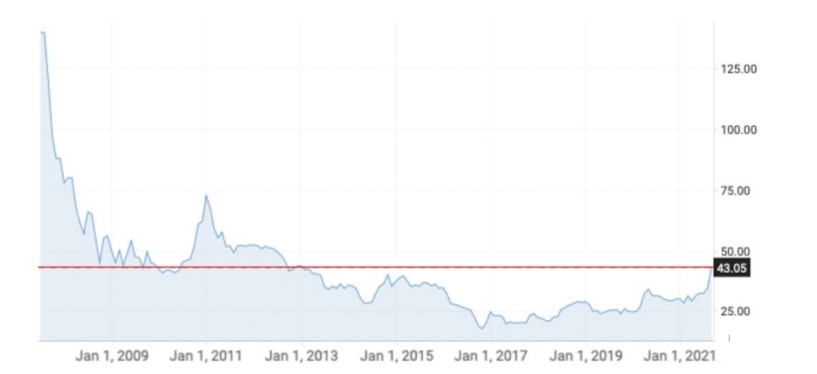
Uranium future prices (US$ per pound) (1 month average prices) have started rising and currently sit at around $59 per pound.
MEU is now looking to capitalise.
The Junction Dam tenement is strategically situated immediately adjacent to the Boss Energy Honeymoon uranium tenement and mine – one of just four permitted uranium mines in Australia (three of which are in South Australia).
Further to this, The Junction Dam tenement bookends both sides of the palaeochannel that runs through the Boss Honeymoon uranium plant:
- To the east, Marmota already has a substantial uranium JORC resource at Saffron; and
- To the north (adjacent to the Boss Jason’s uranium resource), Marmota has never tested an obvious high-priority target (previously cleared for drilling).
The map below highlights Junction Dam’s position in relation to Boss’s mine:
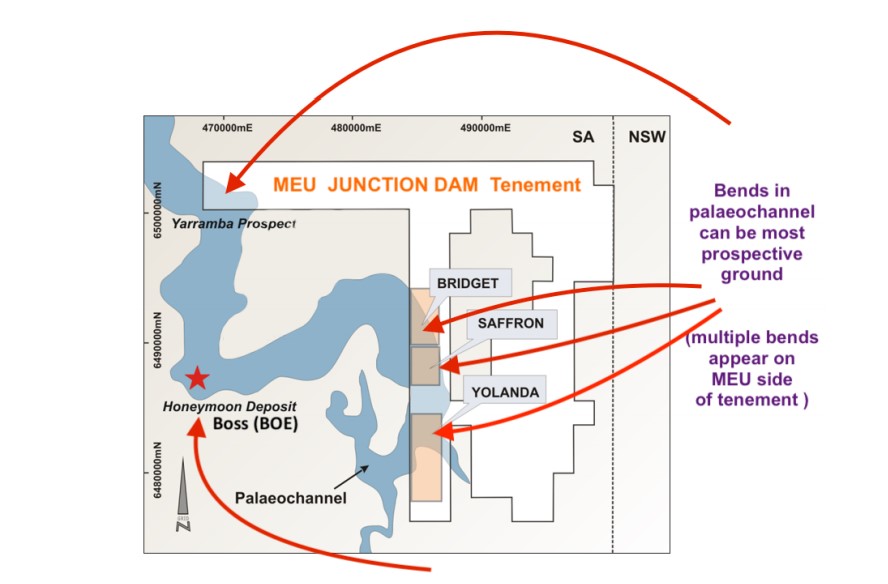
The Junction Dam uranium tenement (now 100% MEU) bookends both sides of the palaeochannel of the Boss Energy Ltd Honeymoon uranium plant.
Boss has been making solid progress towards bringing the Honeymoon plant back into operation, but according to its own feasibility studies, needs a larger resource to achieve economies of scale to lower cost of production and to extend mine life through development of satellite resources.
Existing resource could be increased
While Junction Dam may have been dormant for a while, it is worth remembering MEU’s Saffron deposit has a JORC inferred resource of 5.4 million pounds U3O8 and an overall exploration target of 22 to 33 million pounds U3O8 at approximately 400 to 700 ppm U3O8.
Uranium is currently around $59 per pound.
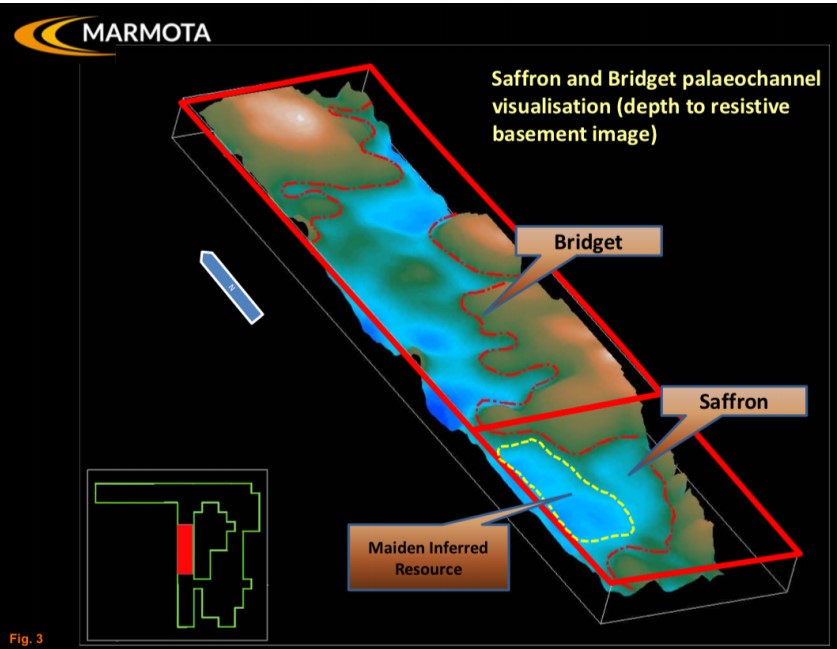
MEU's maiden inferred resource.
The latest tenement acquisition has the potential to increase the resource size with further drilling, noting that the northwest bend of the tenement adjacent to BOE’s Jason’s JORC resource has never been tested by MEU.
Notably, assay grades of up to 8,143ppm U3O8 at the Saffron deposit, start from the western tenement boundary and increase as they head east into MEUs Junction Dam tenement.
Confidence in uranium strategy
Back in June this year, executive chairman Dr Colin Rose demonstrated his faith in the MEU’s gold-copper-uranium strategy with the purchase of shares in an on-market transaction, acquiring almost 1.817 million shares.
That confidence remains, particularly with the latest acquisition.
“Marmota started life as a successful uranium explorer. The company is extremely fortunate to still have these assets, and I find it enormously exciting to be returning to our origins in the uranium space,” Rose said.
“The acquisition of the Junction Dam tenement makes Marmota, for the first time, masters of our own destiny in the uranium space. It is the first and critical step for the company to realise value of this outstanding asset for our shareholders.”