Galileo Mining Ltd (ASX:GAL) has identified five priority palladium-nickel drilling targets to be investigated in upcoming aircore drilling at the wholly-owned Norseman Project in the Kambalda nickel belt of Western Australia.
Surface soil sampling and prior drilling results were used to identify the targets, which boast palladium up to 0.81 g/t in soil sampling and nickel up to 0.25% in the defined target zones.
The program will involve 10,000 metres of aircore drilling scheduled to commence in mid to late October and expected to run for at least six weeks. It is designed to develop multiple prospects to prepare for follow-up RC and diamond drilling programs.
Strong indications
“Soil sampling and existing drill results have established the prospectivity of our ground at the Norseman project. Very few early-stage palladium prospects exist with such strong indications of mineralisation,” Galileo managing director Brad Underwood said.
“Our Norseman project with palladium-nickel-cobalt fits well with our Fraser Range nickel-copper-cobalt project. Both areas have excellent potential for new discoveries as we explore for the metals which will drive the global transition towards the use of cleaner technologies.
“Aircore drilling is scheduled to begin in approximately two weeks subject to the usual constraints of rig availability and weather conditions. We look forward to getting on the ground and starting our next phase of drill testing.”

Existing drilling results from Norseman have already demonstrated the high prospectivity of the ground position:
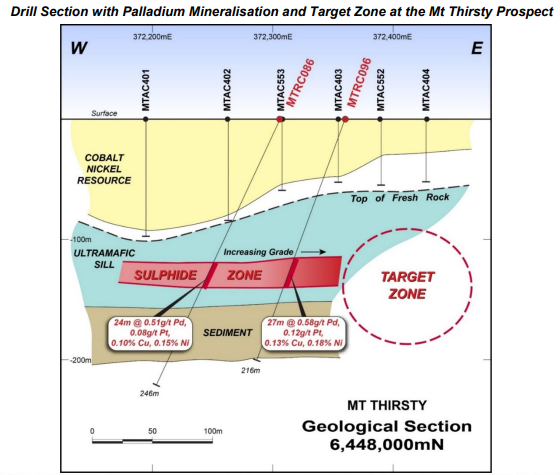
- 27 metres at 0.58 g/t palladium, 0.12 g/t platinum, 0.13 % copper & 0.18% nickel from 123 metres, including 3 metres at 1.1 g/t palladium, 0.19 g/t platinum, 0.23% copper & 0.26% nickel; and
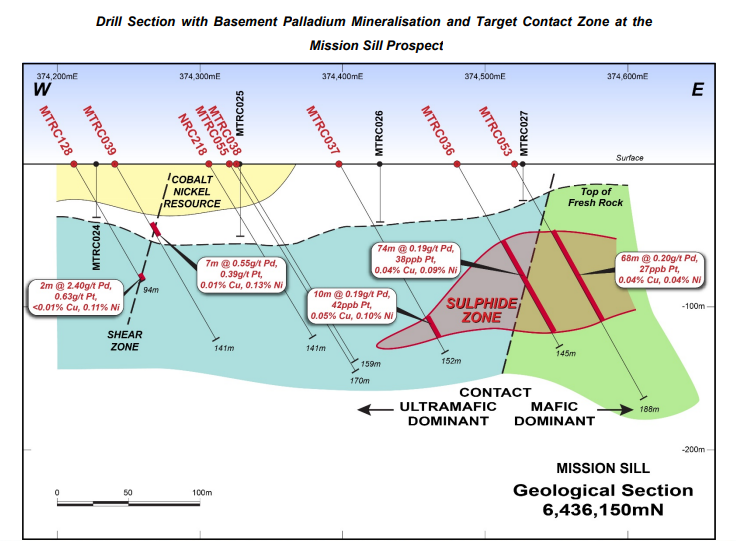
- 2 metres at 2.39 g/t palladium, 0.63 g/t platinum & 0.11% nickel from 92 metres, including 1-metre at 4.3 g/t palladium, 1.1 g/t platinum, & 0.12% nickel.
The company is targeting the exploration of large-scale magmatic nickel-copper deposits in the prolific Fraser Range and high-grade nickel-copper-cobalt resources at its Norseman Project.
Priority drill targets
GAL has identified five high priority targets it intends to investigate in this drilling campaign. A prospective contact zone has been identified perpendicular to the Jimberlana Dyke, a body of igneous rock composed of three vertical layers in a V-shaped cross-section.
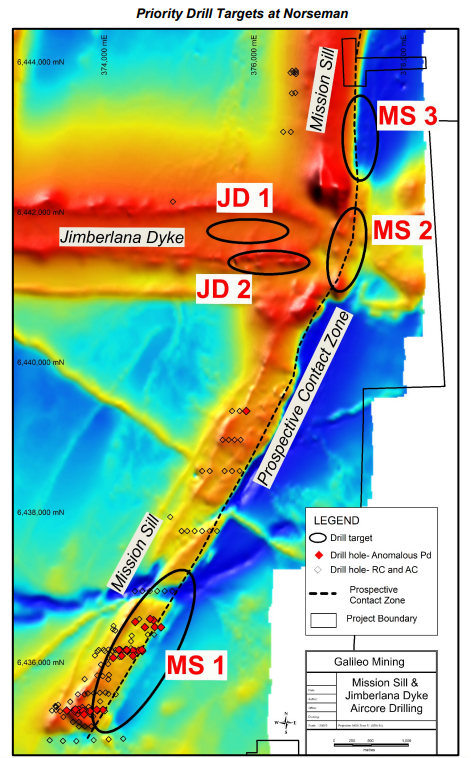
Target JD1: This drilling target occupies a central position in the Jimberlana Dyke. Geochemical anomalism is associated with the outcropping Jimberlana Dyke layered intrusion.
Prospective areas of the dyke to the north and south were unable to be tested with soil sampling due to a shallow cover of material. Aircore drilling will penetrate areas where effective soil sampling was prevented.
Maximum palladium value in soil sampling from this area was 0.81 g/t palladium while maximum nickel recorded was 0.2% nickel.
Target JD2: In a southern position where the Jimberlana Dyke breaches a north striking sulphidic sediment, this target occupies a lower layer of strata beneath the Mission Sill intrusion.
Maximum palladium value in soil sampling from this area was 0.32 g/t palladium and maximum nickel was 0.12% nickel.
Target MS1: The southern-most prospective target in this program, it occupies a contact zone between Mission Sill ultramafic (igneous rock containing less than 45% silica) and overlying gabbro (intrusive mafic rock with 45-55% silica).
Similar geological occurrences are known to produce mineralisation deposits such as the Lac des Iles mine in Canada and the Munni Munni deposit in Western Australia.
Previous RC drilling recorded wide intersections of palladium including 68 metres at 0.2 g/t palladium.
Target MS2: This target is a prospective contact zone between Mission Sill ultramafic and overlying gabbro where the sill has interacted with the east-west trending Jimberlana Dyke.
Maximum values up to 0.3 g/t palladium and 0.25% nickel in soil sampling from this location are associated with laterite-ironstone with prospective zones (as identified by magnetic interpretation) obscured by cover material.
Target MS3: Targeting the northern prospective contact zone between Mission Sill ultramafic and overlying gabbro, there are ultramafic rock outcrops in this area, but the prospective contact position is mostly under only shallow cover.
Maximum palladium value in soil sampling from this area was 0.16 g/t palladium and maximum nickel value was 0.19% nickel.
Future drilling programs
Galileo will follow up any anomalies identified during the aircore program with RC and diamond drilling as appropriate. This next drilling stage will also test down dip and along strike using existing mineralised drill results received from within the Norseman project area including palladium intersections such as:
- 27 metres at 0.58 g/t palladium, 0.12 g/t platinum, 0.13 % copper & 0.18% nickel, including 3 metres at 1.1 g/t palladium, 0.19 g/t platinum, 0.23% copper & 0.26% nickel; and
- 24 metres at 0.51 g/t palladium, 0.08 g/t platinum, 0.10 % copper & 0.15% nickel.
The grade of the sulphide zone at the Mt Thirsty prospect – just to the north of the Mission Sill zone, within the Norseman Galileo Project area – increases as it trends to the east, supporting the interpretation that increased mineralisation occurs within the target zone.
GAL is expected to design a drilling program to further explore this prospective area in the near future.