
Marvel Gold Ltd (ASX:MVL) is celebrating today after hitting the one-million-ounce mark in a mineral resource upgrade for the Tabakorole Gold Project in Mali, West Africa.
The precious metals explorer and project developer bolstered the resource’s contained gold ounces by 12% after an exploration campaign uncovered shallow, high-grade gold zones.
Interestingly, around 70% of Tabakorole’s mineral resource sits within 150 metres of the surface, meaning it could one day support a low-strip, open-pittable gold production scenario.
What’s more, the new zones of gold mineralisation at Tabakorole could demonstrate further growth, with more exploration required to realise their precious metal potential.
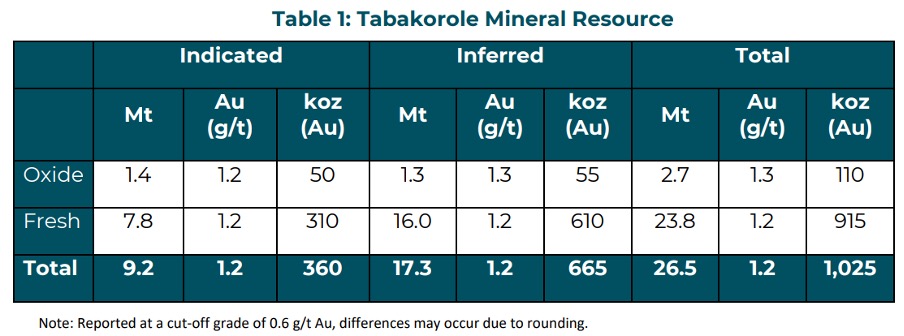
The West African gold play’s mineral resource estimate now stands at 26.5 million tonnes of resource, grading at 1.2 g/t gold for 1.025 million ounces.
Shaping up to meet development criteria
Speaking to the mineral resource upgrade, Marvel managing director Phil Hoskins described it as “a real exclamation point” on a solid year’s exploration at Mali.
“The deposit continues to demonstrate consistent thicknesses and grades over the 3.2-kilometre strike length and the discovery of two shallow, higher-grade zones of mineralisation adjacent to the existing deposit has provided some excellent low-strip starter pit options for a subsequent mining operation.
“With 70% of the resource in the top 150 metres and over one million ounces in total, combined with high metallurgical recoveries averaging 97%, Tabakorole is shaping up to meet the criteria for development.
“In the coming year, however, our focus will be on making additional discoveries across our 830-square-kilometre landholding — one of Mali’s largest — to complement our growing baseload resource.
“We will provide an update of the company’s specific plans later this month as we embark on our near-deposit exploration program.”

All eyes on the northwest
During this year’s field season, Marvel discovered a shallow, higher-grade gold zone to Tabakorole’s northwest.
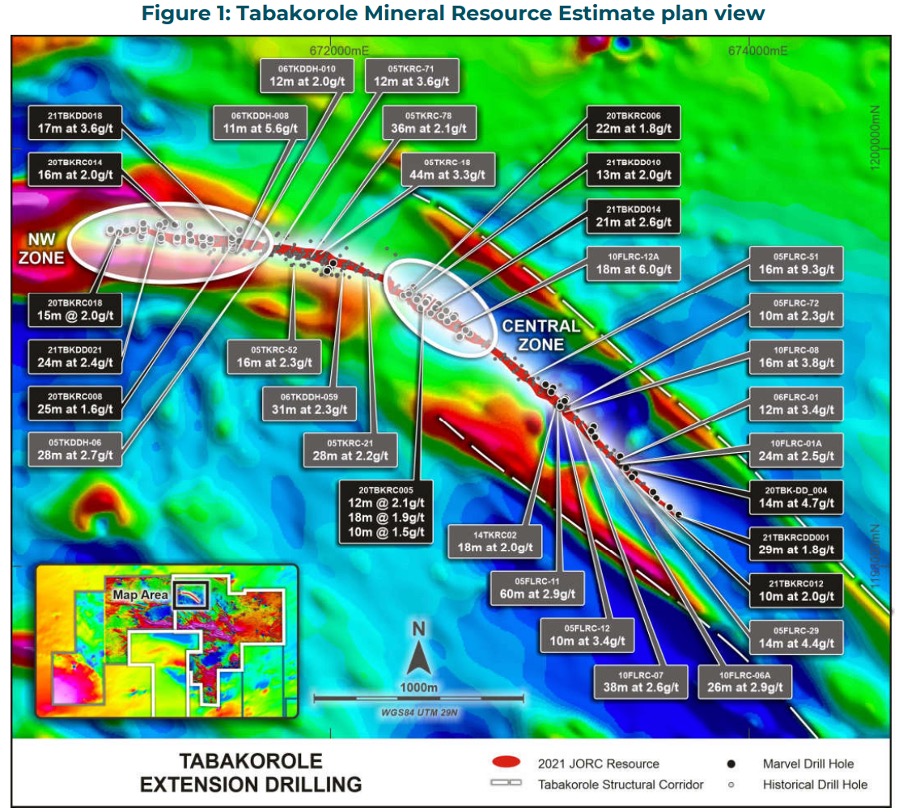
Some of the stronger gold hits from this region include:
- 24 metres at 2.4 g/t from 35 metres;
- 21 metres at 1.5 g/t from 26 metres; and
- 16 metres at 2.0 g/t from 75 metres.
This northwest zone was modelled in two lodes as part of the upgraded mineral resource, running for around 230 and 300 metres, respectively.
The shallow gold zone remains open between the two lodes and at depth because of limited drilling activity.
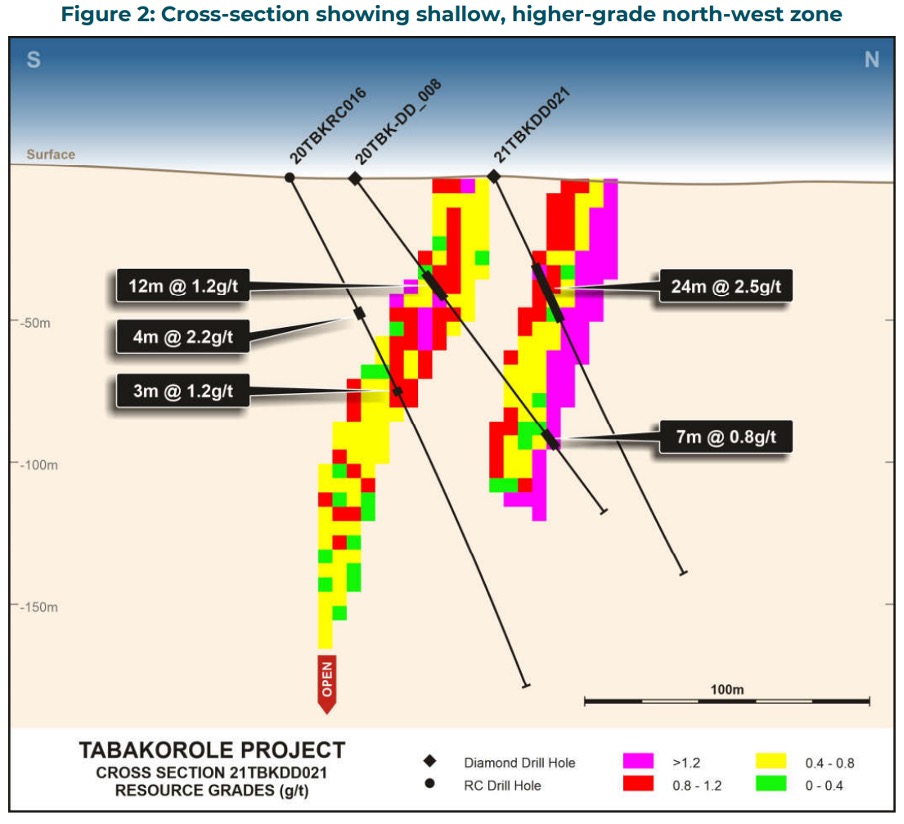
To mitigate this, Marvel intends to make the northwest zone a prime target in future exploration as it works to uncover more growth opportunities at Tabakorole.
Central portion holds promise
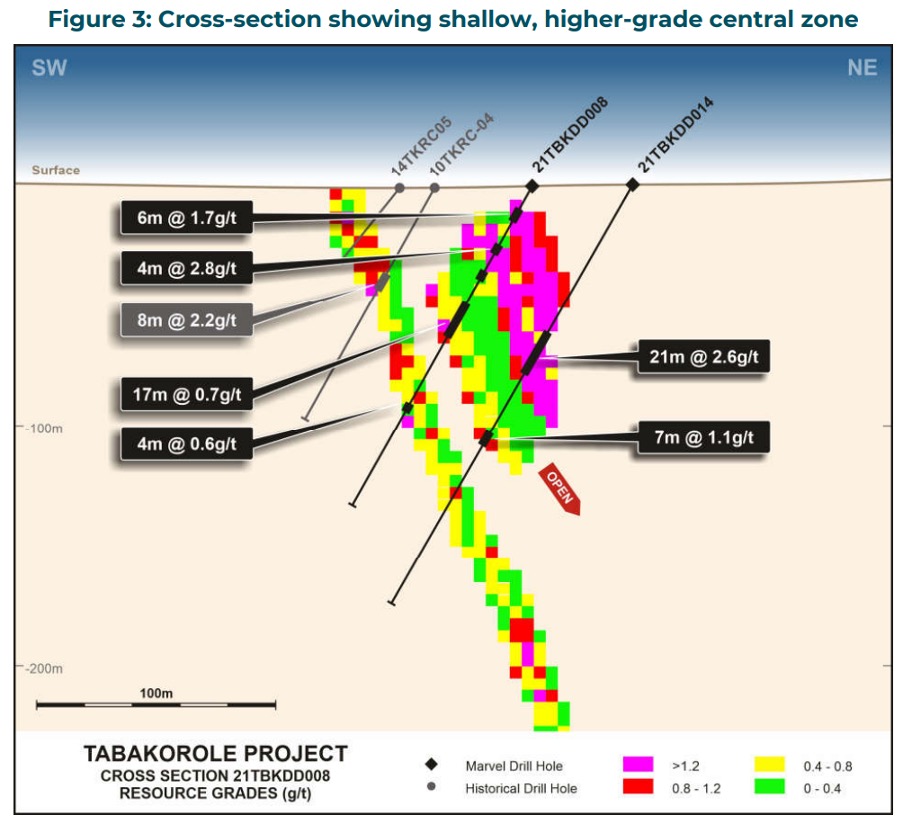
Moving closer to Tabakorole’s epicentre, Marvel also uncovered a shallow, higher-grade mineralisation zone.
Here, the gold explorer and project developer encountered:
- 21 metres at 2.6 g/t gold from 70 metres;
- 22 metres at 1.8 g/t from 77 metres; and
- 12 metres at 2 g/t from 18 metres and 18 metres at 1.9 g/t from 53 metres.
As with the northwest zone, this central target remains open at depth, while its strike potential needs further investigation.
What does the future hold?
Ultimately, these new gold zones represent near-deposit opportunities that could further bolster the Tabakorole mineral resource estimate.
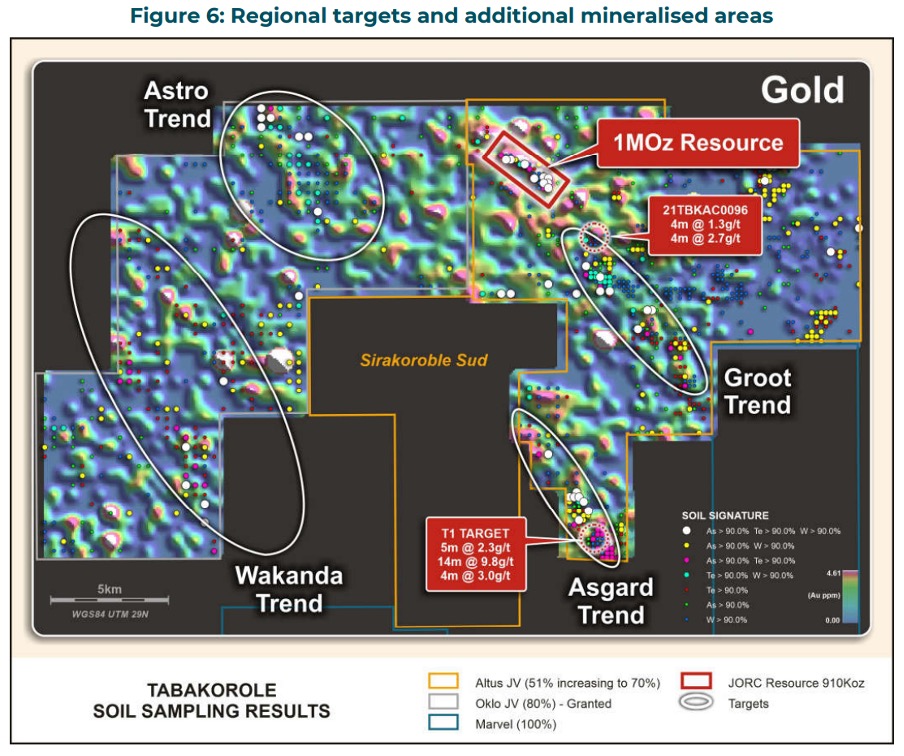
Outside of the current resource, drill targets are dotted within a 15-kilometre radius, underpinned by a multi-element soil anomalism — giving further hope to future upgrades.
With one of Mali’s largest land packages to explore, Marvel is determined to continue chasing gold opportunities in a bid to grow its mineral resource.
The gold explorer is already aware of several occurrences of confirmed gold mineralisation within 15 kilometres of the Tabakorole mineral resource.
One such occurrence is T1 target, which historically intersected 14 metres of gold at 9.8 g/t.
Another is Tabakorole’s Groot trend, where recent aircore drilling unearthed 4 metres at 1.3 g/t and 4 metres at 2.7 g/t and ended in mineralisation.
Later this month, Marvel will unveil its exploration plans for the upcoming field season, slated to kick off in quarter four.
Some of the key campaigns will include:
- An expansive drill program testing numerous high-conviction targets with coincident soil anomalism and structural support; and
- Continued collection of multielement soil geochemistry and, where appropriate, geophysics.