
As new energy vehicles (NEVs) come to the fore and the world scrambles to secure access to all-important battery metals, manganese is becoming a firm favourite among investors.
The silvery-grey ore is easy to procure, abundant in nature and cheap to produce, meaning it will play a key role in the batteries that power vehicles from household names like Tesla and Volkswagen.
While the electric vehicle market embarks on a meteoric rise, there are growing calls for Australia to develop its own battery material hubs, decreasing reliance on manufacturing powerhouses like China so it too can fuel the battery boom.
One company that’s answering the call is Element 25 Ltd (ASX:E25): a manganese stock with a keen interest in powering the batteries of the future with high-purity manganese products.
That vision underpins the company’s long-term strategy: evolving its cornerstone Butcherbird project —Australia’s largest onshore manganese hub — into a multifaceted resource for the electric vehicle age.
As part of our series on manganese investing, Proactive caught up with managing director Justin Brown to discuss the project’s potential, its four-stage development plan and E25’s place in the manganese market.
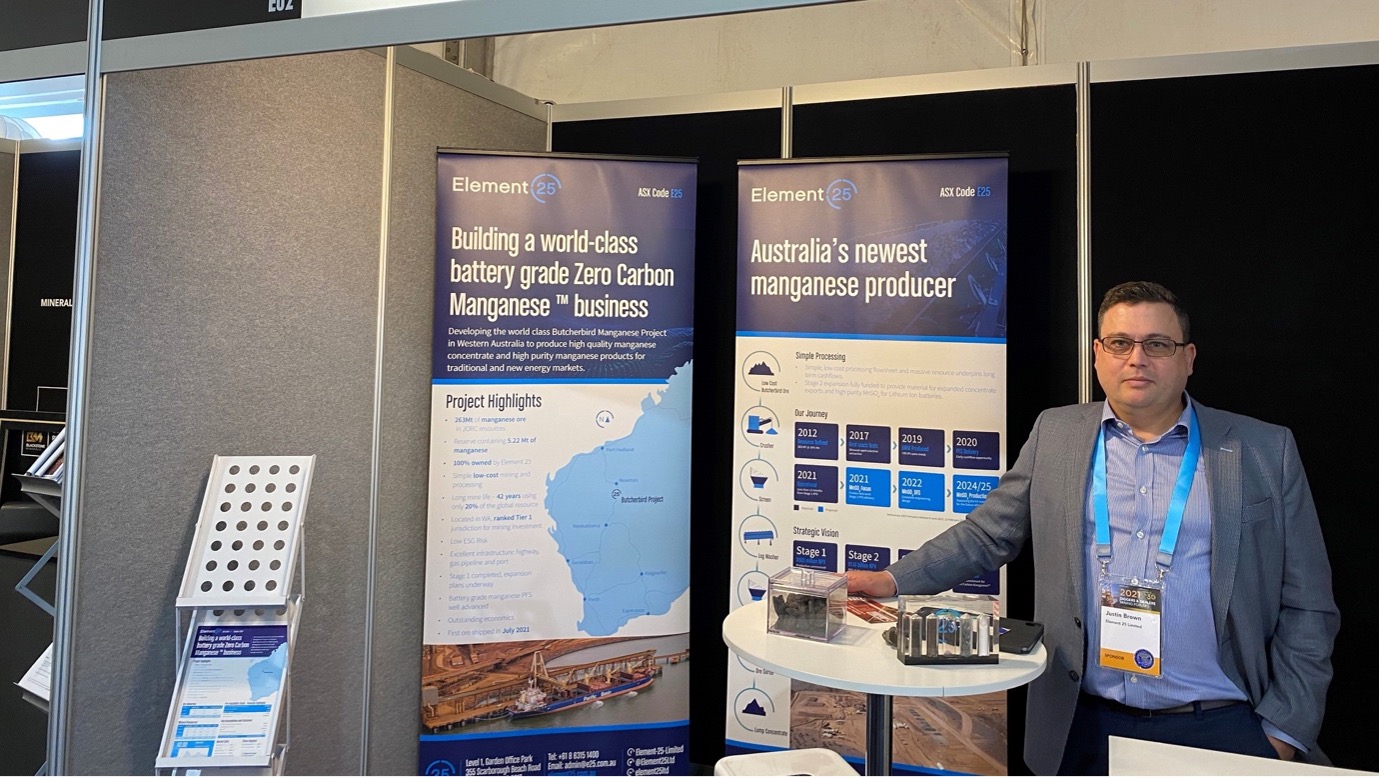
Managing director Justin Brown at Diggers and Dealers this year.
Developing Australia’s biggest manganese source
The mighty Butcherbird asset is primed to be a behemoth — not just here in Australia, but around the world.
The project’s sheer scale is one of its biggest drawcards, weighing in at 20.8 million tonnes of manganese resource inclusive of a 5.22-million-tonne reserve.

Butcherbird’s size naturally sets up a long-term mine life, establishing a resource that can be mined across generations.
Speaking to the asset’s potential, Brown said: “We've got a 42-year reserve, but we've also got inferred resources that go out to 200-plus years. So, there's obviously a big resource with lots of opportunity to expand.”
“Even if you put the most optimistic production forecasts on it, you're still going to see it there for many, many decades.
“It's not going to get mined out in my lifetime, that's for sure.”
So, what do you do with a resource of this scale when you’re a few years away from supplying the battery market with high-purity manganese?
If you’re E25, you establish a two-pronged approach — one that begins with feeding the manganese-hungry steel market and launches you straight to producer status.
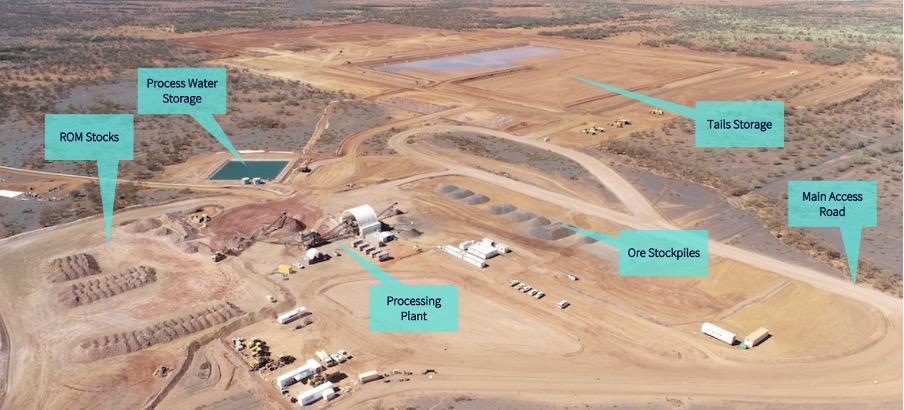
Introducing E25’s Butcherbird asset: a multi-stage manganese project.
Steelmaking at the starting gun
Let’s face it: steel remains a crucial element of the manganese story.
This burgeoning industry currently accounts for roughly 90% of annual manganese consumption, meaning there’s ample opportunity to export manganese that might not be up to scratch for the battery world as a steelmaking feedstock.
It’s this idea that informs the first stage of E25’s Butcherbird strategy.
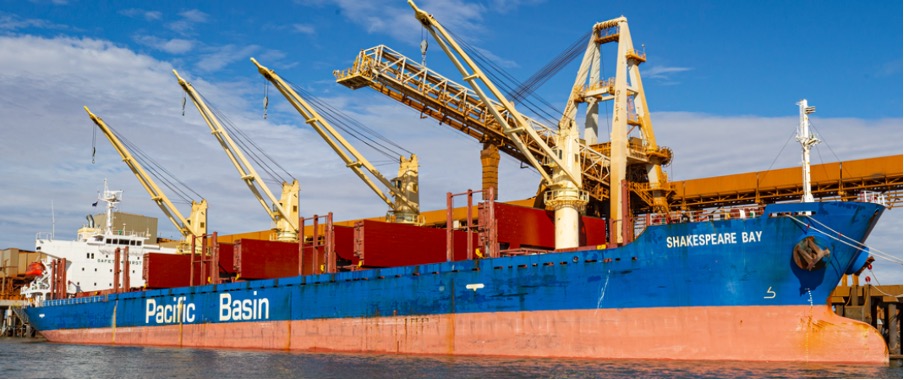
Manganese ore from Butcherbird sets sail, establishing Element 25 as a producer.
Element 25 celebrated its maiden manganese shipment in July, sending out 27,000 tonnes of low-impurity manganese concentrate from Port Hedland to its offtake partner.
Since then, a second shipment has also made its way out from the port.
At the time, Brown called it: “a historic day for all the people who have worked tirelessly to bring this project to life.”
“I look at that so far as the pinnacle of what we’ve reached as a company,” he told Proactive.
But this is just a small chapter in Butcherbird’s story: Brown knows there’s a future in long-life batteries for the project’s manganese.
“There’s the new market, which we really see as the sexy part [of Butcherbird],” he said.
“The battery industry is where we want to put our efforts.”
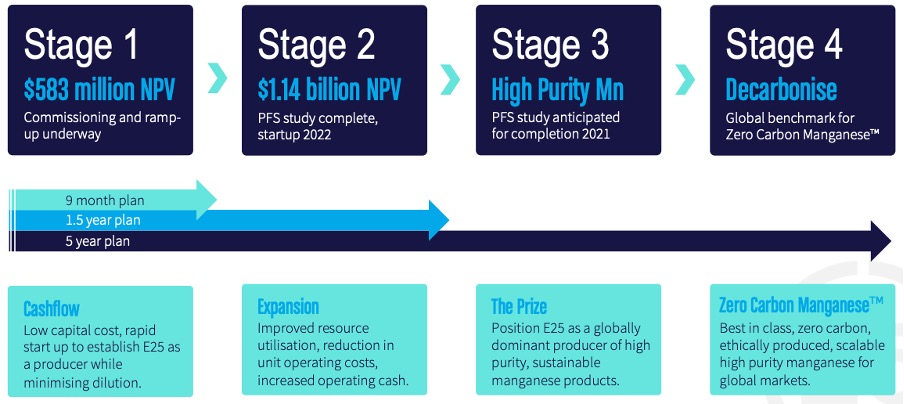
Snapshot of the multi-stage development strategy tied to Butcherbird.
Enter stage two: becoming battery-ready
The next phase of Element 25’s strategy involves readying its business to provide high-purity manganese that can be used in electric vehicles.
When you look at that market’s projections, it’s clear why this is the long-term vision.
By 2040, 58% of new vehicles will either be electric or hybrid models, while passenger sales are piqued to reach 54 million that same year.
This, in turn, is fuelling manganese’s popularity — commodities analyst CPM Group thinks we could see demand from the battery market grow 80 times larger between 2017 and 2037.
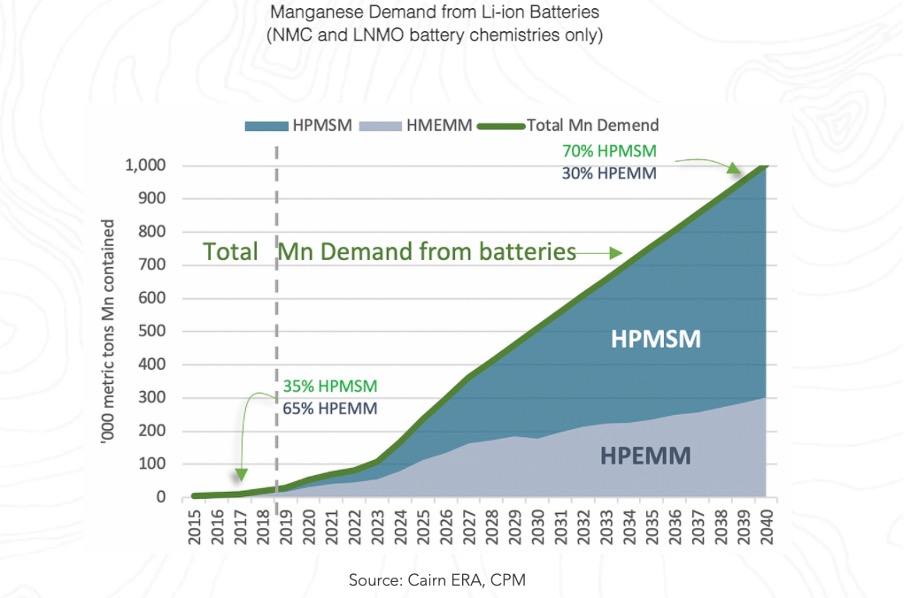
That’s because manganese is the cheapest and most abundant component of nickel-manganese-cobalt cathodes, which are fast becoming a firm favourite for electric vehicle manufacturers.
To feed this market, Element 25 is on track to provide high-purity manganese products to convert into the all-important manganese sulphate by 2024/25.
So, where does the manganese concentrate angle fit in with the stage two plans?
“The concentrate will probably always be part of the business, but we'll convert as much of that as we can to the high-purity battery-grade products,” Brown said.
“But we don’t how long it will take before all of that 100% is converted. It's a bit unknown — it depends on quickly demand grows for the chemical-grade stuff.”
“The future has always been electric”
There’s work to do to reach battery-grade manganese sulphate production.
A pre-feasibility study (PFS), developed in 2020, established a roadmap for Butcherbird’s future and kicked off the E25’s four-stage strategy.
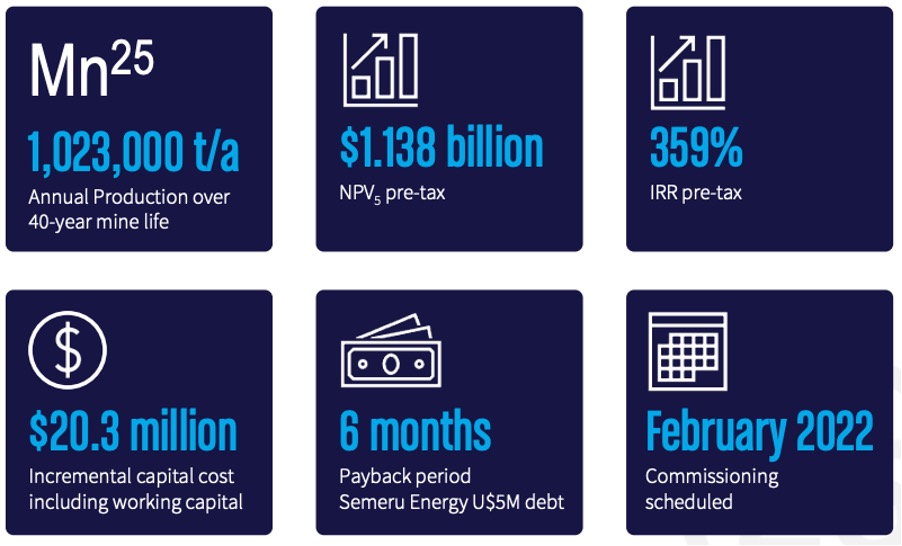
Some of the key metrics tied to Butcherbird’s stage two operation.
Less than a year later, Butcherbird came online as a low-impurity manganese producer and Element 25 proceeded with the next stage of key studies.
This includes a stage two expansion of the concentrate business followed by a stage 3 PFS into high purity manganese conversion, slated for completion in the first half of 2022, with a definitive feasibility study to be completed later that year.
As it irons out the move to battery-grade production, E25 is also working on its flowsheet — the unique process it will use to prepare Butcherbird ore for the battery world.
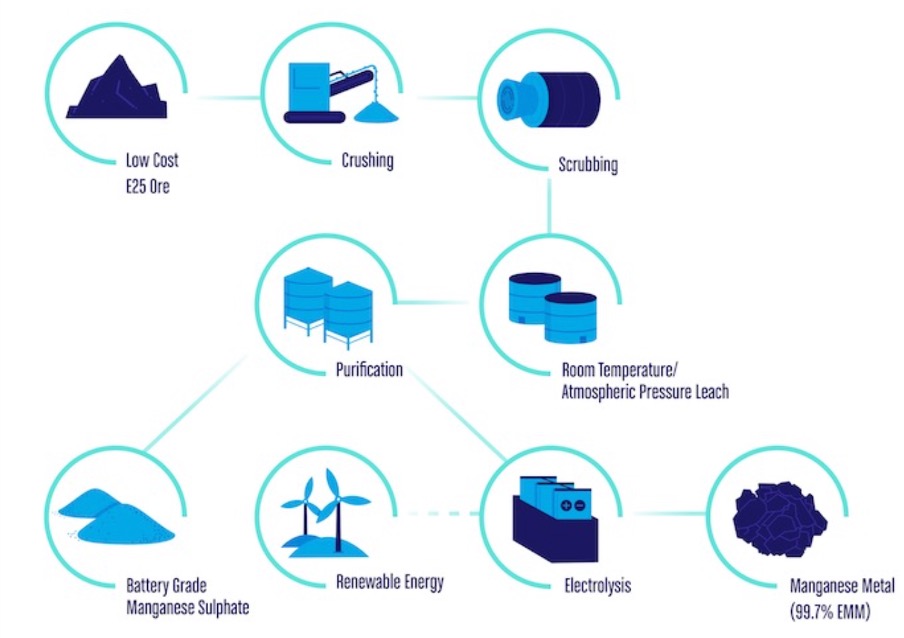
Earlier this month, the company secured its first patent for that flowsheet —an important step towards battery-grade production.

Beyond stage two, E25 will move into high-purity manganese production, generating material that will serve the growing battery markets.
Accelerating towards Zero Carbon Manganese™
E25’s manganese will help power batteries of the future. So, zero-carbon production is a big part of its long-term strategy.
The manganese stock is assessing how it can harness renewable energy like wind and solar power to energise its mine and bulk haulage fleet.
This is the company’s stage four mission: setting a global benchmark for high-purity manganese production by decarbonising its operations.
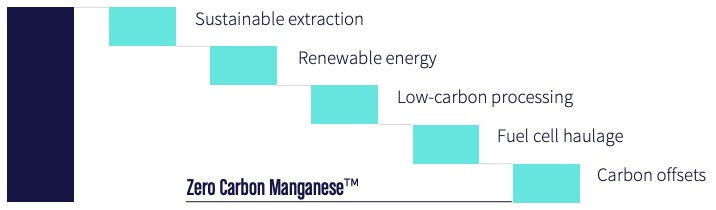
The pathway to zero-carbon manganese.
“We're moving to a resource landscape that has to be low carbon and responsible and ethical,” Brown said of the initiative.
“It's not what mining was like 50 years ago.”
How is the strategy sitting with investors?
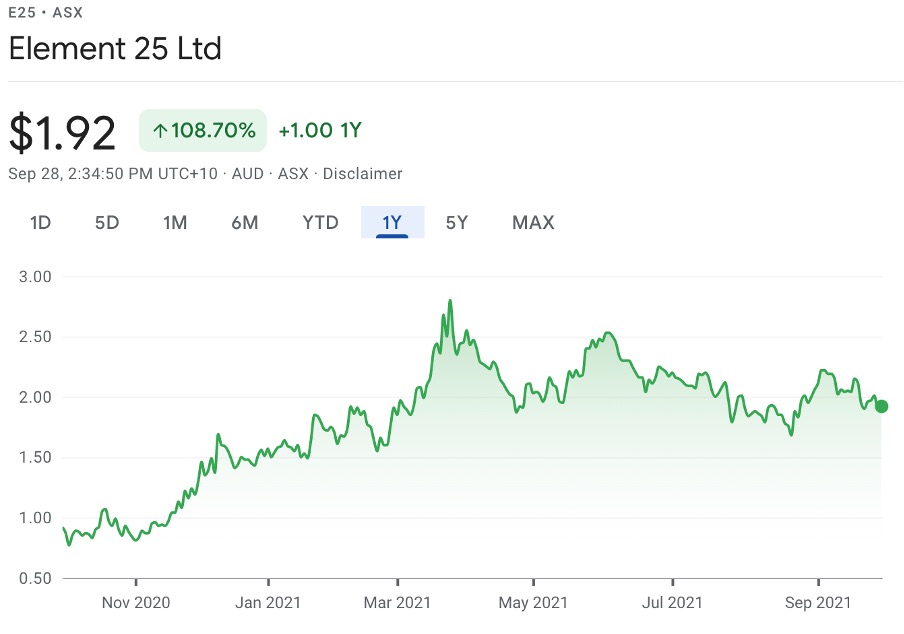
If you want to track how the markets have reacted to Element 25’s progress, a good indication is its performance on the ASX.
Over the course of a year, the manganese stock has seen a 170% increase in its pricing to see shares change hands at just under $2.00 apiece — a far cry from the 16.5 cents they were worth four years ago.
E25’s MD believes it’s the long-term potential that’s drawing investors to the story.
“My current perspective is whether your investment horizon is two, five or 10 years, this business offers an opportunity for you to get long-term growth as an investor.”
Element 25 shares are currently trading for $1.92 a pop in a $285 million market cap.
The road ahead
With demand for this battery metal showing no signs of slowing down, emerging manganese resources with room for growth are more important than ever.
For Justin Brown, he sees his company as a key player in an evolving manganese supply chain — one that will help power the leaner, greener vehicles of the future.
The vision from here is clear: continue advancing along the four-stage strategy that will transform E25 from manganese project developer to creating best-in-class, zero-carbon, high-purity manganese.
Brown concluded: “We’re moving into a really interesting part of the world where the electrification of all things — not just EVs — is going to be a big feature moving forward.
“[Butcherbird] has such a potential long-term growth curve — it’s second-to-none.”