
Three emerging companies in the lifescience field and with rapidly developing therapeutic portfolios in cancer, fibrosis, mental health and neurological treatments will present their investment cases during the Proactive Lifesciences Webinar next Tuesday.
The three Australian-based companies - Amplia Therapeutics Ltd (ASX:ATX), Emyria Ltd (ASX:EMD) and Patrys Ltd (ASX:PAB) - are developing novel treatments and proprietary drug therapies to tackle some of the most virulent cancers and illnesses
Amplia is tackling solid cancers like brain and pancreatic cancer and fibrotic diseases like cystic and idiopathic pulmonary fibrosis, while Emyria is predominantly targeting psychedelic-assisted therapies and neurological disorders such as Parkinson’s and Post-Traumatic Stress Disorder (PTSD) and Patrys has focused on its novel antibody cancer treatments.
The webinar will be on Tuesday, September 28, 2021, at 12pm AEST (10am WA time) and registrations can be made here.
Amplia Therapeutics
CEO John Lambert will present Amplia Therapeutics investment case focused on solid cancer and fibrosis treatments through their proprietary, orally available, small molecule Focal Adhesion Kinase (FAK) inhibitors, AMP945 and AMP886.
➢ AMP945: a highly potent and selective inhibitor of FAK; and
➢ AMP886: a highly potent inhibitor of FAK that also inhibits two other validated disease targets (VEGFR3 and FLT3).
Quickly graduating its ‘pre-clinical stage’, Amplia Therapeutics has become an established drug development company, with a robust pipeline of therapeutic drugs developed by Cancer Therapeutics CRC (CTx), an Australian industry and academic collaboration that included leading cancer and medicinal chemistry researchers at Australia’s top cancer research institutes.
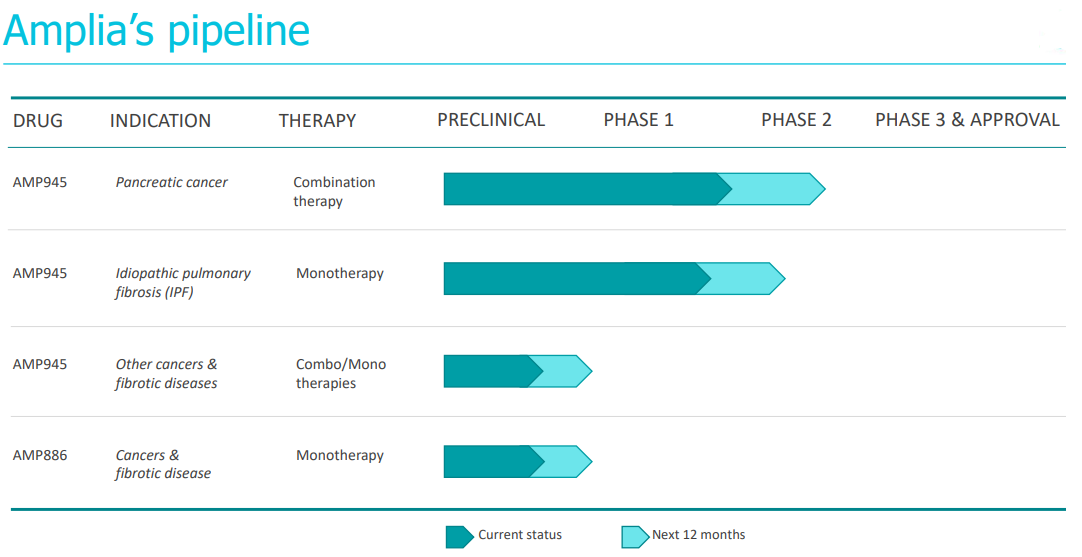
Amplia has completed a Phase 1 clinical trial of AMP945 in healthy volunteers, with positive data from the trial opening the way to Phase 2 trials of AMP945 in patients with pancreatic cancer and idiopathic pulmonary fibrosis.
The Phase 2 trial for pulmonary fibrosis is due to commence recruitment in the third quarter of 2022, while the Phase 2 pancreatic treatment trial is slated to begin recruitment in the first quarter of 2022.
Emyria Ltd (ASX:EMD)
Michael Winlo, managing director at Emyria, will present on the company’s data-backed drug development program, informed by insights generated from extensive analysis of Emyria Data – deep, ethically sourced clinical evidence gathered from patients across independent clinical trials.
Emyria is pioneering new ways to collect, standardise and analyse dynamic patient data and clinical evidence, but it's also engaged in developing new care models for patients with unmet needs using novel treatments that bring together patients, clinicians, researchers, and medical innovators.
A recent study by the company into MDMA and MDMA-analogue UWA-101 produced promising results in the treatment of Parkinson’s disease. Both MDMA and UWA-101 extend active duration of L-DOPA, a common treatment for Parkinson’s, and reduce the proportion of time associated with L-DOPA induced dyskinesia.
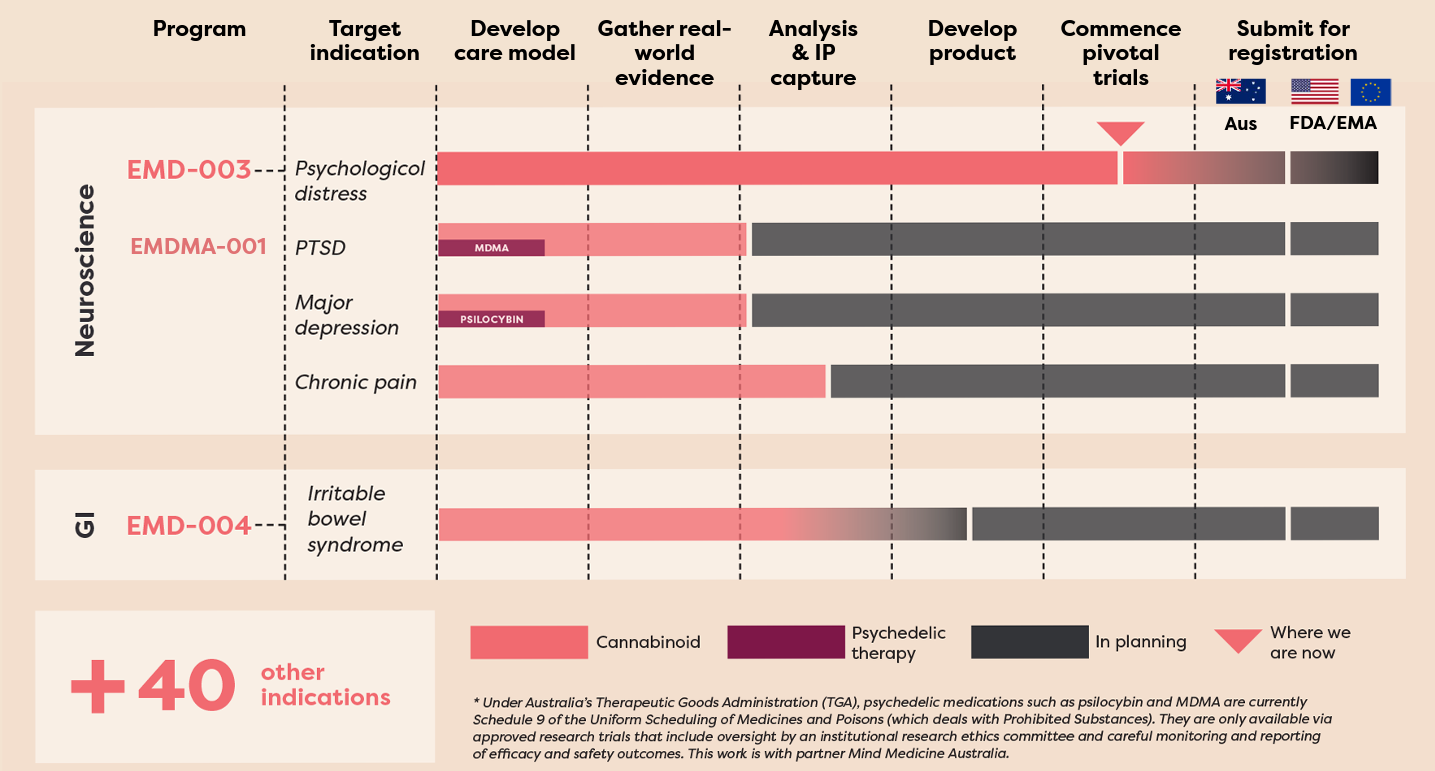
Progress is being made toward Emyria’s first Schedule 3, over-the-counter cannabinoid products, and an MDMA-assisted therapy for PTSD. The company recently engaged Altasciences to deliver a range of proprietary, synthetic cannabinoid-based capsules in the US and Canada.
The company has already registered EMD-003 and EMD-004, cannabinoid medicines that target mental health and irritable bowel syndrome respectively.
Patrys Ltd (ASX:PAB)
CEO James Campbell will present on Patrys’ antibody therapies for the treatment of cancer. In 2016 the company secured an exclusive, worldwide licence from Yale University for the use of deoxyman antibodies as human therapeutic agents for treatment and management of cancer.
Patrys’ deoxymab platform was originally isolated from a mouse model of the human autoimmune disease systemic lupus erythematosus (SLE), producing the antibody called 3E10.
This has biological properties not normally found in human antibodies, including cancer targeting, blood brain barrier penetration, cell penetration and an inhibitive effect on DNA damage repair.
These unusual properties have made a range of therapeutic approaches to the treatment of cancer possible through existing, small molecule or full antibody therapies.
Two pre-clinical drug candidates developed from 3E10, PAB-DX1 and nanoparticle version PAB-DX1-NP, have been proven to effectively target and kill human glioblastoma cancer cells in vitro. Patrys has previously shown that both drugs can cross the blood brain barrier in a mouse model of glioblastoma.
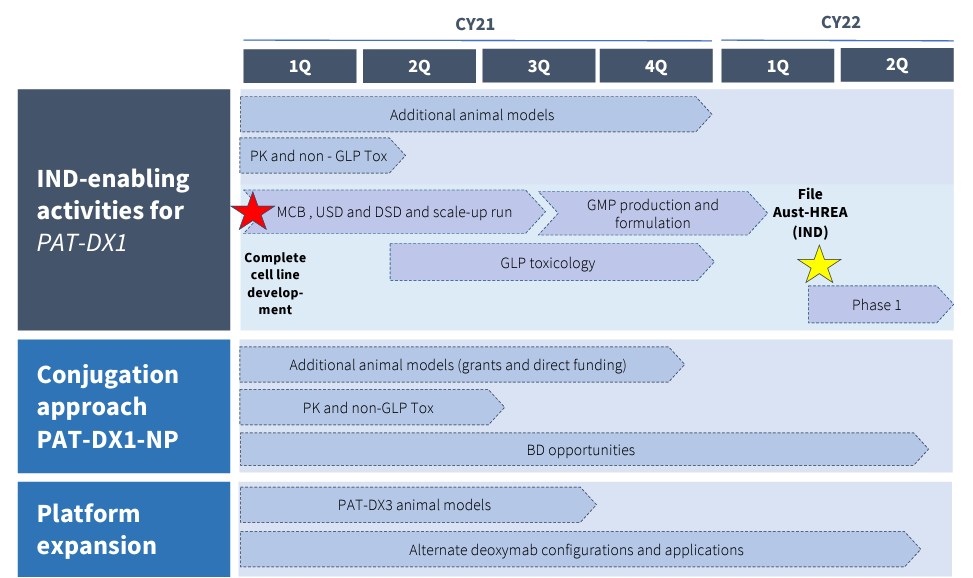
In tumour spheres developed from human glioblastoma cancer stem cells (CSCs), PAT-DX1-NP was shown to penetrate the centre of tumour spheres, targeting cells inside as well as surface cells. Unconjugated Pat-DX1 was also proven to reduce the growth and viability of CSC tumour spheres.
Webinar details
When: Tuesday, September 28, 2021
Time: 12pm Sydney time, 10am WA time.
Focus: Lifesciences
Register: https://event.webinarjam.com/register/91/gqy97hzy
Questions: Email John Phillips - john.phillips@proactiveinvestors.com