
Cobalt Blue Holdings Ltd (ASX:COB, OTC:CBBHF) has adopted a global framework to help assess and implement best-practice standards when it comes to cobalt production.
The Cobalt Institute’s Responsible Assessment Framework (CIRAF), a management tool that aligns with the leading global standard on responsible mineral supply chains, will become part of the ASX-lister’s assessment methodology.
Essentially, the litmus test helps cobalt producers and buyers assess, mitigate and report on the responsible production and sourcing risks inherent within their cobalt operations and supply chain.
Cobalt Blue CEO Joe Kadaverak said: “COB believes in ethical and sustainable cobalt — we look forward to progressively developing our environmental, social and governance (ESG) credentials as the Broken Hill Cobalt Project and other COB projects progress.”

Why is cobalt important?
Cobalt remains an integral part of battery chemistry, a metal required to power the electric vehicles (EV) of the future.
Essentially, it’s integral to a battery’s longevity, thermal stability, recycling potential and energy density.
A large majority of cobalt comes from the Democratic Republic of Congo (DRC), where production in some areas has been linked to dangerous working practices, while around 90% of the metal is generated as a by-product at other base metal mines like copper and nickel.
As leaner, greener modes of transport gain further popularity — and manufacturing ramps up — demand for cobalt is on the rise.
A 2018 report from McKinsey discussing cobalt and fellow battery metal lithium indicated demand for the battery metal could double between 2017 and 2025.
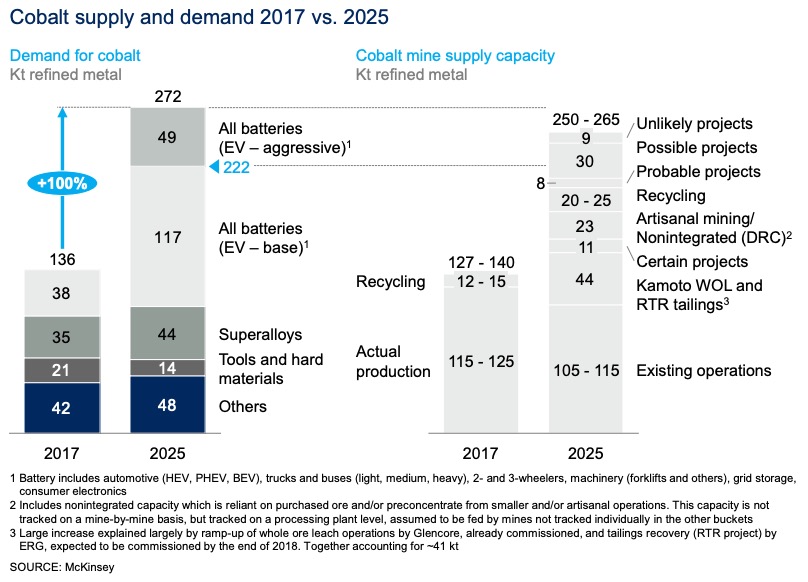
The report stated: “Given its increasing supply exposure in the DRC and the speed and trajectory of EV adoption and battery chemistries, we believe cobalt prices will continue to see high volatility due to supply uncertainties and lack of transparency rather than a fundamental resource scarcity.”
As a result, cobalt producers agree it’s important to improve transparency
Adopting the CIRAF
Established in 2019, the Cobalt Institute’s Responsible Assessment Framework helps participants in the cobalt supply chain demonstrate they are aligned with global best practice on responsible cobalt production and sourcing.
The CIRAF also enables a more coherent and consistent approach to cobalt due diligence and reporting by the cobalt industry.
It covers the full spectrum of responsible mining focus areas, including environmental stewardship, occupational health and safety and human rights, as well as providing a tool for external stakeholders to follow progress across these priority issue areas.
Specifically, Cobalt Institute’s management framework for risk assessment and mitigation teams with the leading global standard on responsible mineral supply chains, known as the OECD Due Diligence Guidance for Responsible Supply Chains of Minerals from Conflict-Affected and High-Risk Areas.
In today’s ASX announcement, Cobalt Blue confirmed it aspires to be one of the world's largest producers of cobalt for battery production.
“We operate in Australia in accordance with strict regulatory requirements and recognise the importance of transparently communicating the responsible exploration, mining, refining and reprocessing of cobalt," the company stated.
“The CIRAF provides a robust and well-accepted methodology to assess our operations performance or risks and a mechanism for sharing our assessment with all stakeholders."
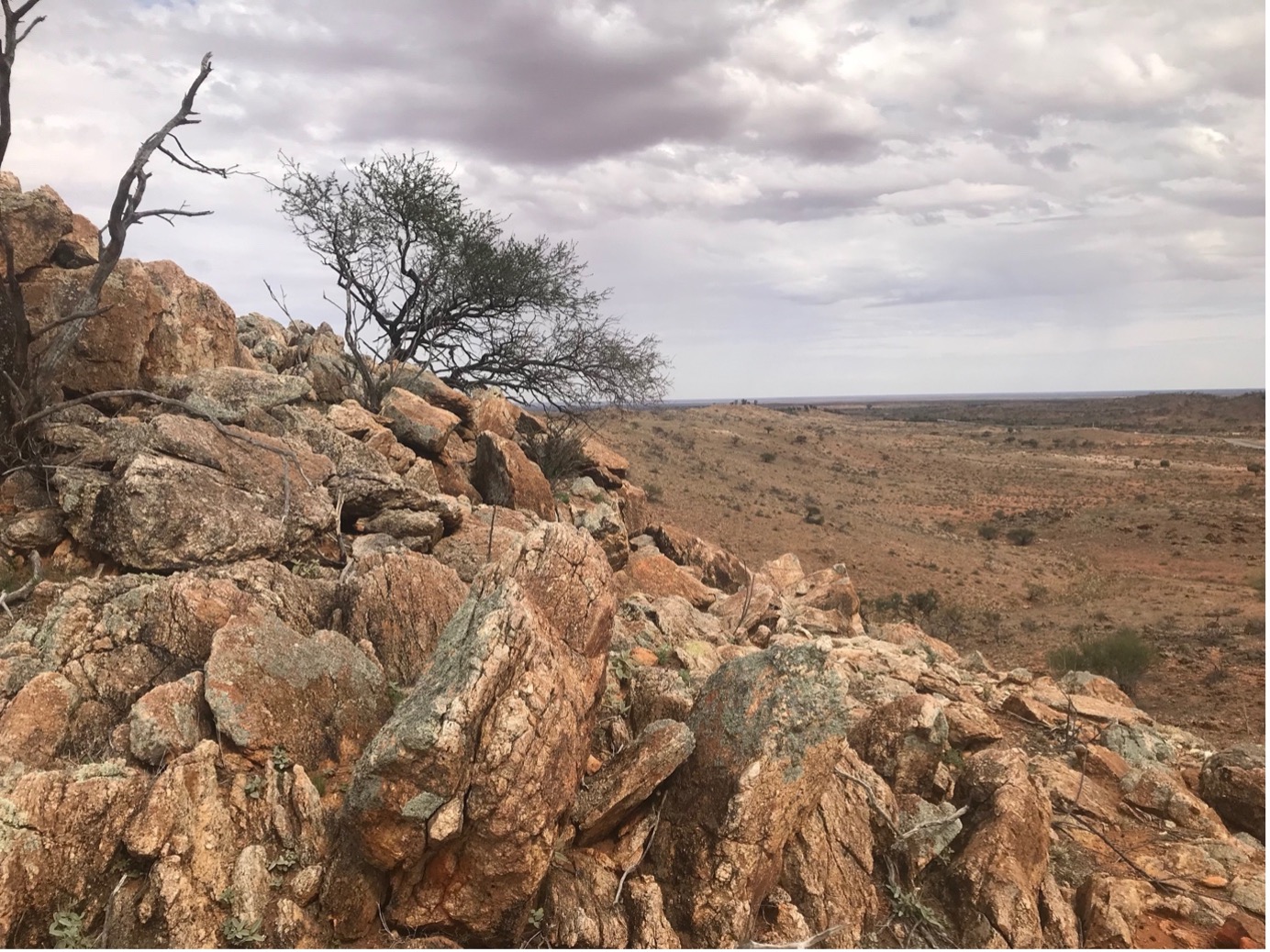
The Broken Hill Cobalt Project.
Cobalt Blue stated: “COB is committed to working as part of the global cobalt industry and other stakeholders to further develop a robust framework for the delivery of sustainable and ethically sourced cobalt.
“Our efforts will support the decarbonisation of the global economy and provide an enduring legacy within the communities in which we operate.
“We look forward to producing cobalt in a responsible and transparent manner that is consistent with our corporate values of honesty, integrity, fairness and respect.
Major cobalt player’s ties to framework
One of the largest cobalt producers in the world was involved with setting up the global framework that’s become part of COB’s assessment methodology.
Glencore PLC (LSE:GLEN) was one of the first cobalt producers to throw down the gauntlet, working with the Cobalt Institute to develop the global production and supply chain framework.
Speaking to its own assessment framework, Glencore’s head cobalt trader David Brocas said the company was seeing efforts converge to address some of the risks tied to artisanal and small scale cobalt miners (ASM) and making sure the battery metal is responsibly produced.
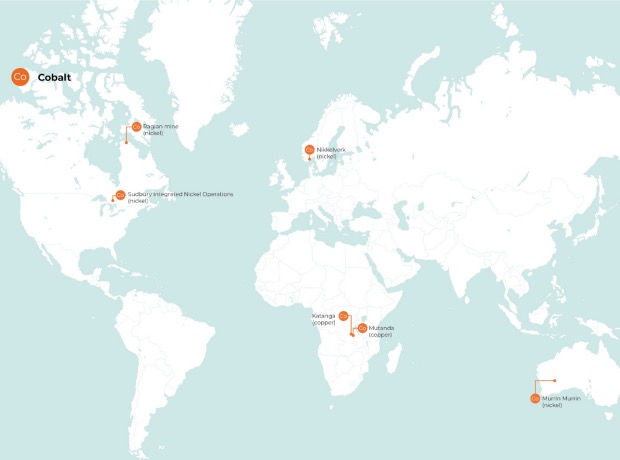
Locations where Glencore mines cobalt.
“The opportunity we have is to use this momentum to go beyond risk mitigation and actually make the cobalt sector a catalyst for the economic and social development of communities in the DRC and the entire region.
“We know this is an ambitious vision and it will not be possible without strong partnerships: the Cobalt Institute, which represents approximately 70% of cobalt produced worldwide, plays a key role in enabling the transparency and collaboration that are needed for this.
“CI’s Cobalt Industry Responsible Assessment Framework was the first tool to articulate a joint approach for defining, managing and reporting on the responsible production of cobalt.
“But this is just the start. We are fully committed to working with CI to evolve this tool and develop other projects which will support our vision of a responsible supply chain that is making a lasting contribution to decarbonisation on a global scale”.
Cobalt Blue’s portfolio
As it adopts the global framework for its own cobalt interests, COB is exploring a battery metal play right here in Australia.
Currently, the company’s focus is the cornerstone Broken Hill Cobalt Project in far western New South Wales.
What sets this project apart is its sheer size: if the Broken Hill asset was a country, it would rank fifth for cobalt production.
Because of this, the large-scale operation is piqued to emerge as one of the biggest cobalt producers in the world.
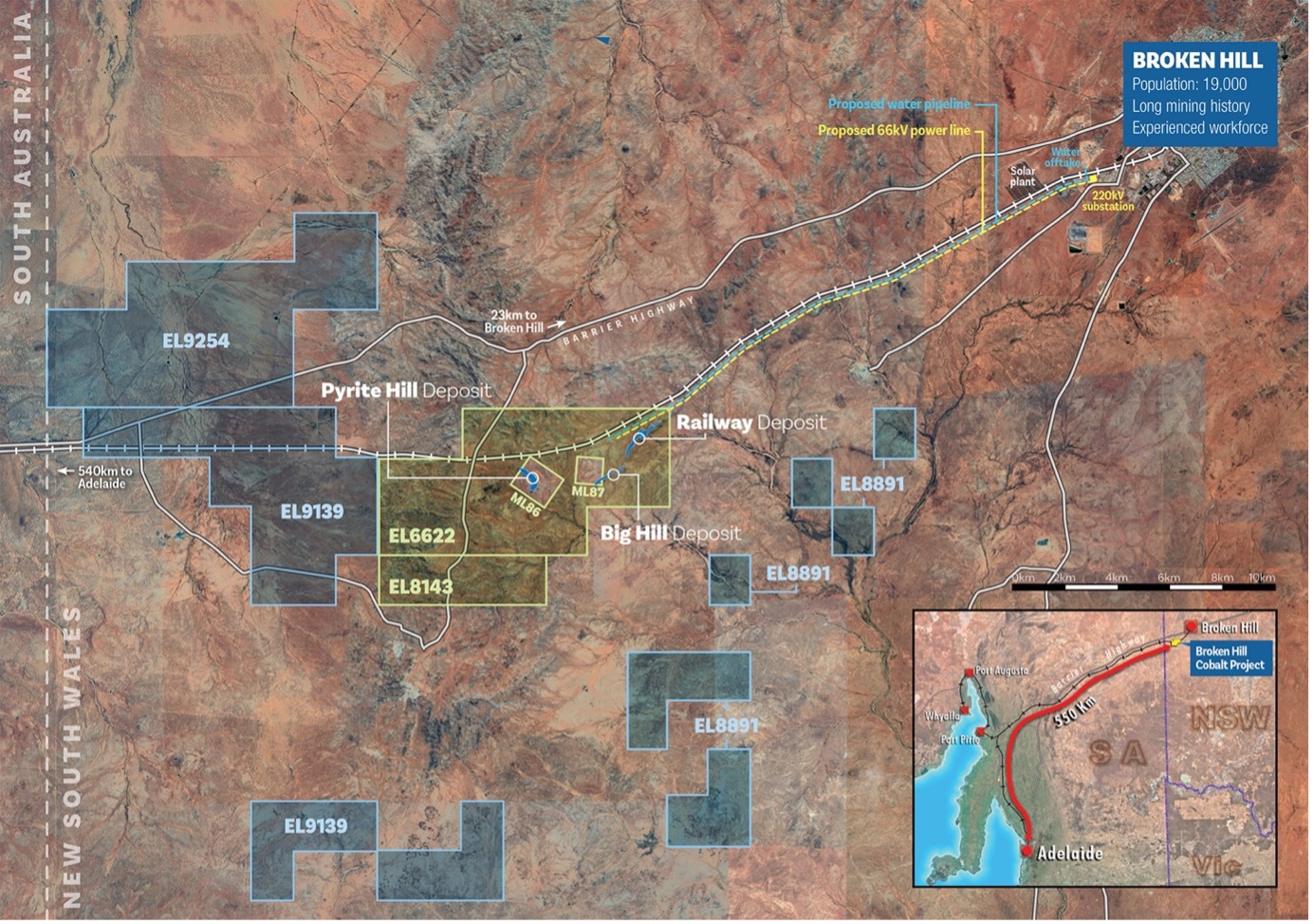
Map of the Broken Hill Cobalt Project.
Cobalt Blue’s project, 23 kilometres west of Broken Hill and 400 kilometres by rail from Port Pirie, consists of seven granted tenements, spanning 220 square kilometres.
COB’s primary exploration targets are well known and document large-tonnage cobalt-bearing pyrite deposits.
Nevertheless, the project is under-explored, with the vast majority of historical exploration directed at or around the outcropping pyritic cobalt deposits at Pyrite Hill and Big Hill.
As a result, the potential to extend the mineral resource at Pyrite Hill, Big Hill, Railway and the other prospects is high.
Several other prospects within COB’s tenement package are at an early stage and under-explored.