
Twenty Seven Co Ltd (ASX:TSC) has pinpointed a series of new lithium and tin targets within its wholly-owned Trident Project in New South Wales.
The precious and base metals explorer recently conducted a geochemical and historical sample data review that highlighted the new targets.
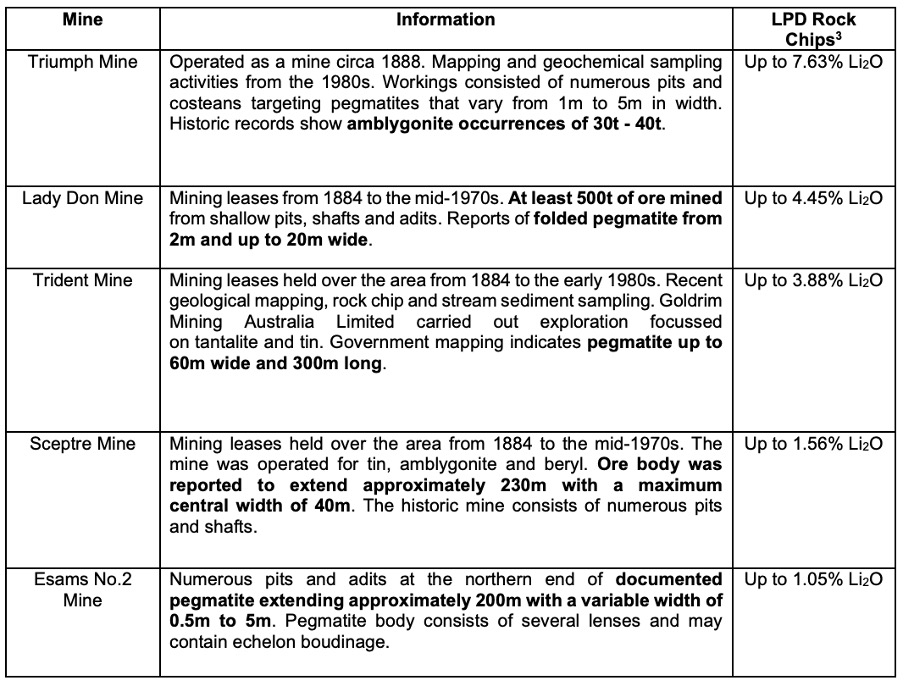
During the program, TSC analysed a series of historical rock chip samples, with one from the Trident Mine prospect returning as much as 7.63% lithium oxide.
Following the strong results, a broader geochemical sampling program is being prepared — this will kick off in the coming weeks to help inform drill testing at Trident, which should take place in a few months’ time.
Encouraging in “buoyant” lithium market
Commenting on the upcoming exploration plans for Trident, TSC CEO Simon Phillips said: “From the outset, TSC’s geological team has been focused on compiling and interpreting all available historical data on the highly prospective Trident Project in NSW.
“Trident is located to the north of our IOCG-prospective Midas Project in a highly prospective region of Broken Hill.
“This recent work follows up the encouraging historical lithium and tin occurrences already identified across a large portion of the Trident Project.
“As a result, we will initiate a wide geochemical soil testing program with the aim of drill testing several of these priority targets over the coming months.
“TSC is extremely encouraged by these latest results in what is a very buoyant lithium market, and we are looking forward to getting our targeted work program underway in NSW.”
Shares have been as much as 75% higher this morning to $0.007.
Building on historical findings
Twenty Seven Co’s latest project has unearthed several new lithium and tin targets for follow-up.
Over recent weeks, the technical team has compiled historical geochemical data, which informed the target discoveries.
Specifically, the geochemical anomalies have coincidental lithium, caesium and tantalum, give or take niobium and tin, which suggest the presence of lithium-caesium-tantalum pegmatites.
Historical explorers have sampled these pegmatites, indicating lithium occurs within amblygonite and lesser spodumene — important minerals for lithium mining.
In the past, one historical drill hole returned intersections of up to 1 metre at 0.46% tin and 3 metres 0.35% tin within a pegmatite.
Promisingly, the broader Trident asset is littered with historical workings that tell a story about the area’s mineralisation and former activity.
However, minimal systematic exploration has been carried out within the tenement for lithium-caesium-tantalum (LCT) pegmatites or pathfinder elements.
Some of the more prominent workings —including some of the key lithium oxide rock chip samples — are outlined below:
“White gold”
The last few months have seen lithium boom as electric vehicle sales spark demand for the material some are calling “white gold”.
This ultra-light metal is a key component in the batteries which power the leaner, greener modes of transport hitting our roads, and Australian players are already starting to benefit.
On Tuesday, ASX-lister Pilbara Minerals Ltd (ASX:PLS) announced it had sold its second parcel of spodumene concentrate during a digital auction on its Battery Metals Exchange platform.
During the first auction in July, the large-cap netted the equivalent of US$1,420 a tonne for the lithium-laced mineral.
But the second sale was another story: On September 14, Pilbara announced it intended to accept a bid to deliver 8,000 dry metric tonnes of spodumene for US$2,240 per tonne — an increase of US$820 in under two months.
As electric vehicle sales continue to rise and the world scrambles to get its hands on more lithium, it seems the price hike is poised to continue.
Next on the agenda
With the review data and fresh targets in tow, TSC intends to undertake rock chip sampling over Trident’s prospective lithium pegmatites.
The company is firming up a work program over the coming months that includes drill testing over high-priority targets.
In tandem, Twenty Seven Co hopes to kickstart drilling over key anomalies at its Rover Project in Western Australia, along with geochemical sampling over the project’s Edale shear.