
Orthocell Ltd (ASX:OCC) recorded a 41.5% spike in product sale revenues over the 2021 financial year, a period that saw it advance development and commercialisation over its biological medical device and cell therapy portfolios.
The regenerative medicine company brought in just over $1 million from product sales during FY21, while revenue from continuing operations added more than $273,000 to the company’s bottom line — a further 19.3% increase.
Orthocell’s two products — CelGro®, a naturally-derived collagen medical device, and Ortho-ATI®, a cell therapy for chronic tendon injuries — were the focus of company activities over the 12-month period.
The ASX lister ended the financial year with more than $16 million in the bank to support its future operations.
Company financials
Over the 2021 financial year, Orthocell tabled more than $928,000 in customer receipts — up on FY20’s near-$822,000 result.
Total revenue from continued operations topped $1.25 million, representing a 36.7% uptake on the previous corresponding period.
Payments to suppliers and employers also decreased by around $600,000, while OCC received nearly $2.4 million from research and development (R&D) tax concessions.
The ASX-lister’s total comprehensive loss came to slightly more than $9 million, up from the previous period’s $6.1 million loss owing to expanded R&D, administrative and corporate expenditure.
Gross profit for the financial year topped $392,000, while Orthocell also recorded a near $2.4 million income tax benefit.
CelGro’s dental applications
Over FY21, Orthocell focused on advancing its soft tissue reconstruction platform medical device, known as CelGro.
In particular, progress was made across the company’s dental-focused Striate+ portfolio, formerly branded as CelGro Dental.
In December last year, CelGro was included on the Australian Register of Therapeutic Goods, allowing the product to be used in dental bone and tissue regeneration procedures.
Subsequent to this, Striate+ was granted inclusion on the Australian Prostheses List, enabling dental practitioners to receive reimbursement from private insurers when using the product in dental procedures, thereby reducing the costs to patients.
Earlier this year, Orthocell secured Food and Drug Administration (FDA) 510(k) clearance to market and supply Striate+ for dental bone and tissue regeneration procedures in the US dental market, valued at US$500 million per annum.
Because of COVID-19 restrictions in the UK and European Union, Orthocell’s work in this market focused on a clinical advocacy program and targeted digital marketing.
In tandem, the ASX-lister used the financial year to prepare for market entry in Australia and the US, grow its body of clinical evidence and engage potential global partners to support its device.
CelGro nerve regeneration
Outside of its dental applications, CelGro was trialled in a nerve regeneration trial, with more than three-quarters of all nerve repairs from the clinical study resulting in functional recovery 12 months after treatment.
In the quadriplegic patient cohort, 13 out of 17 nerve repairs also resulted in functional recovery 12 months on from the treatment.
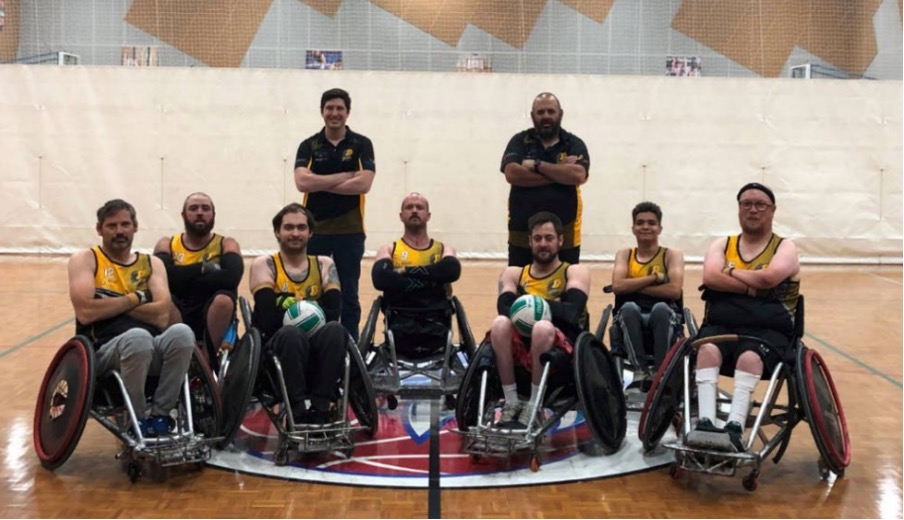
Wheelchair rugby national champion Adrian Walsh (far left) after his CelGro treatment.
These results, combined with the pre-clinical data showing superior nerve regeneration when compared to the market-leading nerve repair device, positions CelGro as the potential market leader in nerve regeneration and restoration of voluntary muscle control of paralysed upper limbs.
In light of these results, the Company has engaged Experien Group, as the company’s US regulatory advisers to evaluate opportunities for expedited approval of CelGro for nerve regeneration.
The evaluation has been completed and the team is now developing the US FDA submission to confirm the most appropriate US regulatory pathway, potential for inclusion in expedited programs and what this will mean for reimbursement value for the product.
During the 2021 financial year, the company was granted divisional patents in the US, China, Hong Kong and New Zealand for its CelGro collagen medical device platform.
The patents cover the sutureless repair of soft tissue and novel collagen ropes to augment ligament repair surgeries, such as Anterior Cruciate Ligament (ACL) reconstruction.
Progress with Ortho-ATI
In addition to its CelGro work, Orthocell, also advanced its Ortho-ATI portfolio across FY21.
Essentially, the platform is described as a first-in-class novel cell therapy, developed to treat chronic degenerative tendon injuries such as tendinopathy or tendonitis.
Ortho-ATI can be used in both surgical and non-surgical applications and is designed to align with an emerging market, worth more than US$7.7 billion and growing.
The company is currently conducting two clinical trials with Ortho-ATI: the first is focused on rotator cuff and the second on tennis elbow tendon defects.
The rotator cuff study is fully recruited and on track to provide a final data readout before year’s end.
This will be the world’s first randomised, active-controlled clinical trial of a tendon regeneration cell therapy and represents a significant inflexion point for the company on its pathway to US approval and commercialisation.
The tennis elbow study is 86% recruited and plans to be fully recruited in 2021.
What’s to come?
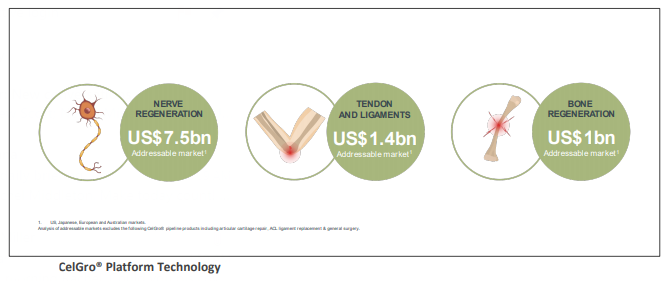
Looking ahead, OCC will use its existing cash reserves to progress regulatory approvals and commercialisation of its CelGro device for bone, nerve and tendon regeneration.
This will occur across a number of key markets after the recent clinical results and growing demand from industry-leading clinicians and potential partners for superior regenerative medicine medical devices.
In addition, funds raised will be used to develop and commercialise Ortho-ATI, support continued business development and marketing initiatives and for general working capital purposes.