
PVW Resources NL (ASX:PVW) is trading higher on starting on-ground fieldwork targeting rare earth elements along with gold at its Tanami Project on the border of Western Australia and the Northern Territory.
The field program is focused on visiting the historical drill areas at the Watts Rise and Killi Killi East prospects and conducting a ground-based review of surface geology and mineralisation that may exist.
Review of historical data (2010-2012) from a previous tenement holder highlights rare earth elements (REE) drill results including:
- 5 metres at 3,630ppm Total Rare Earth Oxide (TREO) from 0 metres;
- 3 metres at 3,140ppm TREO from 1-metre;
- 3 metres at 2,660ppm TREO from 2 metres; and
- 8 metres at 1,860ppm TREO from 16 metres.
Shares are 12.5% higher intra-day to 18 cents.
Early analysis indicates RE potential
PVW executive director George Bauk said: “The results from the initial drill program at Killi Killi in the early 2010s compares favourably to the initial results at Brown’s Range Area 5 prospect from the 1980s.
“The early analysis of the Killi Killi results indicates the potential for the presence of a light RE mineral and a heavy RE mineral which is your perfect scenario.
“The key driver of the rare earth industry is the magnetic elements, being neodymium, praseodymium, dysprosium and terbium and these are usually not found in one mineralisation type.”
Rare earths knowledge base
Bauk said: “The Tanami region has the producing Browns Range Project which is dominated with Heavy Rare Earths and within 50 kilometres of our project is the Boulder Ridge project in the Northern Territory also owned by Northern Minerals.
“We have an outstanding rare earths knowledge base within our company with Robin Wilson, former exploration manager of Northern Minerals, and myself as the former managing director of Northern Minerals.
“In the past decade, we have taken an REE project from a greenfield target to production and know what is required.”
Rare earth market
The key driver of value in the rare earth industry are the magnetic REE’s, being dysprosium, terbium, praseodymium and neodymium.
Importantly, these are the key ingredients for the superior rare earth permanent magnets used in many critical industries including defence, electric vehicles and clean energy solutions.
Many government incentives have been implemented in countries like the US, Japan and Australia to encourage the development of the rare earth supply chain.
In Australia, the majority of the production remains light rare earth dominant with the Northern Minerals Ltd (ASX:NTU)’s Browns Range Pilot Plant being the largest producer of heavy rare earths outside of China, situated to the north of the Killi Killi REE project in the Tanami.
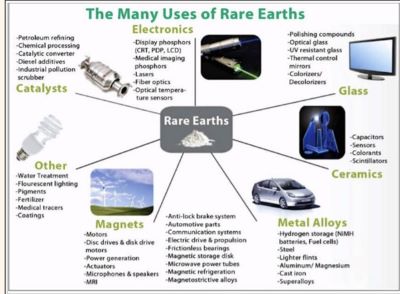
Rare Earths are critical metals to the US, China and many other leading economies that are focused on securing their supply chain.
Historic drilling
The previous holder of PVW’s Tanami Project tenements, Orion Metals Ltd (ASX:ORM), had conducted gold and REE exploration at the Killi Killi East and Killi Killi West now known as Watts Rise prospects.
Notably, Orion’s initial rock chip sampling program at Killi Killi East in 2010 returned anomalous rare earth and gold assay results.
This has led to a first pass drilling program in late 2010 comprising 30 reverse circulation (RC) drill holes followed by further drill programs at Killi Killi East in 2011 and 2012 with 34 RC drill holes.
The potential style of mineralisation at Killi Killi East is hydrothermal unconformity-related REE mineralisation along with the Watts Rise-Killi Killi trend, examples of which occur across a large part of the Birrindudu Basin.