
Galileo Mining Ltd (ASX:GAL) has intersected semi-massive sulphide mineralisation from the first reverse circulation (RC) holes at its Delta Blues Prospect within the Fraser Range Belt in Western Australia.
Drilling is targeting the top of a modelled electromagnetic (EM) conductor with the two drill holes both intersecting semi-massive and disseminated sulphides.
Galileo has completed two drill holes totalling 428 metres at the Delta Blues DB2 prospect with a third drill hole underway.
“Related to mafic and felsic intrusions”
Galileo managing director Brad Underwood said: “The geological results from the first round of drilling at our Delta Blues prospect are highly encouraging with sulphides in both holes drilled to date.
“The mineralisation appears related to mafic and felsic intrusions which is unusual for the Fraser Range and possibly the first time this association has been identified in the region.
“Assay results and microscope petrography will provide us with a guide to the economic potential of the prospect while a follow up diamond drilling program is designed to test the better parts of the EM conductor at depth.
“The RC rig will finish a third drill hole at DB2 before moving on to the DB1 target with the remaining program expected to be completed over the next week.
“A market update will be provided as results become available.”
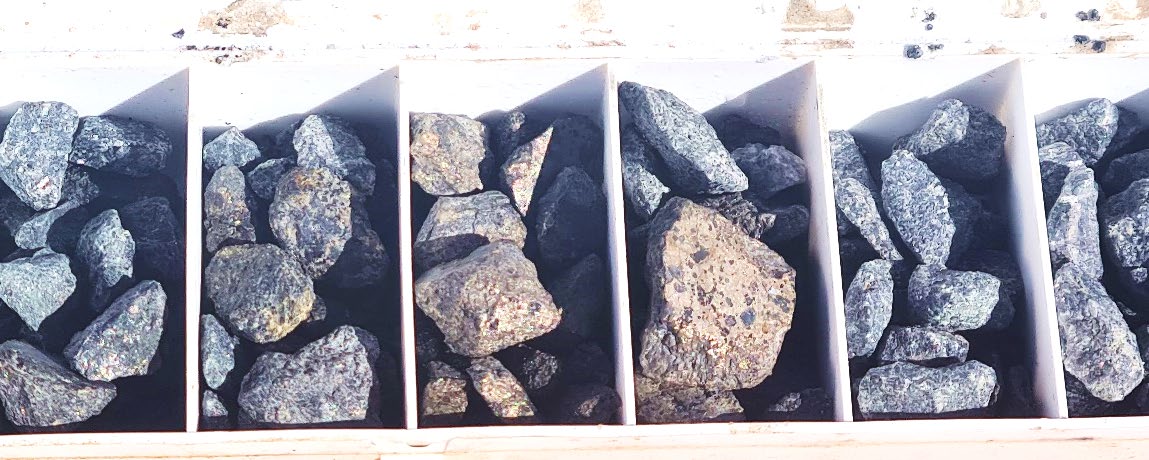
Drill chips from DBRC001; semi-massive sulphide from 190-92m.
Petrography planned
Galileo has intersected semi-massive sulphides which are predominantly pyrrhotite with minor chalcopyrite (copper sulphide) over intervals from 190 metres to 192 metres (DBRC001), and from 167 metres to 170 metres (DBRC002), within larger zones of disseminated sulphides.
The sulphide mineralisation in both drill holes occurs as semi-massive bands surrounded by disseminated sulphide within a mafic intrusion immediately adjacent to a medium-grained felsic intrusion.
These intrusions have been preliminarily logged on-site as gabbro and tonalite with petrography planned to determine the precise rock classifications.
Assays expected in September
The economic implications of the initial results from DB2 are at this stage uncertain with deeper diamond drilling required to test the better parts of the EM conductor at depth.
Galileo has submitted samples from the RC drilling for analysis to the laboratory in Kalgoorlie with results expected in September.
The timing of diamond drilling is subject to rig availability as Western Australia continues to be affected by labour shortages which limit the ability of contractors to undertake Galileo’s drill programs.
Galileo will begin drilling at the Delta Blues DB1 prospect after the final hole at DB2 is finished with two drill holes are planned at DB1 to test the top of a very strong EM target.
- Ephrems Joseph