
Noxopharm Ltd (ASX:NOX) has set out to explore a new approach to treating brain cancer in a collaboration with the US National Cancer Institute (NCI).
The clinical-stage drug development company inked the cooperative research and development agreement based on a new family of anti-cancer drugs, designed by Noxopharm scientists, with a dual anti-cancer action.
This unique factor is tailored to combat aggressive tumours, including brain and pancreatic cancers because it blocks ‘helper’ signals from surrounding healthy tissue that play a key role in an aggressive cancer’s growth.
The collaboration sits within Noxopharm’s Cancer Research Pipeline Program — one of the company’s four-pillar research and development programs.
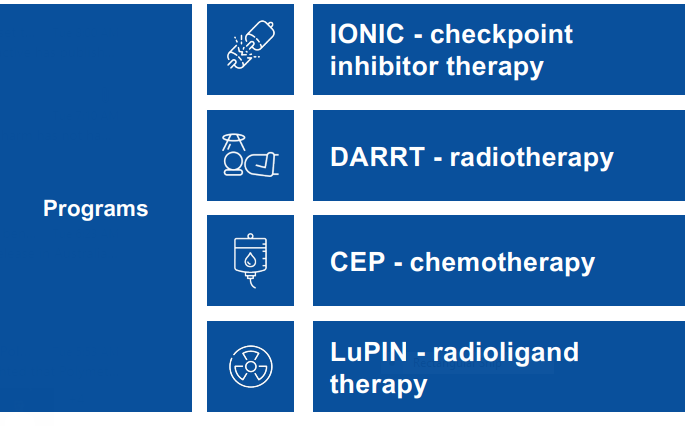
Noxopharm's four pillars.
Brain cancer is the pioneer program
NCI’s principal investigator at the Neuro-Oncology Branch, Mioara Larion, said: “We are enthusiastic about this collaboration that aims to find new targeted molecular therapies for patients affected by diseases in the central nervous system, particularly brain cancers.”
Noxopharm CEO Graham Kelly PhD echoed Larion’s comments and said the principle of this approach was applicable to a wide variety of highly aggressive cancers.
“Brain cancer is our first program, and a separate pancreatic cancer program is underway with details to be announced shortly.”
The collaboration
Noxopharm’s latest agreement relates to a new family of molecules that combines the traditional role of chemotherapy drugs (killing cancer cells directly), with a unique ability to block ‘helper’ growth signals coming from neighbouring healthy cells.
Those ’helper’ signals from neighbouring stromal cells have emerged as an important contributor to the highly aggressive nature of certain cancers, especially in the brain, pancreas and bile duct.
Finding drugs that block these ‘helper’ signals in a tumour’s micro-environment has become a major new direction in oncology, offering the prospect of meaningful survival benefits in patients where effective treatment options continue to remain elusive.
The challenge lies in blocking these signals without damaging their source, something even more vital in the case of the brain.
Noxopharm believes it has achieved this objective in pre-clinical studies, combining potent killing of cancer cells with a secondary action that blocks the action of the ‘helper’ growth signals in a well-tolerated way.
The objective is a drug that will convert aggressive brain cancers in adults and children into slow-growing cancers more able to be effectively managed by other treatments such as surgery and radiotherapy.
Targeting aggressive brain cancers
A human brain is composed mainly of neurones (cells carrying electrical impulses) and glial (support) cells in roughly equal numbers.
The great majority of primary brain cancers derive from the brain’s glial cells and generally are devastating brain tumours with poor treatment options.
Glioblastoma multiforme, the main form of brain cancer in adults, has a post-treatment five-year survival rate as low as 4.7%.
Diffuse intrinsic pontine glioma, a highly aggressive and usually fatal brain cancer in children, is even more devastating with a five-year survival rate of only 2%.
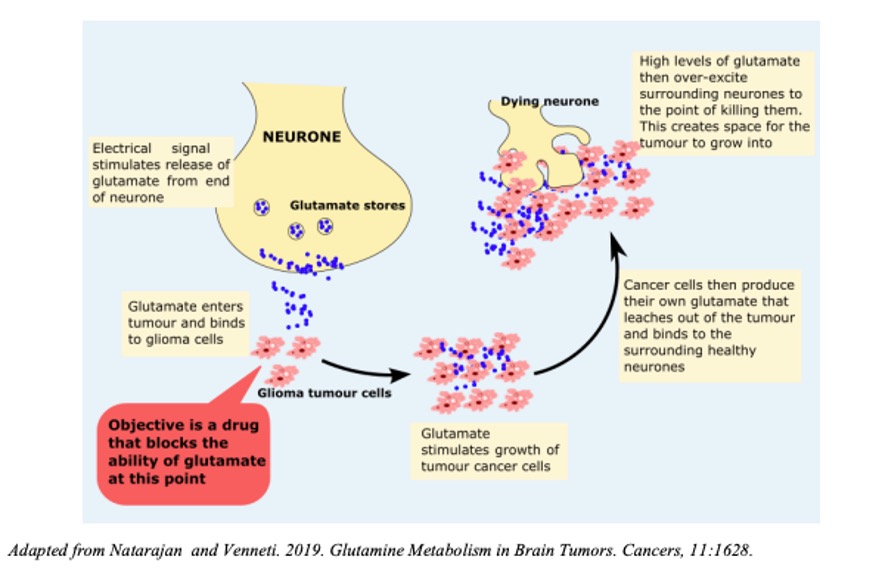
The main ‘helper’ signal in the case of gliomas is the brain’s main neurotransmitter chemical, glutamate.
This inappropriate use of glutamate serves two purposes in brain cancer:
Firstly, glutamate is fed from the neurones into the tumour where it stimulates the growth of the cancer cells;
Then, the activated cancer cells appear to then go on to produce their own glutamate in large amounts, killing surrounding healthy neurones by overexciting them to make room for expansion of the rapidly growing tumour.
The new Noxopharm drugs kill brain cancer cells directly in a similar way to idronoxil. However, an additional design feature has been added that blocks the ability of the cancer cells to respond to glutamate, and to do so in a way that preserves general brain function.