
Chimeric Therapeutics Ltd has licensed a novel cancer therapy for solid tumours from a world-renowned cell therapy centre.
Through an agreement with the University of Pennsylvania, the ASX-listed biotech will exclusively develop and commercialise the CDH17 chimeric antigen receptor T cell (CAR T) therapy.
More than a decade of research has gone into developing this particular immunotherapy, spearheaded by Dr Xianxin Hua, a professor of cancer biology at the university’s Perelman School of Medicine.
The University of Pennsylvania is described as a globally recognised leader in cellular immunotherapy and is widely known as being home to the first Food and Drug Administration-approved CAR T therapy.
CAR T therapy has “transformative potential”
Speaking about the exclusive licence, Chimeric chief operating officer Jennifer Chow said the company was incredibly excited to bring the CDH17 CAR T cell therapy into its pipeline.
“Our focus is on developing cell therapies that have the potential to be curative for patients and we believe that this CDH17 CAR T cell therapy has that transformative potential.
“We are very much looking forward to working with Dr Hua and his team to bring this CAR T to the clinic as soon as possible.”
Chimeric chairman and bioentrepreneur Paul Hopper echoed Chow’s comments in today’s market announcement.
“We are delighted to have secured the exclusive rights to this promising asset from one of the world’s pre-eminent cell therapy centres, which has been a powerhouse in CAR T innovation for many years.
“We look forward to utilizing the deep cell therapy expertise of our team to develop and commercialise this CAR T.”
Developing CDH17 CAR T
The University of Pennsylvania’s novel CDH17 CAR T cell therapy targets CDH17, an oncogenic factor associated with poor prognosis and metastasis in neuroendocrine tumours as well as the most common gastrointestinal tumours, including colorectal, pancreatic and gastric cancer.
A phase one clinical trial using CDH17 CAR T is slated to commence at the university next year, while pre-clinical studies on the novel therapy have already taken place.
During these pre-clinical assessments, the cancer cell therapy has demonstrated it can completely eradicate the tumour cells with no evidence of toxicity and no tumour relapses.
Commenting on CDH17 CAR T’s potential, Dr Hua said: “The preclinical studies indicate that our CDH17 CAR T marks the recognition of an entirely new class of solid tumour antigen targets, that are highly susceptible to CAR T attack on tumour cells yet masked from attack by the CAR T in normal tissues.”
Chimeric’s responsibility
Under the terms of its licensing agreement, Chimeric Therapeutics will acquire the exclusive rights to develop and commercialise the CDH17 CAR T cell therapy.
In exchange, the clinical-stage cell therapy company will pay the University of Pennsylvania license fees, development milestones and royalty payments based on commercial net sales.
In addition, any upfront fees associated with the license agreement will be funded entirely from Chimeric’s existing cash reserves.
The ASX-lister has also committed to a further three years of research and development for this novel cell therapy.
Ultimately, Chimeric hopes to leverage its cell therapy expertise to develop and commercialise the immunotherapy in a timely manner — an activity that aligns with its overarching goal to bring cell therapy’s curative potential to more patients with cancer.
What is CAR T?
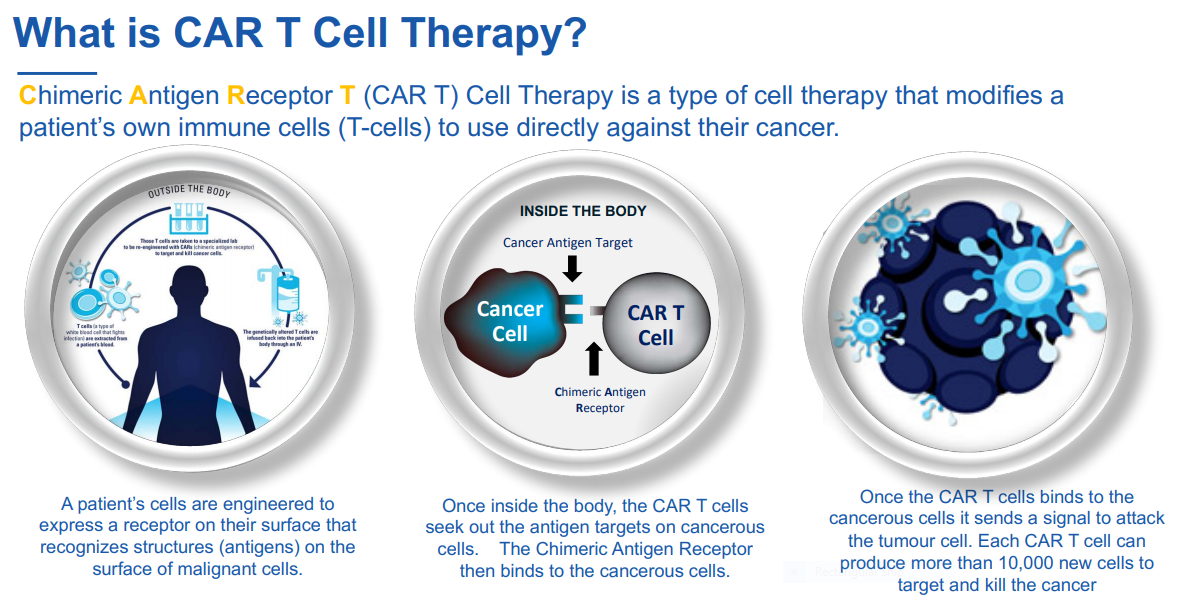
CAR T is an emerging type of immunotherapy that uses specially altered T-cells to directly and precisely target cancer cells.
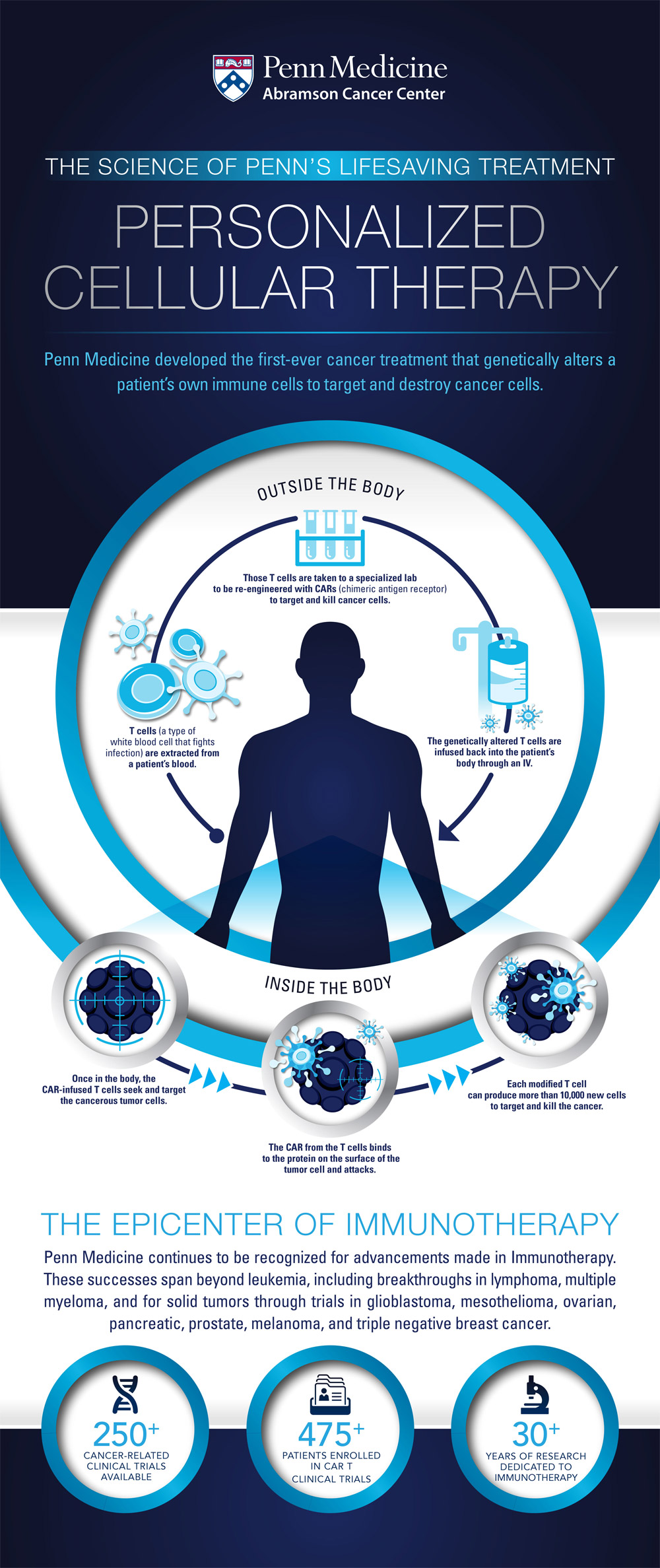
Generally speaking, when a person is infected with a virus, killer ‘T’ cells are able to locate the viral cells and destroy them. These special types of cells, which form part of the body’s immune system, can also be used to combat cancer.
Sometimes, however, cancer can evade these T cells, meaning the immune system needs to be retrained to recognise and destroy the cancerous cells.
This is where the chimeric antigen response — the ‘CAR’ in CAR T — comes into the picture. Doctors can take a small sample of a patient’s blood, separate the T cells and genetically re-engineer them so they carry the unique CAR structures on their surface.
Then, these altered T cells are reinjected and rapidly multiply, now able to recognise and attack the cancer cells.
What’s really special about this kind of immunotherapy is its longevity: if the cancer returns even years down the track, the CAR T cells remain in the body and can reactivate to kill off the new cancerous cells.
CAR T cell therapy is now FDA-approved for patients with acute lymphoblastic leukemia, non-Hodgkin lymphoma and multiple myeloma. The University of Pennsylvania is also studying CAR T therapy for other forms of cancer and is currently enrolling patients for clinical trials.