
Blackstone Minerals Ltd (ASX:BSX) (OTCMKTS:BLSTF) (FRA:B9S) has begun a 'green' hydrogen study, the first of several initiatives being considered as part of plans to develop a zero-carbon mining operation and downstream processing facility at the flagship Ta Khoa Nickel-Copper-PGE Project in Vietnam.
The current pre-feasibility study (PFS) requires the use of oxygen in the downstream processing plant, which is typically produced by a conventional cryogenic oxygen plant with nitrogen as a by-product.
However, the company will investigate producing oxygen via the electrolysis of water, which will produce ‘green’ hydrogen as by-product through the utilising of abundant renewable hydro-electric power and water available at Ta Khoa.
The Green Hydrogen Study will include an investigation into emerging green hydrogen technologies and their potential application at Ta Khoa, a trade-off assessment of the economic and environmental benefits of each option, as well as an assessment of the potential for downstream business to tap into renewable hydro-electric power and water sources.
“Producing nickel with highest ESG credentials”
The opportunity to produce a green hydrogen by-product at Ta Khoa strengthens the company’s aim to develop a zero-carbon mining operation and downstream processing facility at the project.
Blackstone managing director Scott Williamson said: “The Ta Khoa Project benefits from significant competitive operating advantages including access to renewable hydropower.
“The decision to commence a Green Hydrogen Study reflects Blackstone’s commitment to minimising its carbon footprint and producing downstream nickel products with the highest ESG credentials.”
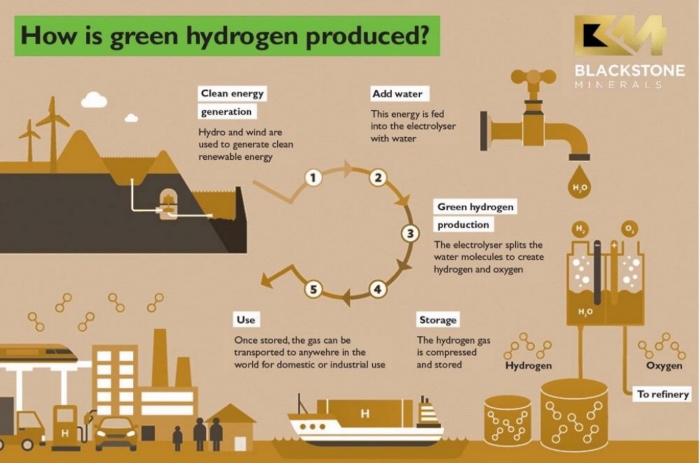
How is Green Hydrogen produced? Source: Adapted from Hydro Tasmania.
Looking forward
Notably, the concept fits into the company’s strategy in several ways.
Oxygen is required as in input into the POX process and the company believes that water electrolysis with hydrogen as a by-product may be an economic and sustainable option.
In addition, green hydrogen for use in hydrogen fuel cells is growing in favour as an alternate, complementary technology to battery electric vehicles and the company intends to use this by-product hydrogen as a fuel for its own concentrate haulage road fleet.
Additionally, as new hydrogen fuel cell mining fleet becomes commercially proven, the company will also look to integrate hydrogen fuel cell vehicles into their mining fleet.
The Green Hydrogen Study will also assess the potential to offset the Downstream Business Unit (DBU) refinery operating costs through the sale of green hydrogen.
Should the study yield positive economics, Blackstone will look to include green hydrogen into the Ta Khoa base case and consider options to commercialise production for sale to third parties given the abundance of hydroelectric power and clean water in the north of Vietnam.