
UK scientists looking to develop a cost-effective form of fusion energy say they are a step closer, after encouraging results in reducing the massive excess heat produced in the reactions.
The UK Atomic Energy Authority's MAST (Mega Amp Spherical Tokamak) Upgrade experiment is trying to replicate the power of the sun and stars in a cost-effective and safe reactor.
READ: Viable nuclear fusion energy could be a reality by 2025, says UBS
Based at the Culham Centre for Fusion Energy in Oxfordshire, the MAST project uses spherical machine called a tokamak to enable hydrogen atoms to fuse together, with the MAST upgrade experiment using something called a Super-X divertor to help tokamak parts to last longer.
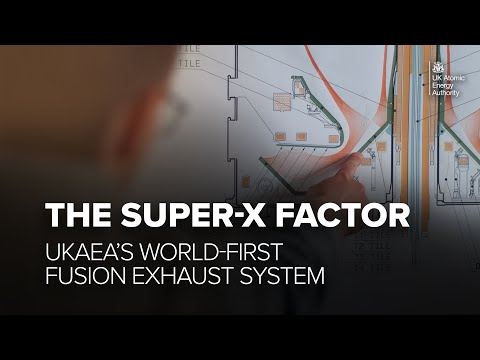
Last night the UKAEA said the latest experiment resulted in a tenfold reduction in heat.
“Super-X reduces the heat on the exhaust system from a blowtorch level down to more like you'd find in a car engine,” said the experiment’s lead scientist Dr Andrew Kirk.
He said the results “are the moment our team at UKAEA has been working towards for almost a decade”.
He added: “We built MAST Upgrade to solve the exhaust problem for compact fusion power plants, and the signs are that we've succeeded.”
Reducing the level of heat, he said, could mean it would only have to be replaced once during the lifetime of a power plant.
“It's a pivotal development for the UK's plan to put a fusion power plant on the grid by the early 2040s - and for bringing low-carbon energy from fusion to the world."
Based on the original MAST machine at Culham, which ran from 2000 to 2013, the MAST Upgrade has been rebuilt to enable higher performance, with longer pulses, increased heating power and a stronger magnetic field – as well as the new plasma exhaust system.
A spherical tokamak is often described as being shaped like a cored apple, while other more traditional fusion experiments like the ITER (International Thermonuclear Experimental Reactor) use a more doughnut-shaped torus to hold the superheated plasma where the atoms are fused.
Culham is also home to the Joint European Torus (JET), which uses a more conventional ITER-style tokamak.
The MAST Upgrade is said to have a tighter magnetic field, with the spherical plasma configuration allowing it to achieve more efficient performance, which the UKAEA believes makes for "excellent potential for building compact test reactors and could also offer a long-term route to smaller and cheaper fusion power plants".