
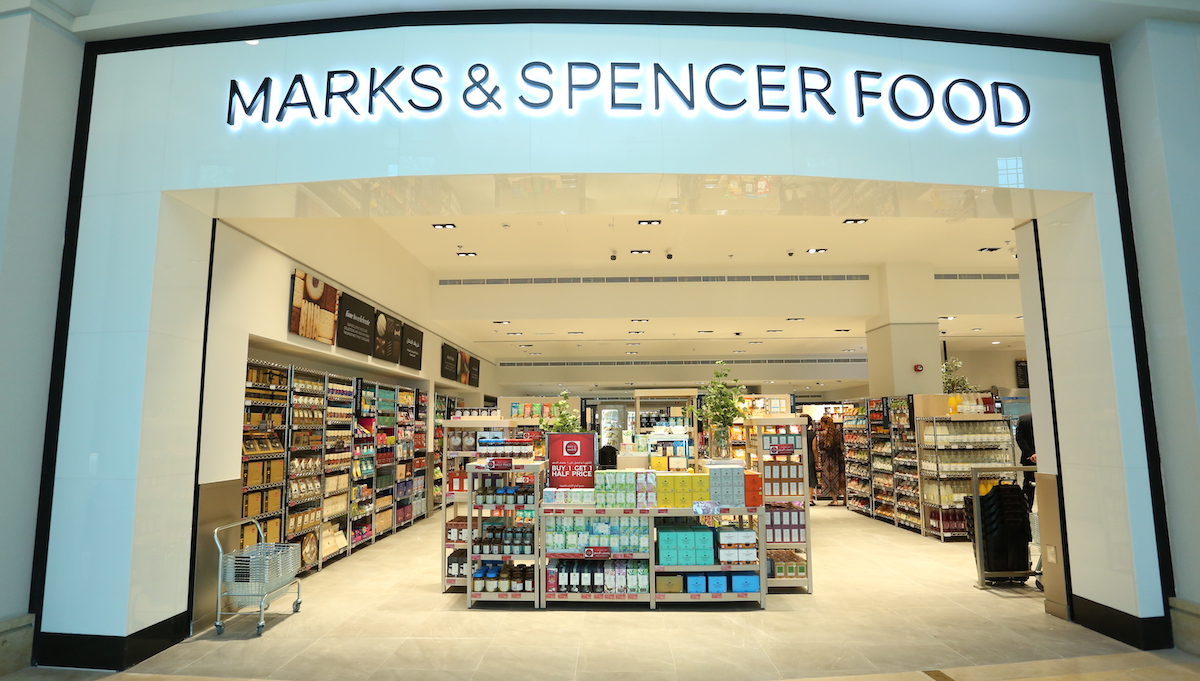
While the rest of the grocery sector grinds through a low-growth summer, Marks and Spencer Group PLC (LSE:MKS) seems to be in a different market entirely, according to the latest data.
Its food sales jumped 15.8% in the four weeks to 9 August, and 26.2% on a two-year view, according to Worldpanel by Numerator figures circulated by Citi. No rival comes close. The nearest mainstream grocer, Sainsbury's, managed 2.6%.
This would seem to show growth in British grocery is now concentrated at the extremes, the premium end and the discount end, while the middle is hollowed out.
The evidence for that squeeze sits in the same data. Food inflation slowed to 2.1% in the period, the softest reading since October 2024, which should in theory have taken some of the shine off the discounters.
The discounters keep winning anyway
Instead, Aldi and Lidl pulled away faster. The combined sales of Tesco and Sainsbury's trailed the two German-owned chains by 258 basis points, a gap that widened from 89 basis points only a month earlier.
That is the tell. When prices were rising, shoppers had an obvious reason to trade down. Now that inflation is cooling and they are still switching, the shift looks structural rather than a passing cost-of-living reflex. Habits formed over three lean years are not unwinding.
Tesco feels the pinch
Tesco PLC (LSE:TSCO), the market leader, is the clearest casualty in the middle. Its sales rose just 1.3%, below the wider market, and its share slipped 32 basis points year on year. With a little over a quarter of the market, it has the most to defend against a lasting change in where Britain shops.
J Sainsbury PLC (LSE:SBRY) held up better, nudging its share up 2 basis points, a sign that loyalty and quality investment can still retain customers in a weak market.
Asda remains the sector's problem child, its 0.2% sales decline only a marginal improvement on recent form. Morrisons grew 1.8%, though that was a sharp slowdown from 3.5%.
For M&S, the read-across is flattering. Its revival, built on food quality and range, is pulling shoppers up the market at precisely the moment the traditional middle is losing them to the bottom.


