
D3 Energy Ltd (ASX:D3E, OTCQX:DNRGF) has established a maiden independently certified prospective resource at its wholly owned PEL121 permit in South Australia, strengthening its exposure to helium, natural hydrogen and methane.
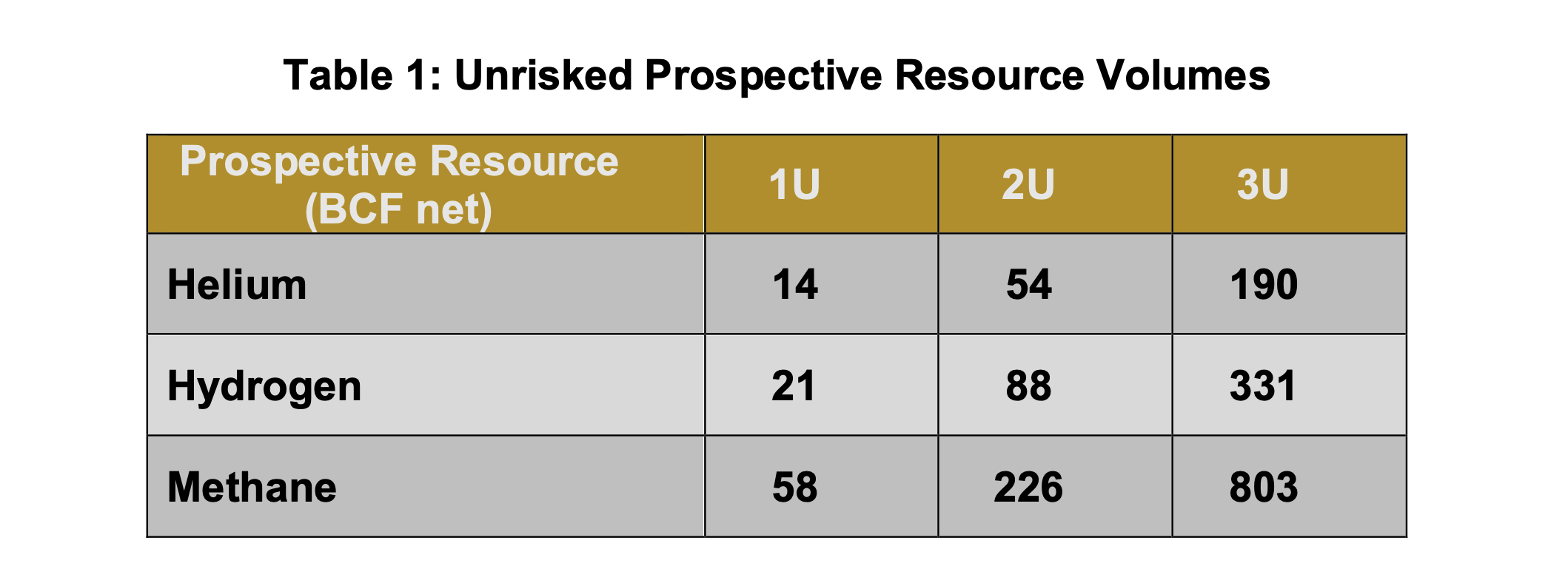
The Hydrohelix and Cootanoorina prospects contain a combined net best-estimate, or 2U, prospective resource of 54 billion cubic feet (BCF) of recoverable helium, 88 BCF of hydrogen and 226 BCF of methane.
Global reserves and resources auditor Sproule ERCE independently certified the resource, which covers targets within the Heavitree (AIM:HVT) Sandstone and fractured basement of the Arckaringa Basin.
Diversified critical gas portfolio
The result gives D3 Energy a second geographically diversified prospective resource base in South Australia, alongside its existing helium and methane reserves and resources in South Africa’s Free State Province.
PEL121 and adjoining permit PEL122 cover a combined 5,865 square kilometres near the Olympic Dam uranium deposit. D3 has identified two prospects and nine additional leads across PEL121 using available seismic data.
D3 Energy managing director and chief executive officer David Casey said the certification represented another important milestone for the company.
“The certification of a maiden Prospective Resource at Hydrohelix and Cootanoorina is another significant milestone for D3 Energy and further confirmation of the potential we see across our PEL121 permit in South Australia.
“Together with our existing helium and methane reserves and resources in the Free State of South Africa, this result gives D3 Energy a genuinely diversified, multi-country exposure to critical gases at a time when global demand for these gases continues to grow while supply is significantly impacted by events in the Middle East.”
Geological setting supports exploration case
Hydrohelix and Cootanoorina sit within a geological system considered analogous to the nearby Mt Kitty-1 well, which recorded helium concentrations of up to 9%, hydrogen of up to 11.5% and methane of up to 13%.
The system combines deep basement faulting suited to hydrogen generation with Heavitree Sandstone and fractured basement reservoirs, capped by a regional evaporite seal.
Hydrohelix covers around 148 square kilometres, and D3 has begun a farm-out process to help fund future drilling activity.
The independently assessed resource ranges from low estimates of 14 BCF helium, 21 BCF hydrogen and 58 BCF methane to high estimates of 190 BCF helium, 331 BCF hydrogen and 803 BCF methane.
The estimates are prospective, undiscovered and have not been adjusted for geological or development risk. Sproule ERCE assessed the chance of success at 6% to 8% for helium, 4% to 7% for hydrogen and 3% to 4% for methane, with an estimated 80% chance of commercial development should a discovery be made.
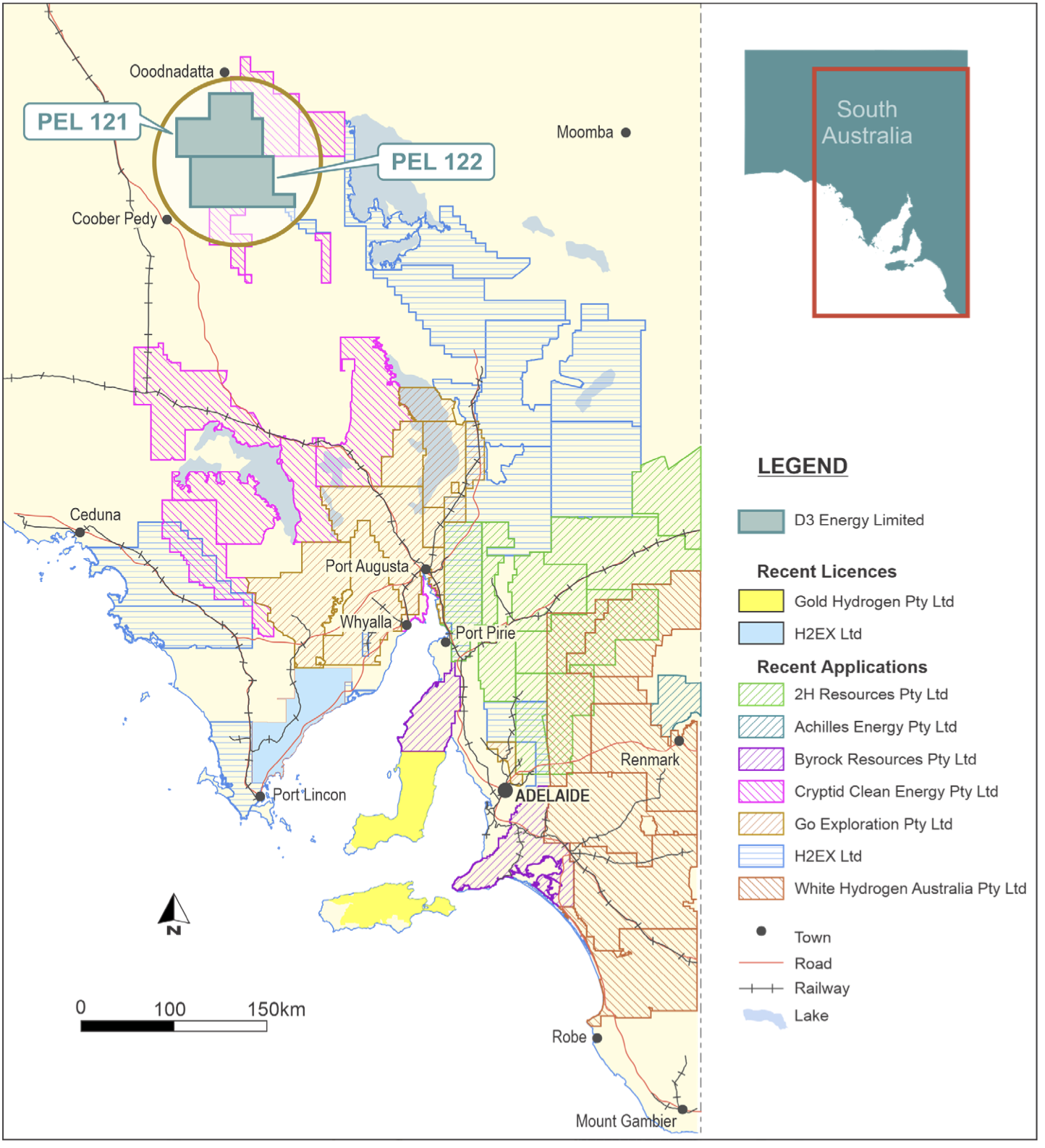
D3 Energy’s South Australian Portfolio.
What's ahead
D3 Energy is planning work programs to drill and test an exploration well within PEL121, with activities targeted to begin in 2027.
The company will also continue maturing the nine identified leads across PEL121 and PEL122 while progressing the Hydrohelix farm-out process and advancing its flagship South African assets toward development.