
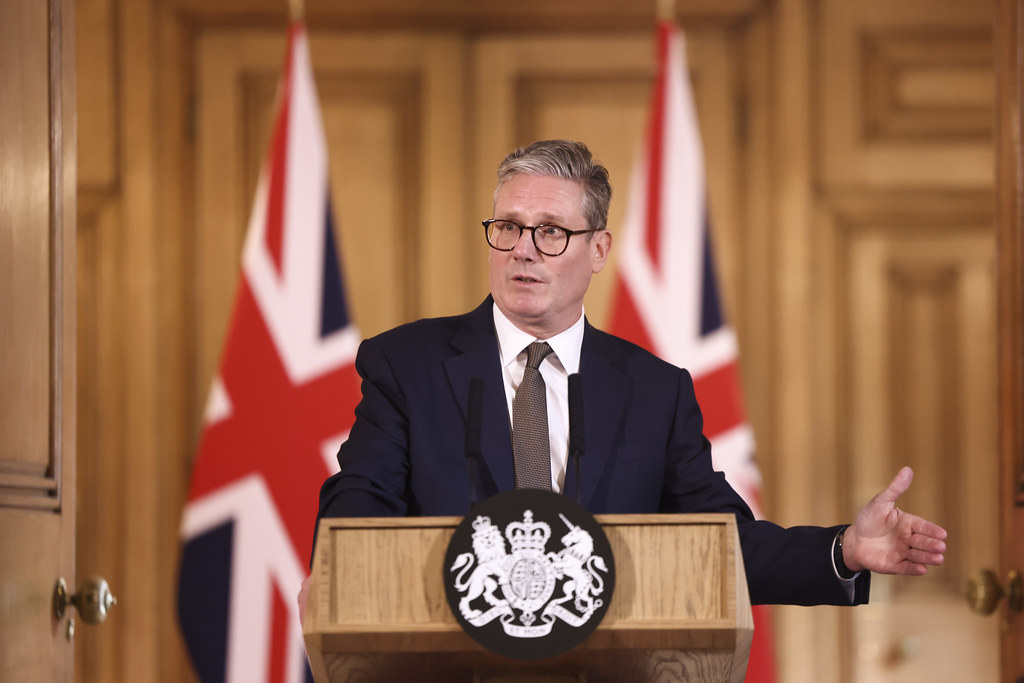
The FTSE 100 and the pound rose after Keir Starmer resigned as prime minister on Monday, with attention in the City shifting away from the Labour leadership contest itself and towards two questions seen as more important for markets: when the next Budget will be delivered and who will become chancellor.
Following Starmer's speech in front of 10 Downing Street, it was confirmed by the Labour Party that nominations for the new leader would open on 9 July and close on 16 July, with a new leader to be in place before Parliament returns from its summer recess on 1 September.
Barclays said the "most likely" outcome was for Andy Burnham to become prime minister, potentially as early as 16 July if no challenger emerges.
Wes Streeting, viewed as the most credible alternative candidate, gave his backing to Burnham in a statement on social media.
An uncontested handover would allow Burnham to form a cabinet over the summer and announce a Budget date before Parliament returns.
Given the Office for Budget Responsibility's requirement for 10 weeks' notice, Barclays estimated the earliest feasible Budget would be in early October.
If a leadership contest takes place, however, a new prime minister may not be in place until the end of August, making an 11 November Budget the earliest realistic option.
Investors are also keenly focused on who Burnham would appoint to the Treasury.
Streeting, Ed Miliband, Yvette Cooper and Pat McFadden were all being discussed as possible candidates.
"While the market appears to be more nervous that a Milliband chancellorship would increase the risk of extra borrowing, we view the others as equally fiscally pragmatic as each other, with the big open question being around the degree of adherence to the current fiscal rules," said Barclays economist Jack Meaning.
"Following the rules without any carve outs leaves little space for expansionary policy against a backdrop of fiscal drag of over 1pp over the next three years."
The FTSE 100 was up 50 points to 10,414.6, while the pound rose 0.3% versus the dollar and 0.4% against the euro.
UK gilts remained mostly unchanged following Starmer's resignation, said Oliver Faizallah, head of fixed income research at Raymond James.
"The lack of move comes as no surprise; the move was widely anticipated, with prediction markets assigning a near certainty of a leadership change last week."
He said the long end of the gilt curve "will likely remain a bit choppy" and gilts will "no doubt experience some small periods of uncertainty driven wobbles over the coming weeks".
"I anticipate this largely to be driven by foreign holders of gilts who will no-doubt find the new system of musical PMs somewhat unsettling. Ultimately, there is little surprise from this morning's announcement, and while political uncertainty may move long end gilts a small amount, we expect more of a correlation to the evolution of ongoing peace talks between US and Iran, oil prices and inflation data."


