
Axel REE Ltd (ASX:AXL) has validated the potential for in situ recovery (ISR) of ionic rare earth elements at its Woolrich deposit within the 100%-owned Caladão REE-Gallium Project in Minas Gerais, Brazil, after column leach testing recovered up to 560ppm soluble total rare earth oxides (TREO).
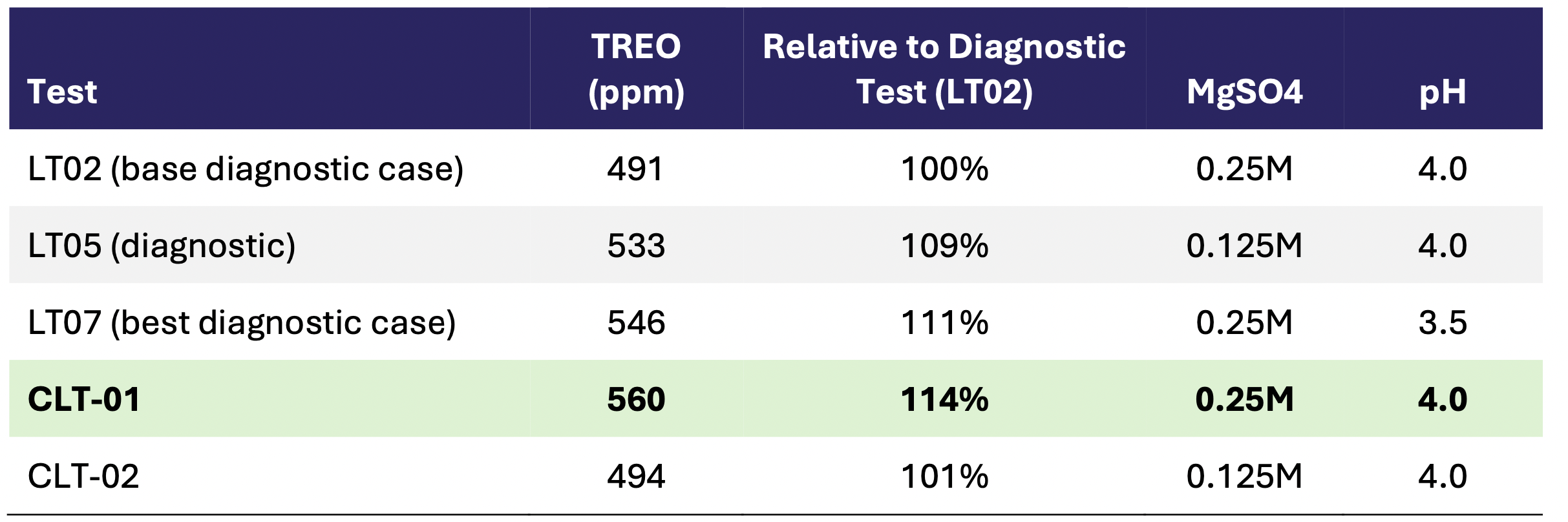
The result, achieved in column leach test CLT-01 using a mild magnesium sulphate solution at pH 4.0, exceeded the best previous diagnostic result and supported the company’s view that Woolrich is amenable to low-acid, low-impact ISR extraction.
CLT-01 recovered 560ppm soluble TREO, 39% magnet rare earth oxides (MREO) and low levels of impurities, including aluminium below 2ppm, iron below 0.5ppm, thorium below 5.5ppm and uranium below 4ppm.
The results confirm Woolrich behaved as a genuine ionic clay rare earth system under dynamic ISR-style flow conditions.
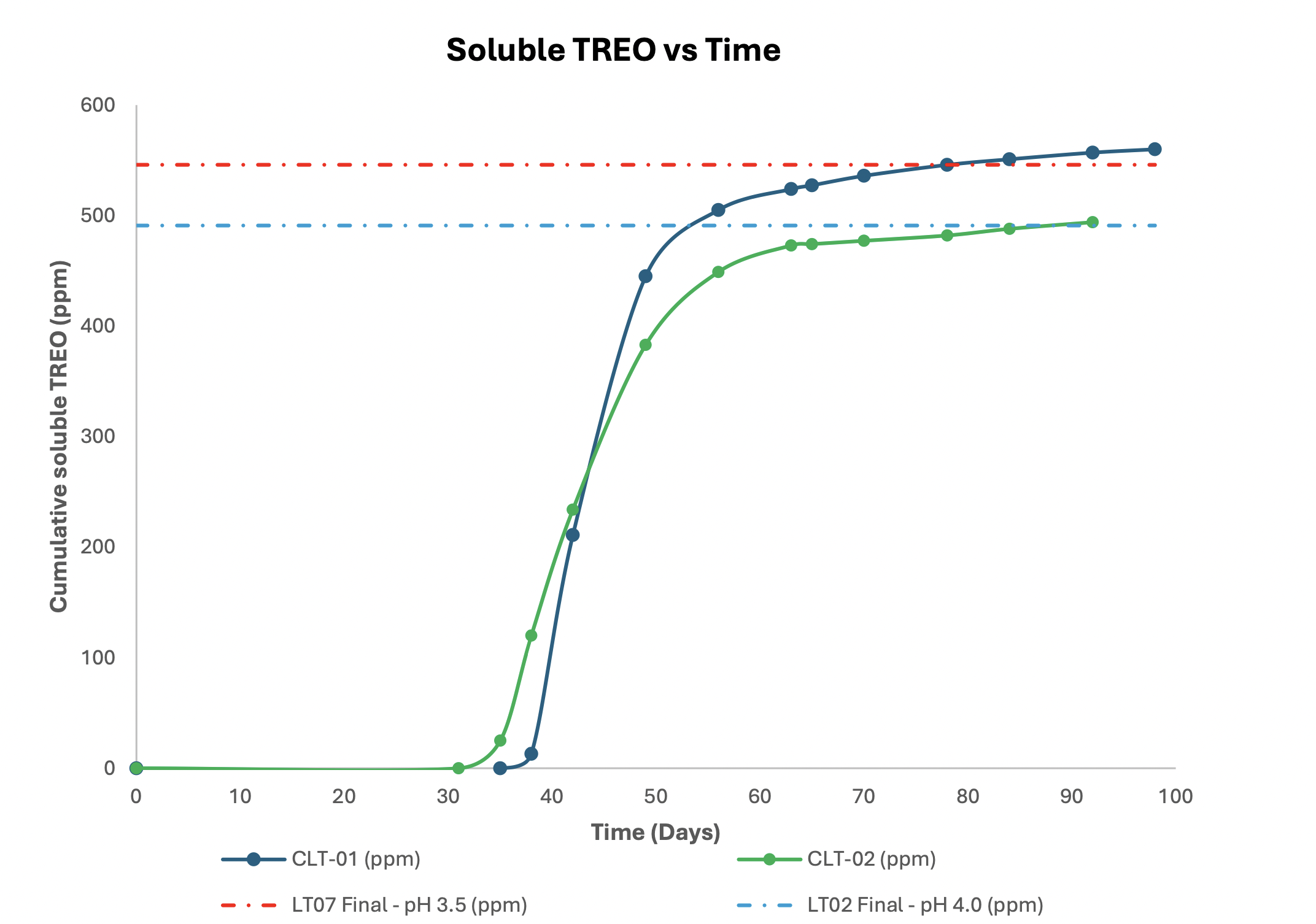
Soluble TREO from diagnostic and column leach testing on the Woolrich composite using magnesium sulphate solution throughout. LT02 is the diagnostic base-case benchmark. CLT-01 and CLT-02 are the new column leach results reported today.
Testwork supports low-impact development pathway
The column leach program was carried out by Core Resources Pty Ltd in Brisbane and is designed to simulate percolation leaching under conditions more representative of ISR than earlier diagnostic beaker testing.
Axel said CLT-01 delivered a 14% improvement on the base diagnostic case LT02, which returned 491ppm soluble TREO using the same 0.25M magnesium sulphate solution at pH 4.0.
A second column, CLT-02, operated at a lower 0.125M reagent strength, recovered 494ppm soluble TREO, slightly above the base diagnostic case.
The results indicated rare earth recovery was driven more by solution throughput and ion-exchange equilibrium than reagent strength, with further testing to assess the best balance between recovery and pregnant leach solution volumes.
Column Leach TREO Recovery Relative to the LT02 Diagnostic Benchmark.
A high-value magnet rare earth basket was maintained through both tests, with CLT-01 and CLT-02 recovering about 39% and 37% MREO respectively, including dysprosium and terbium.
“These results are an important step forward for Axel,” managing director Dr Patience Mpofu said.
“The column program shows that Woolrich behaves as a genuine ionic-clay system under realistic flow conditions, recovering high-grade, magnet-rich rare earths while keeping impurities very low.
“Just as importantly, the work is now generating the operating data we need to design ISR field exploratory tests at Woolrich – moving Axel from laboratory validation toward field-scale, low-impact ISR development.”
Woolrich field testing next milestone
The Woolrich deposit forms part of Area B at Caladão and hosts an inferred resource of 128 million tonnes at 1,013ppm TREO and 35.1ppm gallium.
Axel said the column testing was generating the hydraulic, kinetic and solution-chemistry data needed to design an ISR field exploratory test program, which is planned to begin in the December quarter of 2026.
The next stage of laboratory work will include a second pair of columns, CLT-03 and CLT-04, once results from CLT-01 and CLT-02 have been reviewed and incorporated into the next-stage test design.
Successful progression through field exploratory testing could position Axel as a potential first mover in commercial ISR rare earth extraction in Minas Gerais.
About Axel REE
Axel REE is a critical minerals exploration company focused on developing the Caladão REE-Gallium and Caldas REE projects in Brazil.
Caladão hosts a combined inferred mineral resource estimate of 572 million tonnes at 1,506ppm TREO across Areas A and B, as well as an inferred gallium resource of 439 million tonnes at 38ppm gallium.
The company is advancing a modular ISR development concept at Caladão using magnesium sulphate leaching to target ionic clay-hosted rare earth mineralisation, while also progressing metallurgical work on gallium and scandium in the near-surface oxidised profile.