
The autonomous drone partnership between ROCKETDNA LTD (ASX:RKT) and BHP Mitsubishi Alliance (BMA) has evolved into one of the largest continuous autonomous drone deployments operating in Australia, following the completion of around 4,400 missions across four Queensland coking coal mines since February 2026.
The drone technology company has logged more than 2,000 hours of autonomous flight time across BMA’s Peak Downs, Goonyella, Saraji and Caval Ridge operations in the Bowen Basin.
RocketDNA is currently averaging about 1,500 flights per month across the four active mine sites, with the program designed to improve both productivity and safety outcomes by enabling rapid access to aerial operational data.
The deployment has been enabled by RocketDNA’s broad-area Beyond Visual Line of Sight (BVLOS) approval from the Civil Aviation Safety Authority (CASA), granted in late 2025.
The approval allows the company to deploy autonomous drones on demand across Australia without requiring separate site-by-site approvals, removing a key regulatory hurdle that has historically limited autonomous drone operations to trial environments.
“The CASA Broad Area BVLOS approval was the unlock that made the trial possible and the data is now demonstrating what that approval actually means for industry,” RocketDNA managing director and CEO Christopher Clark said.
“We think it's only the beginning of what becomes possible at this scale.”
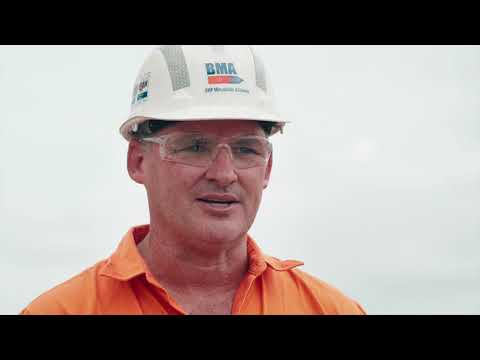
On-demand aerial intelligence delivered in minutes
Under the operating model, BMA personnel request drone missions through RocketDNA’s Skylink platform by selecting the mission type, site and operational parameters through a dedicated interface.
Processed aerial data is then delivered within 15 minutes of dispatch without requiring a drone pilot to be physically present on site.
The missions cover surveying, inspections, panoramic capture and live video applications across the four coal operations.
RocketDNA said the system allows mine personnel to assess hazardous or changing ground conditions remotely, reducing the need for workers to physically enter operational risk areas.
The company believes the technology has the potential to significantly shorten the time between changing site conditions and operational decision-making.
“The deployment validates that industries, like mining, which operate in high-consequence, rapidly changing environments, can no longer afford the lag between a ground condition changing and a decision-maker knowing about it,” Clark said.
“Autonomous aerial infrastructure closes that gap in a way no previous technology has done at this scale.
“Furthermore, this arrangement represents a working operational model for how autonomous and commercial aviation will increasingly share Australian airspace as BVLOS-capable drone programs scale beyond trial conditions."
Expanding autonomous drone operations
RocketDNA is a multinational drone-based data services and technology company providing aerial surveying, mapping, security, surveillance and asset inspection services to enterprise customers across the mining, agriculture and engineering sectors.
The company delivers fully outsourced, AI-driven drone solutions that allow customers to remotely access aerial intelligence while maintaining focus on ground operations.
RocketDNA generates revenue through a mix of multi-year contracts and shorter-term project work, servicing major mining clients including Rio Tinto, BHP, South32, Newmont, Vault Minerals and Seriti Coal.
The company operates primarily across Australia and Africa, with regional offices in Perth, Johannesburg and Accra.
The latest operational data from the BMA partnership highlights RocketDNA’s push to scale autonomous drone infrastructure beyond pilot programs and into large-scale commercial deployment, positioning the company to expand further as BVLOS-enabled drone operations gain broader industry adoption.