
Lightning Minerals Ltd (ASX:L1M, FRA:YZ1) has identified tungsten potential at its 100%-owned Warby Project in North Queensland following a review of historical regional drainage sampling data and recent field reconnaissance.
The review highlighted tungsten anomalies of up to 102ppm W from active stream sediment samples, pointing to an additional exploration target beyond the company’s core gold and copper focus.
Follow-up fieldwork completed in May 2026 confirmed multiple shallow historical tungsten workings across a northwest-trending structural corridor extending about two kilometres.
“The identification of visible tungsten mineralisation associated with historical workings at Warby represents a highly encouraging outcome for the company and reinforces the broader potential emerging across this underexplored project area. Importantly, the combination of anomalous historical drainage results, visible mineralisation, greisen alteration and structural setting provides a strong technical foundation as we advance our understanding of the project," Lightning CEO Troy Brice said.
"With tungsten prices strengthening significantly amid tightening global supply conditions and increasing focus on securing alternative Western supply chains, we believe Warby is well positioned to emerge as a compelling exploration opportunity within Lightning Minerals’ North Queensland portfolio.”
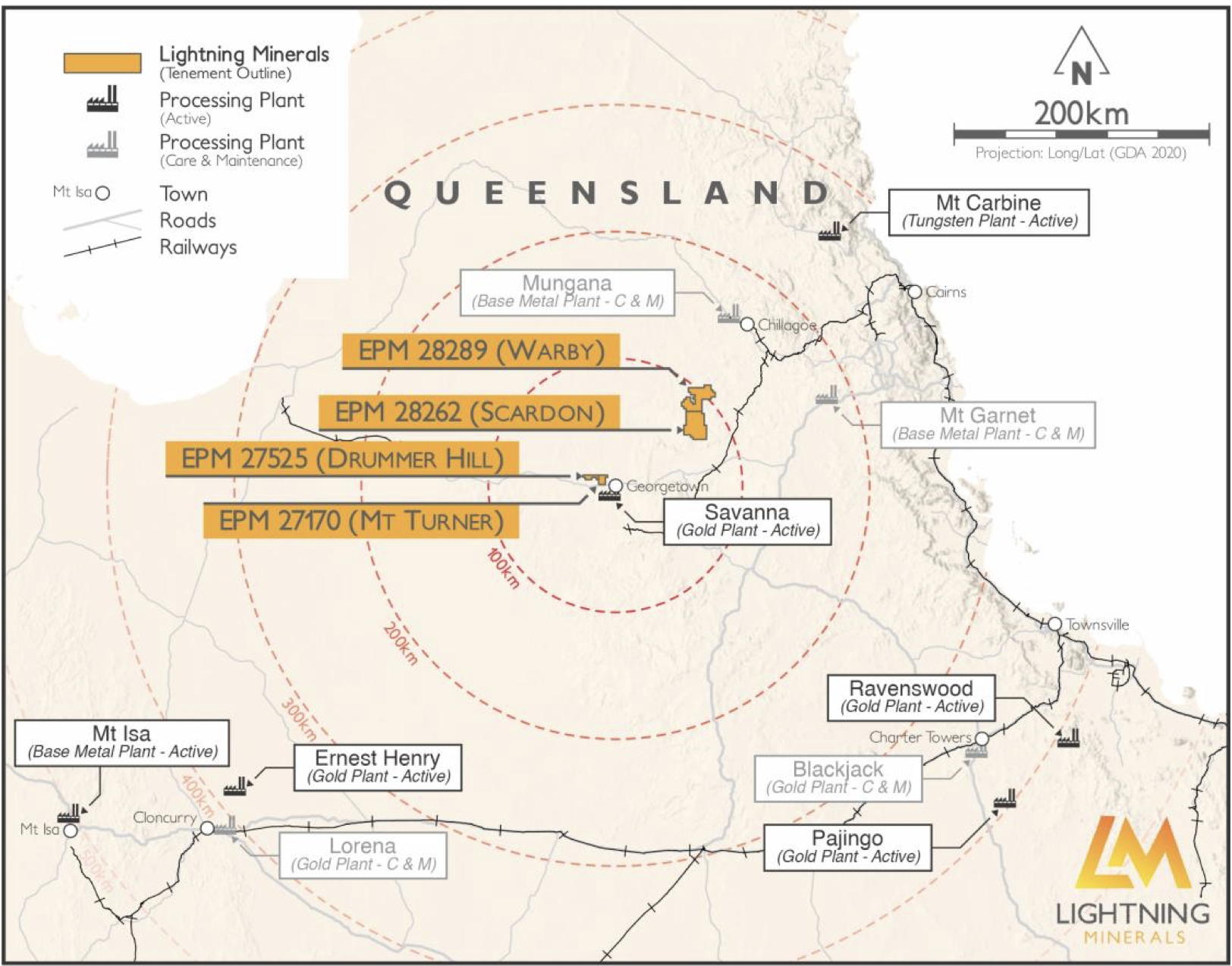
Location of Lightning Minerals tenements in North Queensland.
Sampling program to test historical workings
Field investigations observed visible tungsten mineralisation in quartz vein, greisen and altered granite material associated with historical workings and surrounding sub-crop exposures.
Greisen alteration was also identified between mapped vein positions, which Lightning said supported the potential for a broader mineralised system rather than isolated vein-hosted occurrences.
The workings are near the contact between the Permo-Carboniferous Elizabeth Creek Granite and the Proterozoic Lyndbrook Metamorphic Complex, a setting considered prospective for intrusive-related tungsten mineralisation.
Lightning noted there was no evidence of modern systematic exploration across the target area, with the shallow workings interpreted to date from the World War 1 era.
The company collected 14 rock chip samples from dump material associated with 9 individual veins during the May field program.
These samples have been submitted to ALS Laboratories in Townsville for assay analysis, with results expected within about 2 weeks.
The assays are expected to help refine Lightning’s understanding of the tenor and distribution of tungsten mineralisation across the current prospect.
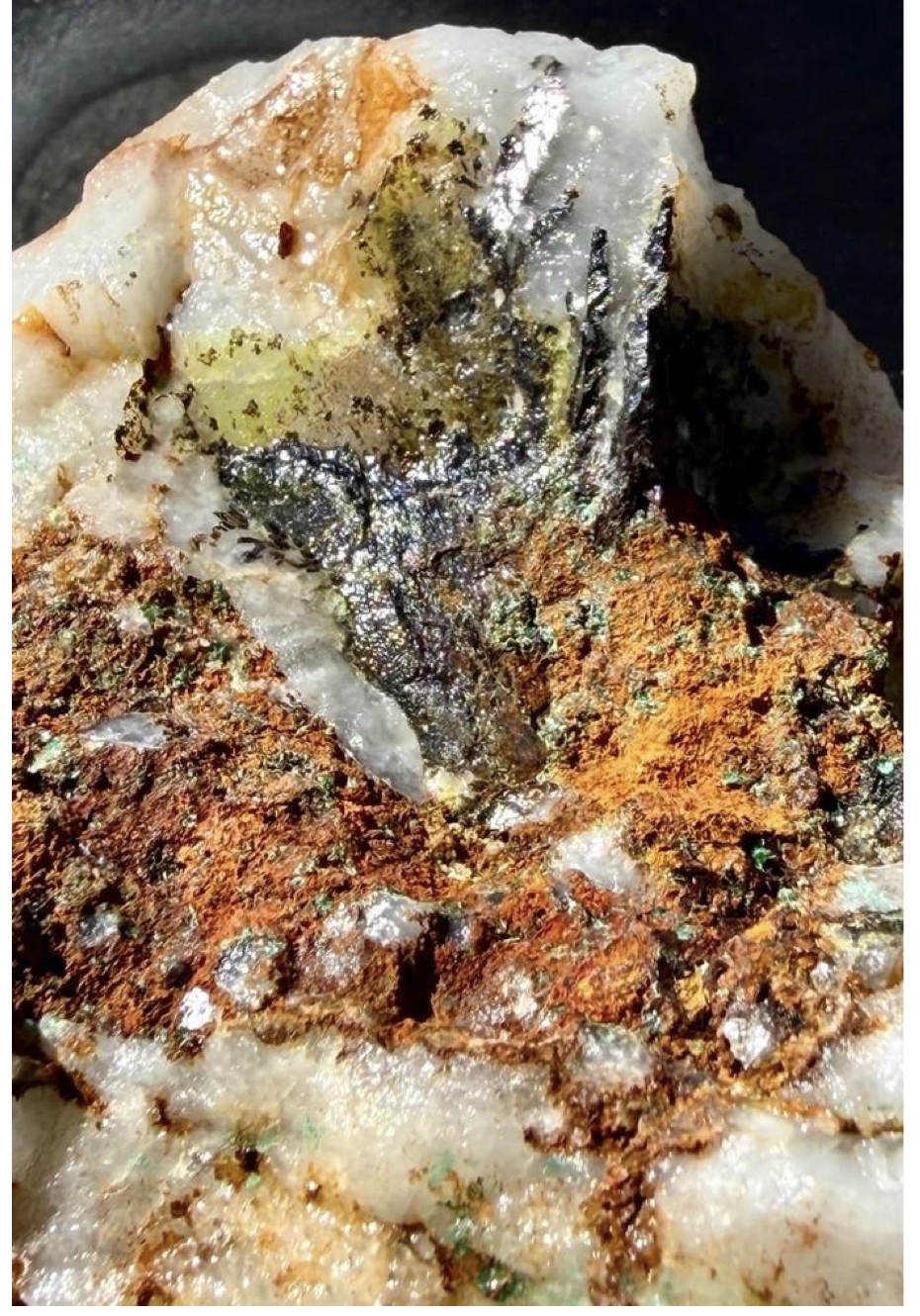
Coarse sprays of acicular wolframite in quartz with malachite and limonite gossan, FOV 5 cms.
Why tungsten?
Tungsten is recognised as a critical mineral by several Western governments due to its importance in industrial, infrastructure and defence applications, including cutting tools, drill bits, AI and advanced alloys.
The market has faced tightening supply conditions following Chinese export restrictions, with China remaining the dominant global supplier of processed tungsten products.

Demand is expected to grow on the back of industrial activity, infrastructure development and increased defence procurement, prompting greater focus on securing alternative supply from stable Western jurisdictions.