
CelLBxHealth PLC (AIM:CLBX, FRA:DWV) chief executive, Peter Collins, talked with Proactive about the company’s first-quarter trading update, operational restructuring and growing commercial momentum in the circulating tumour cell (CTC) market.
Collins explained how CelLBxHealth has repositioned the business following a major restructuring programme, reducing headcount, consolidating facilities and re-establishing its R&D capability while delivering significant cost savings of more than £6.6 million. He said the company has continued generating strong data with partners, including The Royal Marsden and highlighted collaborations with a major US healthcare company and a global pharmaceutical group.
The interview also focused on CelLBxHealth’s strategy to expand partnerships across clinical academia, specialist CROs, diagnostic providers and biopharma companies to accelerate the adoption of circulating tumour cells in drug development and precision medicine workflows.
Collins said the company is seeing increasing industry demand for CTC analysis and highlighted strong momentum from key oncology conferences, including AACR, ESMO Breast Cancer and the upcoming ASCO meeting.
He told Proactive: “The need for circulating tumour cells as an important component of liquid biopsy is reiterated again and again because it provides information that we can't get from the tissue block.”
Collins also discussed the company’s growing sales pipeline, commercial expansion in the US and long-term ambition for CTCs to become part of standard cancer care diagnostic workflows.
Watch the full interview for insights into CelLBxHealth’s commercial strategy, partnership progress and the future of circulating tumor cell technology.
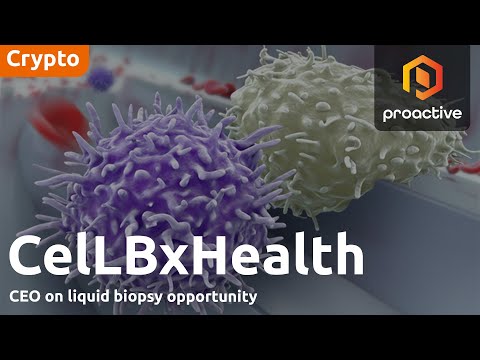
Proactive: Peter very good to speak with you as a reminder for investors and our viewers. Can you provide us with a high-level overview of the business?
Peter Collins: CelLBxHealth is a circulating tumour cell insights company with a best-in-class platform for isolating and harvesting circulating tumor cells from a simple blood draw. The circulating tumour cells are live cells shed from the tumour, and they provide critical and complementary information that can assist in drug development and the delivery of precision medicine.
Our vision at CelLBxHealth is that circulating tumour cells become part of standard-of-care diagnostic workflows.
Proactive: You're out with your first quarter trading update, Peter. What were the highlights?
Peter Collins: We achieved a huge amount in Q1, particularly around carrying out our restructuring successfully. The company moved from around 115 employees to 39 people by the end of Q1. This included relocating from two buildings and re-establishing our R&D capability.
We successfully restarted R&D and generated strong data with partners, including our collaboration with The Royal Marsden. We also referenced a large US healthcare company and a pharma major that we expect to begin working with in the near future.
We have worked hard to ensure costs are under control, identifying more than £6.6 million in cost reductions, and we will continue to seek further efficiencies. We also strengthened our commercial efforts by bringing in an experienced executive in the circulating tumor cell space in the US.
Proactive: Having restructured and consolidated the business over the last couple of months, what are the key drivers going forward?
Peter Collins: The key drivers are continuing to build on our partnership strategy and generating data with collaborators across clinical academia, specialist CROs, diagnostic providers and biopharma companies.
We want to see circulating tumour cells used as regulatory endpoints in drug development and eventually become part of standard care workflows. Coordinating this ecosystem is what we believe will deliver future growth.
Proactive: The trading update mentions a strong sales pipeline. Can you provide any colour on this?
Peter Collins: The pipeline is largely driven by our partnering strategy with specialist CRO labs, laboratory developed test providers in the US and our pharma partnerships. We are also continuing work with groups such as Myriad and The Royal Marsden to build additional clinical utility use cases for circulating tumour cells.
We saw increased partnership activity during Q1 and expect that momentum to continue through Q2 and Q3.
Proactive: What should investors look out for over the next six months?
Peter Collins: Over the next six months, investors can look forward to positive inflexion points driven by strong data generation, additional studies and progress towards incorporating circulating tumour cells into standard care workflows.
Our partnering strategy is underpinned by growing demand for circulating tumour cells as a key sample type that provides unique information for patient management and drug development.
I recently attended AACR and the ESMO Breast Cancer meeting and am preparing for ASCO. Across keynote talks, workshops and presentations, the need for circulating tumour cells as an important component of liquid biopsy continues to be reinforced because they provide information that cannot be obtained from tissue samples alone.
We understand there are limitations when analysing expression and proteomics from other sample types, while circulating tumor cells can uniquely provide this information. We have strong support from many leading physicians treating cancer patients globally, and we are excited about the future.