
Gold exploration stories often hinge on scale or grade. Increasingly, the market is looking for something more tangible — a credible pathway from resource to production.
For Nexus Minerals Ltd (ASX:NXM, FRA:YAK), that shift is starting to come into focus.
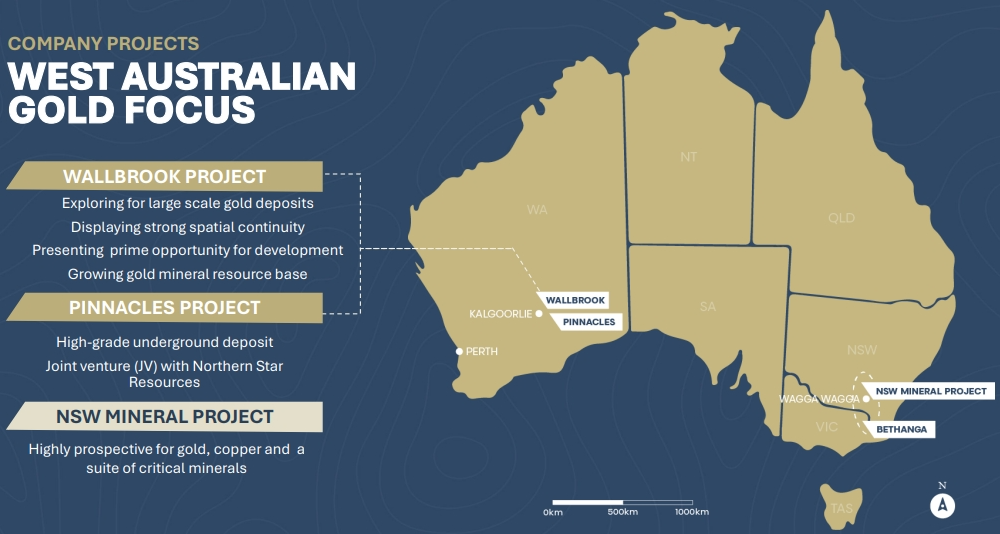
At its Wallbrook Gold Project, northeast of Kalgoorlie, the company is moving beyond early-stage exploration into a more defined development strategy, anchored by a growing resource base, advancing permitting and early-stage commercial discussions that point towards potential mining scenarios.
The result is a project that is beginning to straddle both ends of the development spectrum — still delivering exploration upside, but with clearer signals around how value might ultimately be realised.
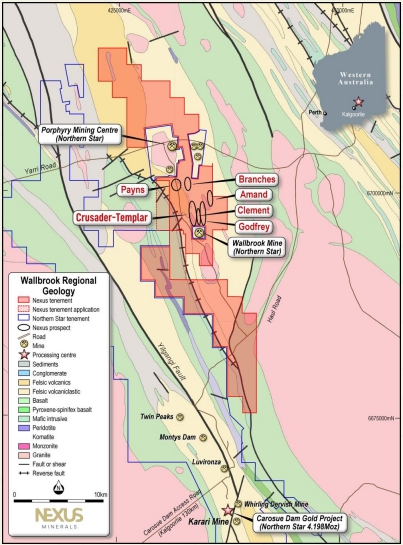
Wallbrook Gold Project
From resource to development pathway
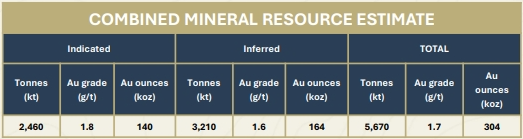
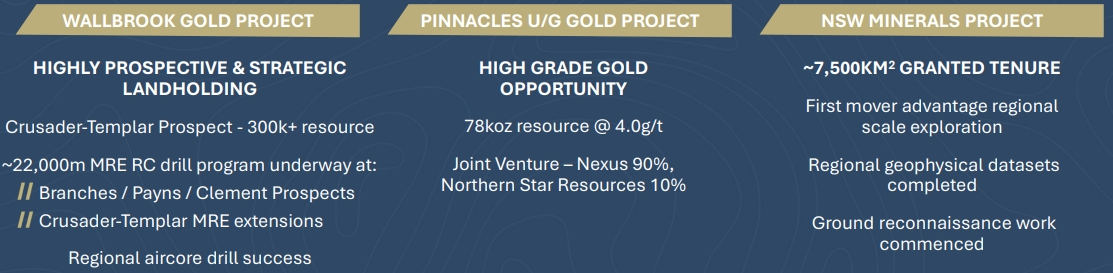
Much of that transition is now centred on the Crusader–Templar deposit, where Nexus has defined a combined mineral resource of 304,000 ounces at 1.7 g/t gold.
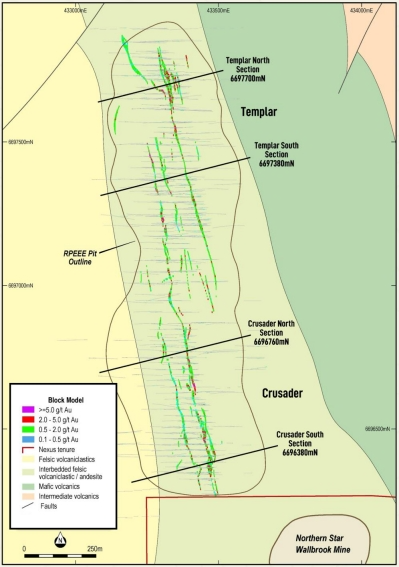
Crusader–Templar Prospect
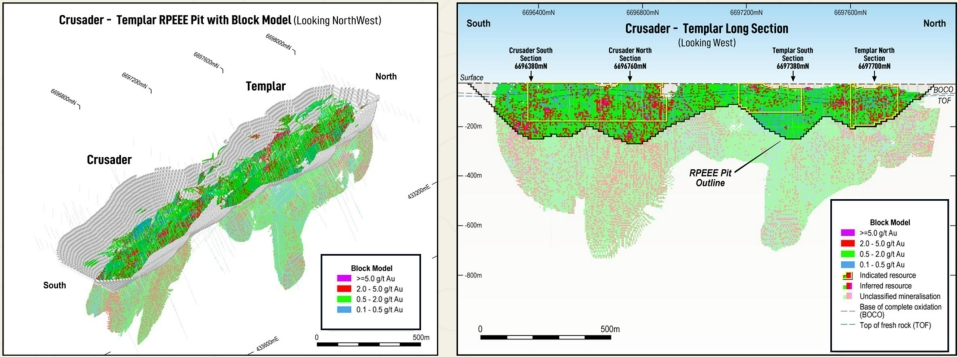
That resource — with 46% in the Indicated category — is already framed within an optimised open-pit shell, supported by metallurgical recoveries of around 98% for oxide material and 97.6% for fresh ore.
But more telling is how the company is positioning that resource.
A recently signed memorandum of understanding with Macro Gold Mining Services Pty Ltd sets out a potential framework for development, covering everything from funding and approvals to mine design and securing an ore purchase agreement.
The structure is still non-binding, but it signals a clear intent to move towards a contractor-led, potentially capital-light mining model, with profit-sharing arrangements rather than a traditional owner-operator approach.
That approach aligns with the broader strategy taking shape at Wallbrook — one focused on leveraging existing infrastructure in the region, including third-party processing plants, rather than building standalone facilities.
Crusader–Templar Prospect — MRE
Economics begin to take shape
A scoping study released in mid-2024 offers an early look at what that pathway could deliver.
Based on a production target of 1.5 million tonnes at 1.75 g/t gold, the study outlines potential production of around 80,000 ounces over a roughly 28-month mine life.
At a gold price of A$3,500 per ounce, that translates to an undiscounted cash surplus of about $67 million, with relatively modest pre-production capital of $2.2 million–3.3 million.
Even allowing for the early-stage nature of the study, the economics highlight a key point: the project appears capable of generating positive returns across a wide range of gold prices, with break-even levels estimated around $2,635 per ounce.
With spot gold prices now well above A$6,000 per ounce, the margin buffer has widened significantly — a dynamic that is clearly shaping the company’s push towards development discussions.
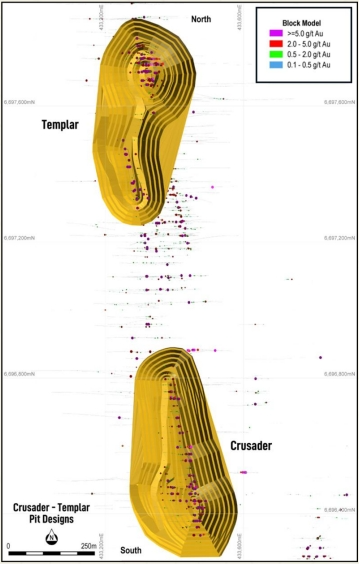
Crusader–Templar Pit Designs
Permitting largely in place
One of the more notable aspects of the Wallbrook story is how much of the groundwork has already been completed.
Key approvals for Crusader–Templar — including mining leases, water licences, works approvals and vegetation clearing permits — are largely in place, with several secured through 2025 and early 2026.
What remains is more operational in nature: finalising haulage arrangements, securing a toll treatment partner and progressing operating licences. It suggests the project is moving out of the regulatory phase and into execution planning — often a critical inflection point for junior developers.
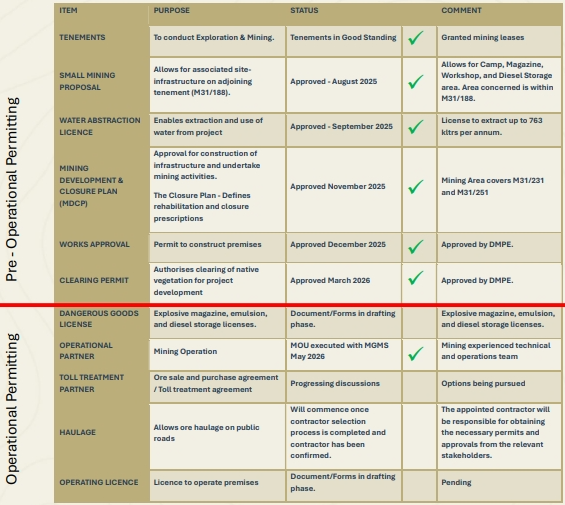
Permitting Status for Crusader–Templar
A broader gold system emerging
While Crusader–Templar anchors the near-term narrative, the broader Wallbrook landholding tells a bigger story.
The project spans 192 square kilometres and sits within a structurally favourable corridor between Northern Star’s Carosue Dam and Porphyry operations — a setting that supports the idea of a multi-million-ounce district.
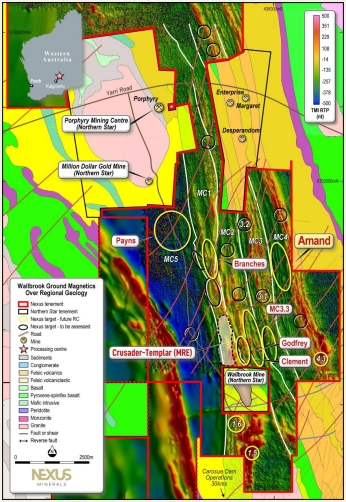
Wallbrook Gold Project — Emerging Gold Camp
So far, five mineralised corridors have been identified, with around 90% of the tenement package still largely unexplored.
Recent drilling has started to flesh out that potential across a series of emerging prospects:
- Branches: High-grade hits including 5m at 17.91 g/t and multiple broad intercepts, with mineralisation extending over a 1.5km corridor.
- Payns: Strong near-surface results such as 5m at 8.10 g/t including 1m at 30.05 g/t, pointing to structurally controlled high-grade zones.
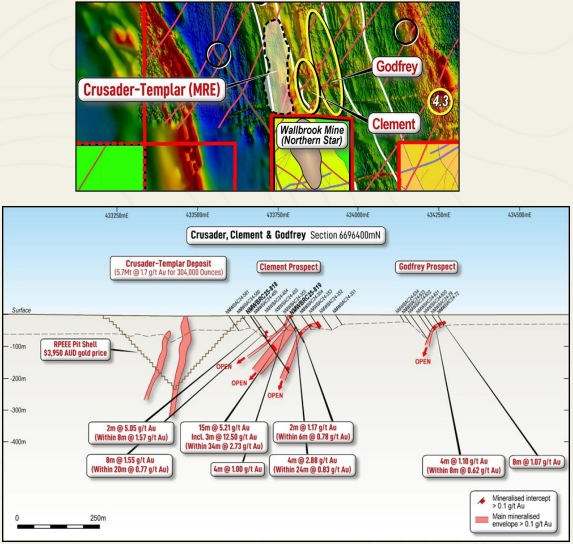
- Clement: Broad, consistent mineralisation with intercepts like 15m at 5.21 g/t, suggesting potential for scale.
Other prospects, including Amand and Godfrey, are being advanced towards resource drilling, while an ongoing ~22,000-metre RC program is targeting both extensions to the existing resource and new discoveries.
Together, the exploration results reinforce the idea that Crusader–Templar may be just one component of a much larger gold system.
Pinnacles adds a higher-grade angle
Alongside Wallbrook, the Pinnacles joint venture provides a complementary piece of the puzzle.
Here, Nexus holds a 90% interest, with Northern Star as a 10% contributing partner. The project hosts a higher-grade underground resource of 78,000 ounces at 4.0 g/t gold, including a 66,000-ounce underground component at 4.6 g/t.
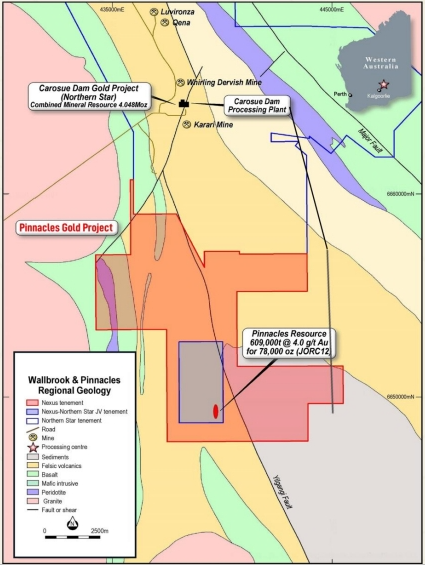
Pinnacles JV Gold Project
The development concept is straightforward: ore would be sold to Northern Star and processed through the nearby Carosue Dam mill, just 13 kilometres away.
An underground study is under way, with next steps focused on mining proposals and permitting.
While smaller in scale, Pinnacles offers exposure to higher-margin underground mining and existing infrastructure — a different development pathway that could complement any future open-pit operations at Wallbrook.
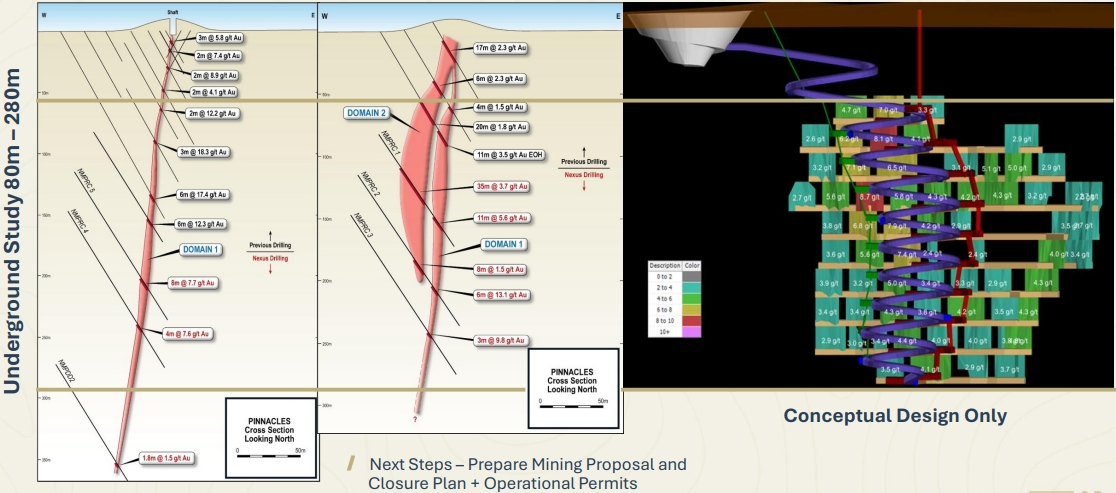
Pinnacles JV (with NST)
A longer-term diversification play
Beyond Western Australia, Nexus is also quietly building a much larger exploration footprint in New South Wales.
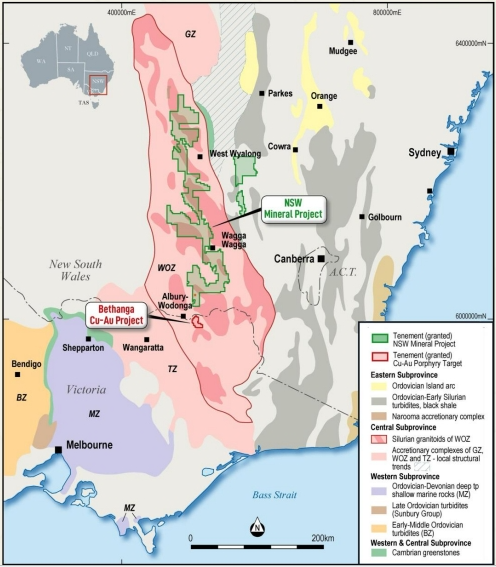
NSW Minerals Project
The company has assembled more than 7,500 square kilometres of tenure across the Wagga-Omeo Zone, targeting a mix of gold, copper and critical minerals including lithium, caesium and tin.
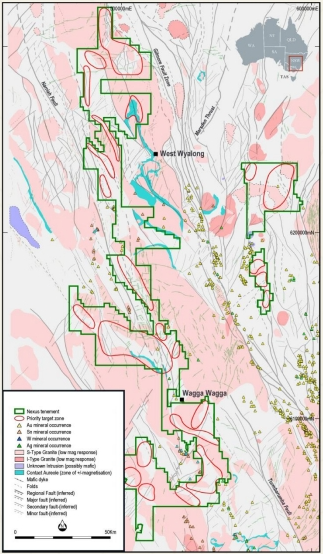
7,500KM2 “Mega Peg"
Early-stage work has already identified multiple priority targets based on geological and geophysical signatures, with field programs under way to refine those prospects.
It is a much earlier-stage play compared to Wallbrook, but it adds a layer of longer-term optionality — particularly in a region increasingly recognised for its potential to host lithium-caesium-tantalum pegmatites and associated mineral systems.
Shifting from discovery to delivery
For much of its recent history, Nexus has been defined by exploration progress — expanding its footprint, building a resource base and identifying new targets.
That story is still intact. Wallbrook remains largely underexplored, and the scale potential is far from fully tested.
But the emphasis is starting to broaden.
With a defined resource, advancing permitting, early-stage commercial agreements and improving gold price tailwinds, the company is now beginning to map out what development could look like — and how it might be funded and executed.
Nexus is no longer just building ounces in the ground. It is starting to shape how those ounces might ultimately be mined — and, crucially, how that transition from exploration to production could be achieved without the heavy capital burden that often stalls projects at this stage.
With multiple prospects advancing alongside Crusader–Templar, Nexus is steadily building a broader gold camp narrative at Wallbrook.
Projects Summary