
While the world’s largest technology companies race to secure power for artificial intelligence infrastructure, one question is whether existing digital infrastructure operators can reposition themselves to meet that demand.
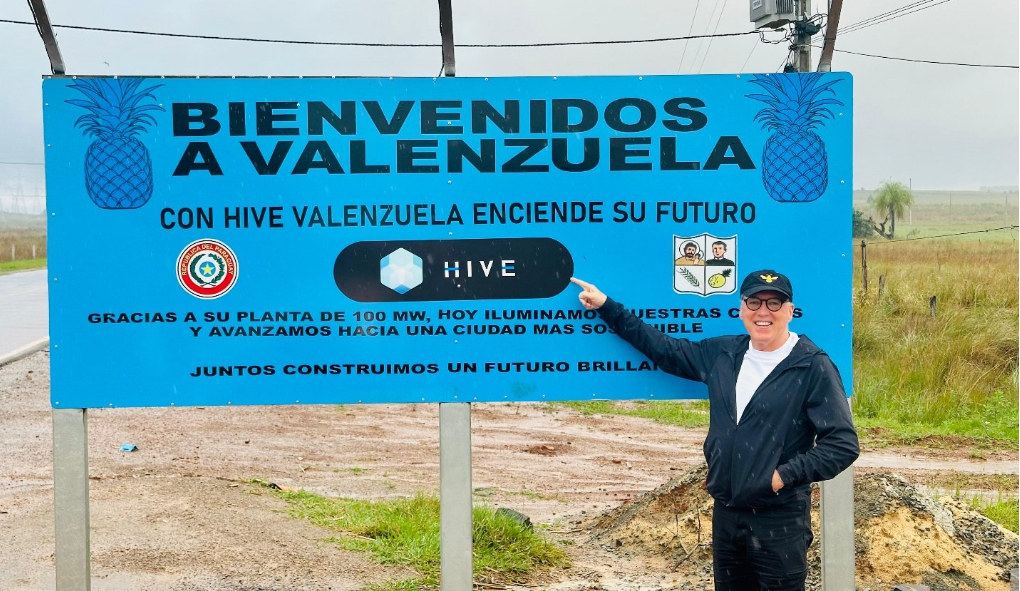
HIVE Digital Technologies Ltd (TSX:HIVE, NASDAQ:HIVE, FRA:YO0, BVC:HIVECO), long known as a Bitcoin miner, is making good on that shift. The company operates hydro-powered data centers across Canada, Sweden, and Paraguay, with current capacity of 440 megawatts and a stated path to 540 MW. Built initially for cryptocurrency mining, that infrastructure is now being adapted to support high-performance computing (HPC) workloads tied to AI.
The opportunity is tied to a broader constraint. Hyperscale AI facilities can require hundreds of megawatts of continuous power, and new capacity can take years to build. Industry forecasts point to potential supply gaps in the coming years, putting a premium on already connected, operational power.
“Most people still think of AI as just ChatGPT or a chatbot, but the reality is much broader,” executive chairman Frank Holmes said in an interview with Proactive. “Without data centers, there is no streaming, no Netflix, and no real-time communication.”
Today, HIVE operates two distinct but related businesses: Bitcoin mining and AI-focused compute. Bitcoin remains the dominant contributor. The company generated $88.2 million in revenue from mining in its most recent quarter, producing 885 Bitcoin, while average hashrate rose 41% sequentially to 22.9 exahash per second. Total quarterly revenue reached $93.1 million, up 219% year over year, with gross operating margin expanding to 35% from 18% a year earlier.
The second business, BUZZ HPC, is materially smaller but rapidly scaling and central to the company’s strategy. In the company’s most recently-reported quarter, it generated $4.9 million in quarterly revenue and has signed $30 million in two-year AI cloud contracts tied to planned deployment of 504 NVIDIA B200 GPUs. Management has set a target of $225 million in HPC revenue by late 2026.
The key is a dual-engine, digital infrastructure platform. The platform converts low-cost, clean power into institutional products—either virgin Bitcoin from a SOC 1 and SOC 2 compliant US pool, or contracted Nvidia GPU AI compute sold in dollars under multi-year agreements, Holmes explained. “That’s driving the growth of a diversified infrastructure company, and it’s central to the AI boom.”
HIVE’s strategy rests on the overlap between Bitcoin mining and AI data centers. Both require large amounts of power, cooling systems, and physical space. The company is seeking to convert portions of its existing footprint to higher-value AI workloads rather than building new facilities from scratch.
The economic argument is straightforward: AI workloads can generate significantly more revenue per megawatt than cryptocurrency mining, though they also require higher upfront investment, particularly in GPUs and cooling systems.
Rather than fully exiting mining, HIVE is maintaining Bitcoin operations as a source of cash flow while selectively upgrading sites. The approach is intended to limit capital intensity, though the scale of future investment required to support GPU deployments remains an open question.
Holmes described the company’s approach as disciplined, securing contracts before deploying hardware and avoiding speculative buildouts.
Access to power is a central part of HIVE’s positioning. The company’s 440 MW of operational capacity is already connected to the grid and largely powered by hydroelectric energy, a key differentiator, according to Holmes. “The model is simple: to be successful, you need stranded or surplus electricity, access to land, and depending on the use case, water for cooling systems,” he said. “But the two core inputs are energy and land.”
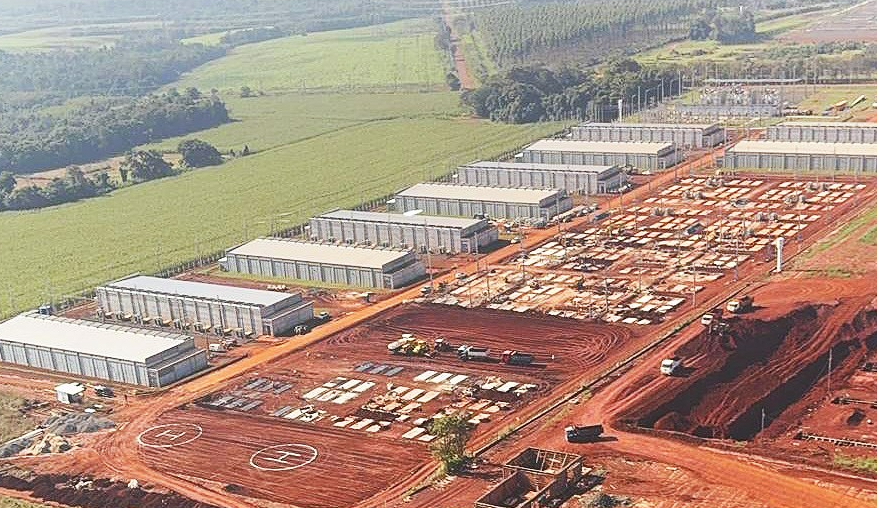
Not all capacity may be immediately suitable for AI workloads, and upgrading facilities to higher-tier data center standards can require additional time and capital. Still, in an environment where new data center projects can take years to permit and construct, existing infrastructure may offer a relative advantage.
HIVE has also pointed to sovereign AI — domestically controlled computing infrastructure — as a potential tailwind. The post-2022 geopolitical environment, from Russia's invasion of Ukraine to US CLOUD Act concerns and semiconductor export restrictions, has increased focus on where data is processed and stored, with governments seeking more local control over AI capabilities.
In Canada, the federal government has committed funding to support AI infrastructure and has called for proposals from private-sector participants. HIVE has taken steps in that direction, including the acquisition of a 7.2 MW data center in Toronto through its BUZZ HPC subsidiary, with plans to upgrade it to Tier III standards.
To support its transition, HIVE raised $115 million in April 2026 through 0% exchangeable senior notes due 2031. The structure carries no cash interest, preserving operating cash flow in the near term.
Near-term execution will center on scaling the HPC business from its current base. Management has indicated that annualized HPC revenue could approach $200 million within twelve months, a significant increase from the current $4.9 million quarterly run rate.
“We’ve pivoted and moved around over time, and now we serve about 10,000 customers in 80 countries,” Holmes said. “We’re scaling toward roughly $3 million a month in revenue, and I believe this time next year we should be up more than $100 million in additional revenue from that line, potentially approaching $200 million.”
HIVE also points to a valuation gap relative to US-listed peers, which management attributes in part to index inclusion and investor access. “Many of our peers that have re-domiciled are now part of those US indices, where a substantial portion of their shareholder base comes from passive ETF flows, including the Russell 2000 and other technology-focused benchmarks,” Holmes said. “That’s a key structural difference. I think over time, that gap will close as more companies move into those indices, and that could drive a meaningful re-rating.”
HIVE is in the midst of repositioning itself from a cryptocurrency miner toward a broader digital infrastructure company, combining an existing base of power-connected facilities with an emerging AI compute business that remains small but is expected to grow.
Whether that transition succeeds will depend on execution: converting infrastructure, deploying capital efficiently, and scaling contracted AI revenue while maintaining cash flow from mining.
For now, the company reflects both sides of that shift: a Bitcoin-driven revenue base alongside an early-stage push into AI infrastructure, with the balance between the two likely to define its trajectory over the next several years.