
Gold exploration stories often turn on a single moment — a key drill hit or a result that changes the narrative. For NewPeak Metals Ltd (ASX:NPM, OTC:NPMFF, FRA:NPM), the next few months could deliver several of them.
With drilling under way in Argentina and fresh assays pending in Queensland, the company is moving into a phase where strategy, timing and geology begin to come together. The focus is shifting beyond isolated high-grade hits towards a broader question: whether a much larger system is emerging — and whether it can be defined in a way the market recognises.
At the centre of that shift is a deliberate change in thinking at NewPeak’s flagship Las Opeñas Gold Project.
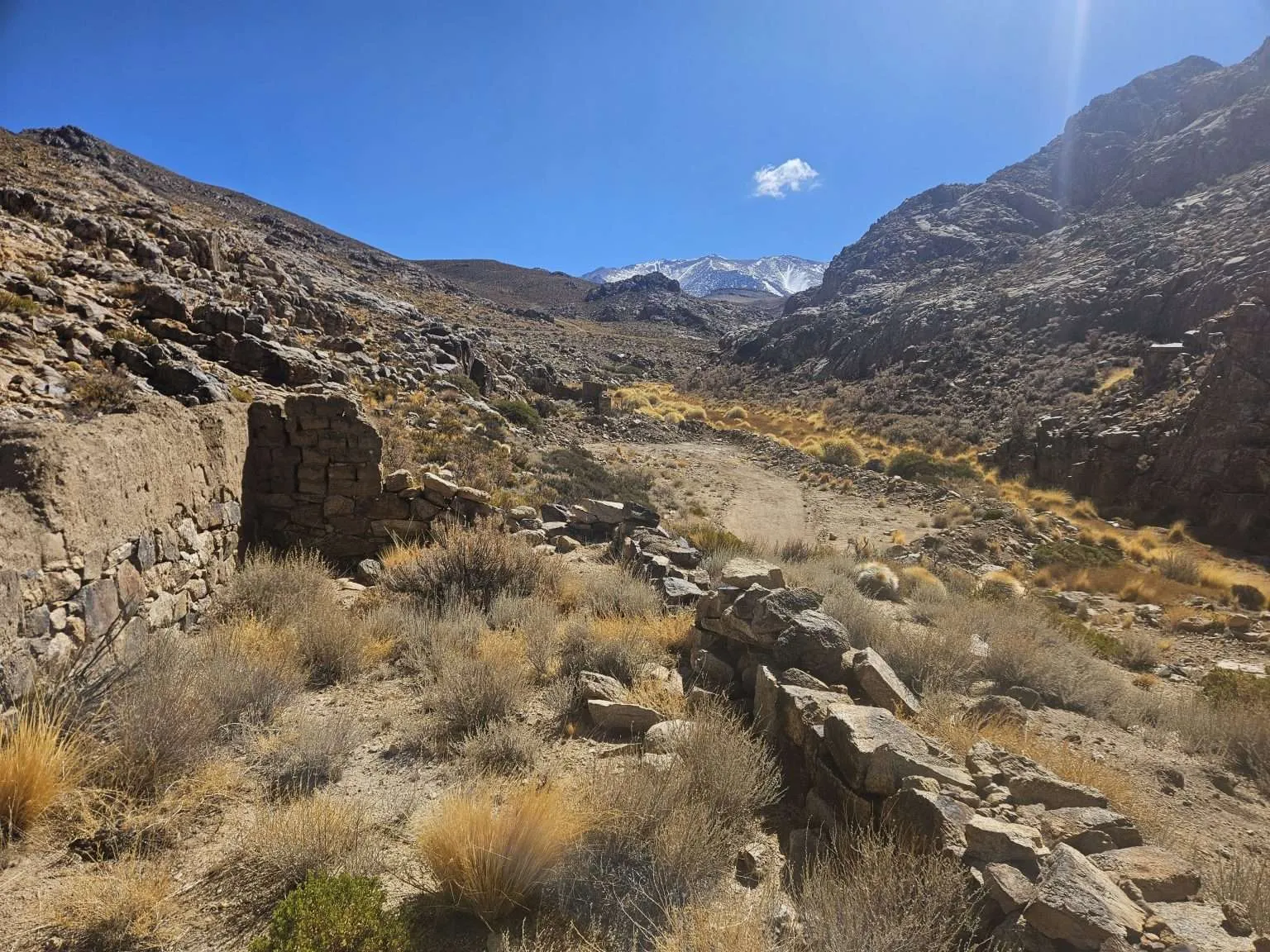
Las Opeñas Gold Project (Source: NewPeak Metals)
Returning to scale at Las Opeñas
Las Opeñas sits in Argentina’s San Juan Province, a Tier 1 region that has steadily emerged as one of South America’s most active mining jurisdictions, ranking it among the top mining provinces on the continent — and higher than any jurisdiction in Australia — in a recent Fraser Institute Survey.
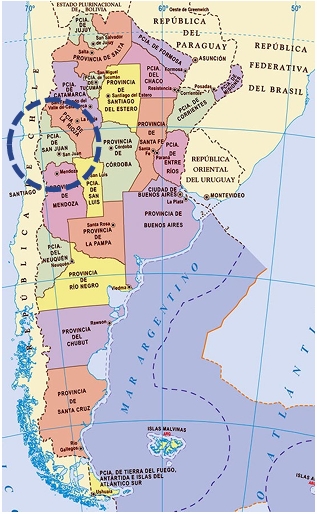
San Juan Province, Argentina
San Juan hosts a deep roster of major operators, including Barrick, BHP/Lundin, Glencore and McEwen Mining, alongside newer entrants such as Challenger Gold and Austral Gold. Recent discoveries such as Filo del Sol (BHP/Lundin) and Hualilan (Challenger) continue to reinforce the scale of mineral systems across the Andean belts.
For NewPeak, Las Opeñas offers not just proximity to established mines, but a geological setting that suggests the potential for a large, multi-phase system that has not yet been fully tested.
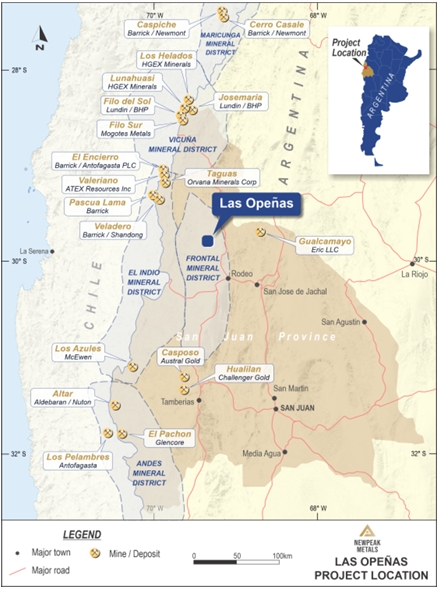
Location of Las Opeñas gold project in San Juan Province
NewPeak first secured an interest in the project in 2019 and has since consolidated its position, acquiring the remaining stake from Genesis Minerals in October 2025 to take full ownership of the 1,462-hectare landholding.
The project itself has a longer exploration history. Initial work by Teck Resources between 2005 and 2009 focused on mapping and surface sampling, before Genesis advanced the project with first-pass drilling between 2012 and 2014.
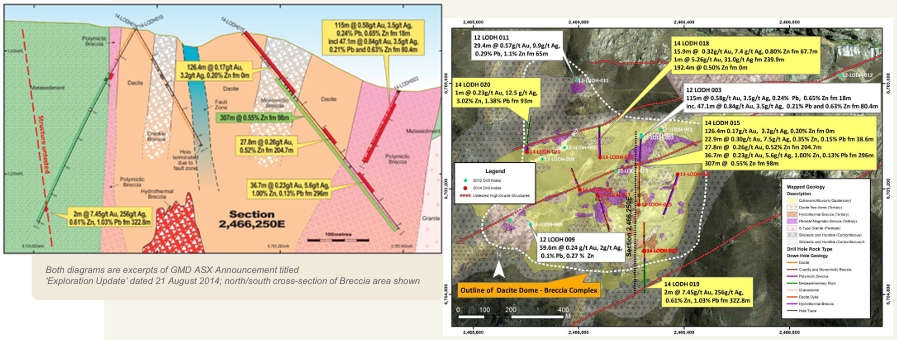
2012 & 2014 Genesis Minerals drilling showed potential for large-scale breccia deposit
That drilling, while relatively shallow, confirmed broad zones of gold-silver-polymetallic mineralisation within a breccia system, including long intercepts such as 115 metres at 0.58g/t gold from near surface. The results pointed to a large, structurally controlled system with multi-metal anomalism and clear indications of scale, even if higher-grade zones were not yet fully defined.
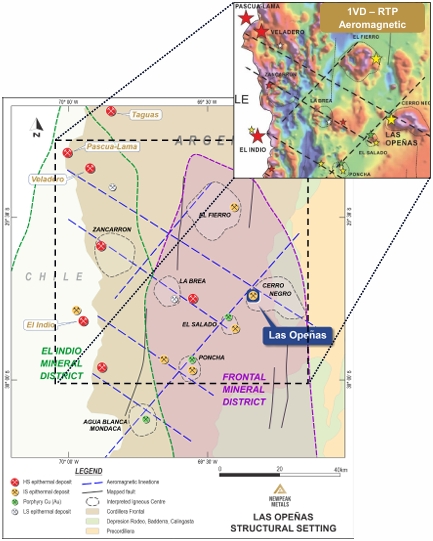
Epithermal Au/Ag/polymetallic setting in central Andes
When NewPeak entered the project in 2019, exploration initially focused on a different part of the system. Drilling targeted nearby outcropping quartz veins in an effort to chase higher-grade mineralisation, reflecting the lower gold price environment at the time.
That work delivered stronger grades over narrower intervals, supported by high-grade surface sampling, but did not clearly demonstrate the broader scale suggested by the earlier breccia-hosted results.
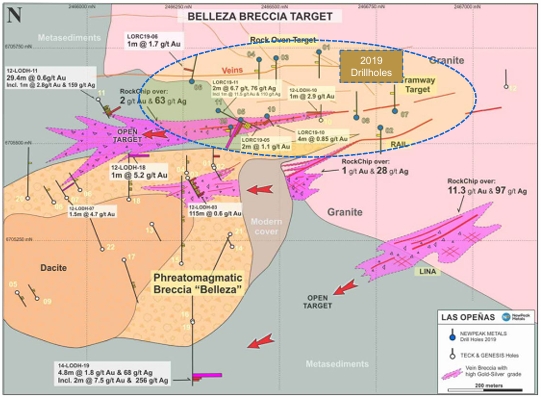
2019 NewPeak approach targeted higher grades in adjacent vein area
The current strategy marks a clear pivot back to that earlier interpretation. Rather than focusing on discrete high-grade veins, NewPeak is now targeting the breccia-hosted system more systematically, testing whether it can support a larger, continuous mineralised footprint.
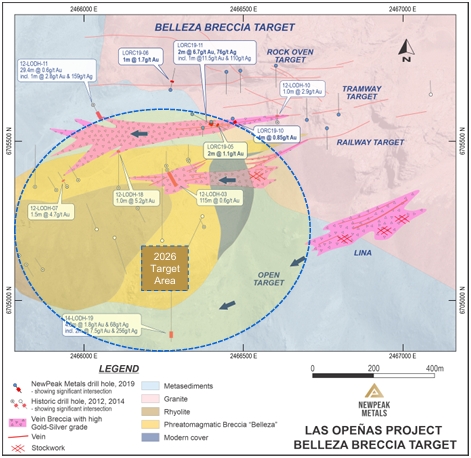
2026 Current NewPeak approach: Look for scale in breccia area, define resource
Depth potential and system scale
One of the more compelling aspects of Las Opeñas is the suggestion that mineralisation may strengthen at depth. Historic drilling indicates that in some holes, gold grades increase below shallow levels, pointing to the possibility that earlier programs did not fully test the system.
Geologically, the project sits within a structurally complex environment, where volcanic rocks, intrusive phases and major fault systems intersect. Breccias, veins and hydrothermal alteration have all been identified across the project area — a combination often associated with large, multi-stage mineral systems.
Recent reinterpretation work has outlined a broad breccia system measuring roughly 800 by 600 metres at surface, providing a clearer sense of the scale NewPeak is now aiming to test.
That combination of structural complexity, multi-phase mineralisation and emerging scale underpins the company’s current exploration focus.
NewPeak managing director Mark Purcell recently spoke with Proactive about its drilling plans at Las Openas and other upcoming catalysts:

Drilling program targets scale and definition
The company’s current drilling program is designed to move beyond early-stage exploration and test that scale more directly.
A minimum 2,500-metre diamond drilling campaign is under way, with contractor Ecominera engaged and site works completed ahead of an April start.
The program is focused on several key priorities:
- testing below the depth limits of earlier drilling to assess fresh sulphide mineralisation
- tightening drill spacing in selected areas to evaluate continuity
- targeting less obvious structural features that may not be expressed at surface
The aim is not just to confirm mineralisation, but to begin building towards a maiden resource — a step that can materially reshape how the project is assessed.
Further drilling is expected to follow if early results support the geological model, with scope to expand the program later in the year.
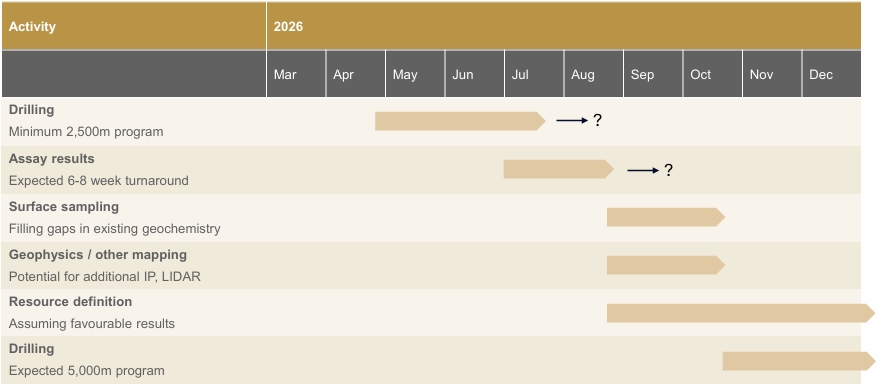
Exploration plan – Las Opeñas
Tansey provides near-term catalyst
While Las Opeñas represents the longer-term opportunity, NewPeak’s Tansey Gold Project in Queensland offers a more immediate source of news flow.
The company recently completed 1,179 metres of diamond drilling at Tansey, targeting extensions beneath and adjacent to the historic South Burnett gold mine, which was previously mined to depths of around 80 metres.
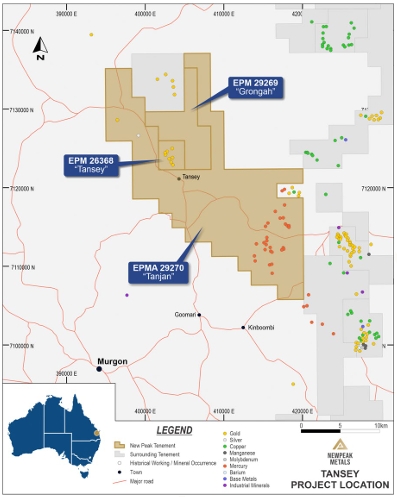
Tansey Project Location
The program was designed to assess whether mineralisation extends beyond the shallow historic footprint and to provide a clearer understanding of the broader system.
Gold at Tansey is associated with quartz and quartz-calcite veins within graphitic sediments and intrusive rocks, with sulphide minerals including pyrite and arsenopyrite pointing to structurally controlled mineralisation.
Assay results are expected in the near term, positioning Tansey as the first meaningful test of that deeper system and a near-term catalyst alongside the work in Argentina.
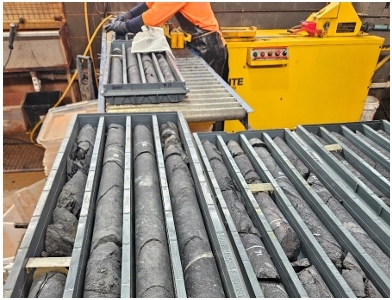
Tansey drill core being prepared at ALS Brisbane
Market backdrop and positioning
NewPeak’s exploration push comes at a time when broader conditions are supportive of gold-focused exploration. Strong prices have lifted interest across the sector, particularly for junior explorers with exposure to discovery potential.
At the same time, Argentina has been working to improve its investment framework for mining, with regulatory changes aimed at attracting capital and supporting project development. San Juan has been a key beneficiary of these shifts, reinforcing its position as a major destination for exploration.
Within that context, Las Opeñas sits in a region where both geology and jurisdictional momentum are working in its favour.
Multiple pathways to value
From a corporate perspective, NewPeak remains a relatively small-cap explorer, with a modest market capitalisation and around $1.4 million in cash at the end of the March quarter.
The company also holds a stake in Lakes Blue Energy, providing exposure to a separate asset that could offer non-dilutive funding optionality depending on outcomes from gas well testing.
That additional lever, combined with two active exploration programs, gives NewPeak multiple pathways to generate value.
Board and management ownership remains relatively high, aligning leadership closely with shareholder outcomes.
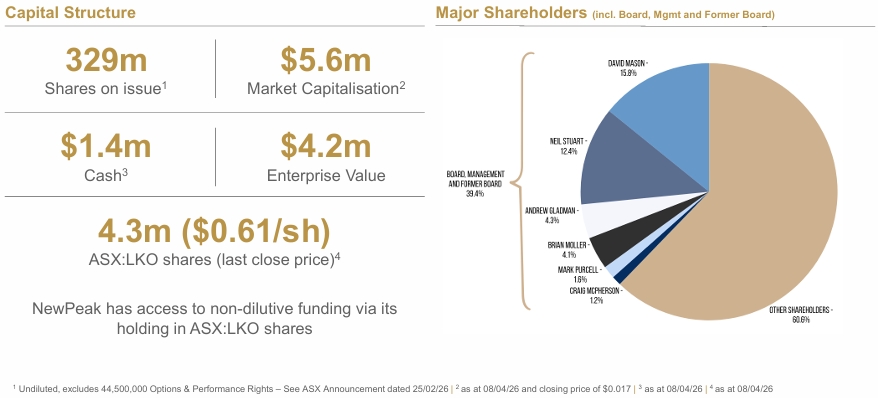
Corporate snapshot
A defining stretch ahead
Exploration rarely unfolds in a straight line, but certain periods tend to matter more than others.
For NewPeak, the combination of active drilling at Las Opeñas, imminent assay results from Tansey and a refined focus on system scale places it in one of those periods. It is a transition point — from building the geological picture to testing it more systematically.
After several years of groundwork, NewPeak is now moving into a phase where that picture begins to take clearer shape.