
Graphene Manufacturing Group Ltd (TSX-V:GMG, OTCQX:GMGMF) said on Wednesday its graphene aluminium-ion battery technology has demonstrated improved performance metrics, including the ability to charge in as little as six minutes.
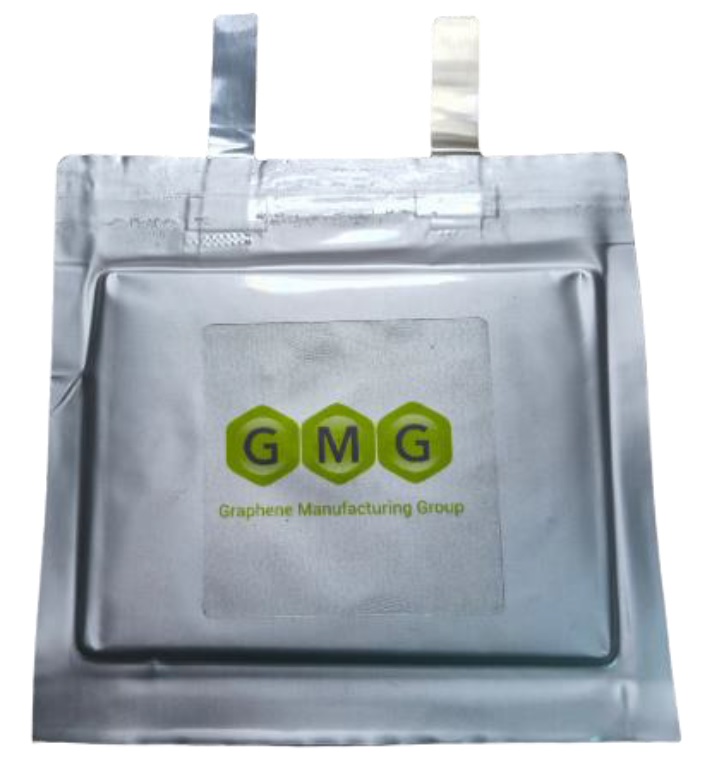
The company, working with the University of Queensland under a joint development agreement with mining major Rio Tinto and with support from the Battery Innovation Center in the US, said its G+A Cells showed gains in energy density and fast-charging capability compared with lithium titanate oxide (LTO) batteries.
Testing indicated the cells’ energy density has nearly doubled to 49 watt-hours per kilogram (Wh/kg) from 26 Wh/kg reported in December, while reaching 101 Wh/kg when charged over one hour, up from 58 Wh/kg previously. The batteries also maintained performance over hundreds of cycles at a six-minute charging rate.
LTO batteries, widely used in high-power applications, typically offer energy densities of 50–80 Wh/kg and can charge rapidly but at a higher cost. GMG said its technology is approaching similar performance levels while potentially offering lower manufacturing costs.
The company’s non-executive director Bob Galyen said the chemistry could enable faster energy turnaround and reduce reliance on lithium-based systems, citing advantages in charge time, temperature tolerance and raw material availability.
GMG said its cells use aluminium and graphene rather than lithium or copper, and incorporate a chloride-free, non-corrosive electrolyte designed to support stable high-rate charging. Aluminium foil is used as a substrate for both electrodes, which the company said could lower costs and weight.
The company added that the technology has met key target specifications for heavy mobile equipment, including charging in under six minutes and achieving energy density above 100 Wh/kg after one hour of charging.
"This is a significant step up from where we were at with battery performance in December 2025 and we see the required performance for our targeted use case being largely met - which means we can start to put together the next stages of the battery maturation program - including partnerships and manufacturing plans,” CEO Craig Nicol said
The battery remains at a mid-stage technology readiness level, with further work planned to validate long-term cycle life, safety testing and performance under varying temperatures. GMG said it aims to begin customer testing in 2026 and small-scale commercial production in 2027.
The company sees potential applications across commercial vehicles, grid storage, industrial equipment and aerospace, markets currently served in part by LTO batteries, which generated an estimated $5.7 billion in global sales in 2025.
GMG said it expects its cells could eventually reach energy densities above 160 Wh/kg with further development.
Shares of GMG traded up about 11% on the update.