
- FTSE 100 up 260 points at 10,608
- US and Iran agree 2-week ceasefire
- Oil prices drop as Hormuz Strait to open
4.58pm: Stocks surge
News of a ceasefire deal struck between the US and Iran, which could end conflict in the Middle East, boosted global stocks on Wednesday. The FTSE 100 closed up 260 points at 10,608.
“The old adage suggests investors should buy on the sound of cannon, and sell on the sound of trumpets. But over the past six weeks investors have done the opposite,” IG chief market analyst Chris Beauchamp said.
“Having cut back on stocks when the war erupted they are now rushing back to buy, and with the S&P 500 now trading at a much lower valuation the logic makes sense.”
4.14pm: Oil rebounds as Hormuz remains tightly controlled by Iran
Gains for the FTSE have been trimmed as oil prices have pared some of their earlier losses.
Oil prices had been falling back to levels seen almost four weeks ago but have picked up, amidst reports that the Iranian navy has threatened ships attempting to pass through the strait of Hormuz without Tehran’s permission.
The Navy apparently told ships that transit through the crucial waterway remained closed and so those that do not have perimission "will be targeted and destroyed".
The message was cited by "several shipping sources", according to the Guardian.
Brent crude oil was down at $90.44 a barrel before this but has now climbed back almost to $95 a barrel.
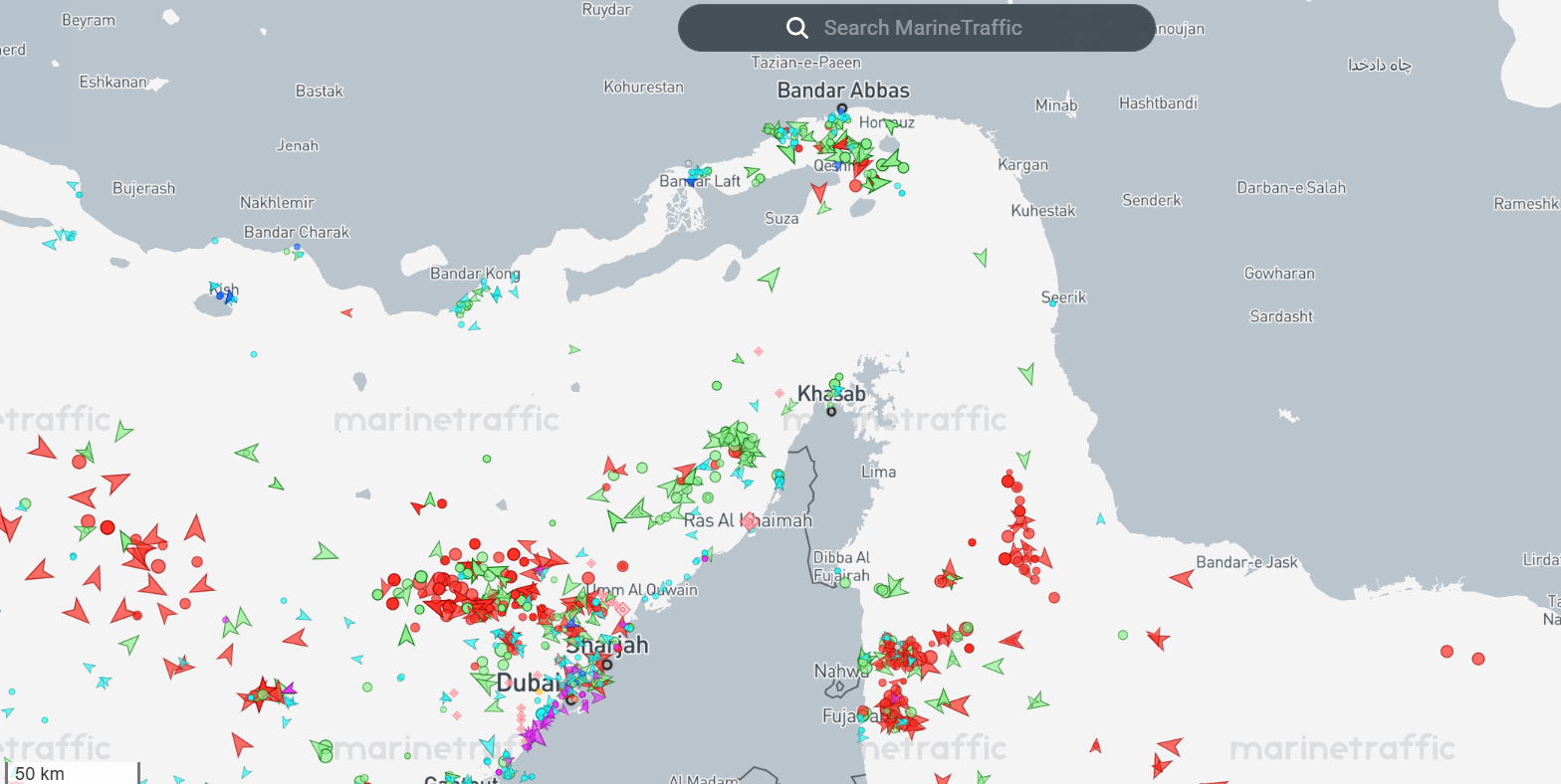
Tracking data mapped by MarineTraffic shows still most ships are bunched either side of the Strait.
On the FTSE, top of the leaderboard looks like this:
- Rolls-Royce +10.6%
- Antofagasta +10.2%
- Standard Chartered +10%
- Lion Finance +9.7%
- Spirax +9.1%
- Melrose Industries +8.5%
- IAG +8.4%
- Weir Group +7.9%
- InterContinental Hotels Group +7.5%
- Persimmon +7.6%
At the other end, there are six companies in the red, with only BP, Shell and Centrica down 6.3%-1.9%.
3.41pm: Polymarket bets draw suspicion and ire
Prediction markets like Polymarket are under fresh scrutiny after a series of well-timed bets on a US-Iran ceasefire raised concerns about potential insider trading.
Using data from analytics firm Lookonchain and analysis from Bubblemaps, Bloomberg has reported that several newly created Polymarket accounts reportedly made more than $480,000 by betting on a truce before April 7, while other accounts that had previously predicted military events generated over $560,000 from similar trades.
There is no direct evidence of insider dealing, as cases rely on circumstantial data rather than clear proof, but the pattern of profits has drawn attention.
Bloomberg also highlights structural issues in prediction markets, as the outcome of last night's ceasefire contract remains disputed, leaving traders waiting days for payouts, even as more than $60 million in volume continues to trade.
Unlike traditional markets, these platforms rely on user voting systems to resolve outcomes, often leading to disagreements over how real-world events fit predefined rules. In this case, debate has centred on whether the ceasefire qualifies under the platform’s criteria.
3.18pm: Bitcoin founder revealed?
In a break from the Iran-inspired melt-up, some crypto news.
British cryptographer Adam Back has been identified as the most credible candidate yet for Satoshi Nakamoto, the pseudonymous creator of Bitcoin.
A forensic investigation by the New York Times journalist John Carreyrou uses evidence centred around an analysis of writing style, technical fingerprints and circumstantial evidence accumulated over 17 years.
The report used an AI-powered analysis of a database of more than 30,000 users to examine a highly specific linguistic quirk: the incorrect use of hyphens.
Satoshi's writing, across the original Bitcoin white paper and early forum posts, displays a consistent pattern of hyphenating compound nouns (ie block-chain) while leaving compound adjectives (peer to peer) unhyphenated, the reverse of standard usage.
(This seems weak to me, as around 2010 'blockchain' as one word wasn’t standardised yet, and many technical terms were still inconsistently hyphenated.)
2.48pm: US stocks storm higher
In New York, stocks have opened sharply higher, led by the tech-powered Nasdaq, gaining 3.1%.
The Dow Jones is up 3% and the S&P 2.5%.
Gains on the Nasdaq 100 were led by chip and tech names, with Western Digital, Lam Research, Axon Enterprise and ASML all up around 9%, alongside strength in Micron and Applied Materials, pointing to a broad semiconductor rally.
Among the mega caps, Meta Platforms was up close to 5%, while Nvidia, Alphabet, Apple, Amazon have risen over 3%, with Microsoft and Tesla up over 2.5%, and Apple 1.6%.
In London, this transatlantic surge has taken a little of the wind from the Footsie's sails.
2.07pm: Broker notes - RELX, ConvaTec, Close Bros
Citi has upgraded RELX to 'buy' from 'neutral', arguing that a 14% year-to-date de-rating has created a more attractive risk/reward profile for the stock.
The upgrade is part of a broader reassessment of the European media sector, which Citi said has underperformed by approximately 20% year to date as artificial intelligence-related concerns weigh on sentiment.
The bank said it had revisited its valuation frameworks and adjusted target price methodologies across the sector following the 2025 results cycle, the evolving AI debate and heightened macro uncertainty stemming from the Middle East conflict.
Close Brothers shares may have already priced in the good news from its encouraging motor finance update, according to analyst Gary Greenwood at Shore Capital, who now sees limited upside after a sharp rally.
Greenwood described the update as a moment for investors to “breathe a sigh of relief”, noting the estimate was close to expectations and well within the group’s capital capacity, but downgraded to 'hold' from 'buy' as he says now may be a good time to take profits.
Deutsche Bank says ConvaTec's investor day tomorrow is less about new financial targets, following an upgrade to mid-term growth guidance at February's full-year results, and more about providing evidence to support the existing algorithm.
The bank said investors would focus on the credibility of the medical device company's 6-8% organic growth target from 2027 and the pathway to mid-20s operating margins, with pipeline visibility, near-term input cost pressures and capital allocation all expected to be front of mind.
1.35pm: Trump talks Iran uranium, sanctions and tariffs
Donald Trump says as part of the deal with Iran "there will be no enrichment of uranium".
In a Truth Social post, he said the US will be working with the country to "dig up and remove all of the deeply buried (B-2 bombers) nuclear 'dust'."
Iran's nuclear enrichment programme has been "under very exacting satellite surveillance" and "nothing has been touched from the date of attack".
He also said the US will "talking tariff and sanctions relief with Iran", with many of the 15 points of a US dea having "already been been agreed to".
In a follow-up post, he said any country "supplying military weapons to Iran will be immediately tariffed, on any and all goods sold to the United States of America, 50%, effective immediately. There will be no exclusions or exemptions".
He wrote:
A Country supplying Military Weapons to Iran will be immediately tariffed, on any and all goods sold to the United States of America, 50%, effective immediately. There will be no exclusions or exemptions!
12.32pm: Wall Street futures pointing to surging start
US stocks are set for a sharply higher open, with futures pointing to strong gains due to the Iran ceasefire agreement.
Nasdaq futures are leading the move, up 3.5%, while the Dow Jones and S&P 500 are both seeing rising around 2.8%.
Gains have increased in London too, with the FTSE 100 led by three miners and two aerospace parts suppliers all up over 10%.
Almost half the blue-chip index is up more than 5%, while around two-thirds are up at least 3%.
At the other end of the scale, six names are in the red: BP (down 5.8%), Shell (down 5.6%), Centrica (-1.6%), BAT -1.15%), Imperial Brands (-0.7%) and Admiral Group (-0.5%).
12.14pm: Shipping Strait reopens
Shipping has resumed in the Strait of Hormuz following the US-Iran ceasefire announcement, according to data from MarineTraffic.
The maritime analytics provider reported "early signs of vessel activity emerging" in the Strait, led by Greek-owned bulk carrier NJ Earth and Liberia-flagged Daytona Beach.
Iran said last night that passage through the key waterway will be possible during the two-week ceasefire "via coordination with Iran’s armed forces and with due consideration to technical limitations". Reports have suggested Iran and Oman may charge fees for transit.
Hundreds of vessels remain in the region, MarineTraffic said in a social media post, including over 400 tankers, over 50 carriers of LNG (liquefied natural gas) and LPG (liquefied petroleum gas).
Vessel movements resume in the Strait of Hormuz following ceasefire announcement
Early signs of vessel activity are emerging in the Strait of Hormuz following a ceasefire announcement, which includes a temporary reopening of the strategic waterway to allow for negotiations.… pic.twitter.com/CSy6PZlCJ4
— MarineTraffic (@MarineTraffic) April 8, 2026
Two ships have passed through the Strait of Hormuz since Iran agreed to reopen the waterway as part of a ceasefire deal, maritime monitor Marine Traffic says. ???? Marine Traffic
— AFP News Agency (@en.afp.com) April 8, 2026 at 11:40 AM
11.27am: Exodus of UAE's British expats
One in eight residents of Dubai and other parts of the United Arab Emirates have departed the country since Iran started strikes in retaliation for the US and Israel's attacks.
Around 30,000 British residents have left the tax haven, according to local estimates, out of the 240,000 Britons calculated to have been resident before the war broke out.
The FT reported that 10-15% of the prewar resident population have moved out of the UAE, while the thousands of trapped holidaymakers have also departed.
Dubai, Abu Dhabi and other parts of the UAE have been subject to many more Iranian missile and drone attacks than other US allies in the region.
Expats who remain in place have reported nervousness despite the UAE's air-defence systems against missile and drone attacks on civilian infrastructure, including hotels, airports and industrial facilities.
Leisure and tourism spending is said to have dwindled to virtually zero, with advertising, media and other associated industries badly affected as confidence in Dubai's image as a safe and stable base has been shaken.
Newspaper reports cited others saying they are planning to leave Dubai for good, while the FT report cited locals who expected many would return to Dubai once a peace agreement was made.
10.53am: Talks on Friday, UK energy impact could be for many months
The next step in the Middle East ceasefire process will be talks between the US and Iran starting on Friday in Pakistan, which as emerged in recent weeks as a key mediator between the two nations.
Pakistan’s Prime Minister Sharif will host talks in Islamabad to "further negotiate for a conclusive agreement to settle all disputes", he said in a tweet.
President Trump’s accepted the general framework of Iran’s 10-point proposal as a “workable basis on which to negotiate".
Iran's foreign minister said safe passage through the Strait of Hormuz will be possible for two weeks "via coordination with Iran’s armed forces and with due consideration to technical limitations". Reports suggested the plan will allow Iran and Oman to charge fees for transits through the Strait.
Also, Israel is continuing to attack Lebanon in what it says is its continued fight against Hezbollah.
Market analyst Patrick Munnelly at Tickmill says Iran's statement on Hormuz "raises questions about its compatibility with Trump's demand for the 'complete, immediate, and safe opening' of the Strait".
As talks between the two nations are set to begin in two days, he says there is "a risk of negotiations collapsing due to some of the contentious demands outlined in Iran's ten-point plan".
"Even if diplomatic resolutions and peace prevail in the coming weeks, the financial markets are likely to experience lasting effect," he says, mentioning that damage to regional energy infrastructure could lead to supply constraints for an extended period.
"Examining the UK natural gas futures curve reveals that prices are expected to remain elevated for nearly a year, in stark contrast to the oil market, which shows a more pronounced backwardation over a shorter timeframe."
He says this is particularly relevant for UK consumers, given how natural gas prices influence the Ofgem energy price cap on household energy bills.
"Consequently, even in a scenario where the ceasefire holds, the inflationary repercussions from the damages incurred thus far could still have significant effects on both monetary and fiscal policy."
The outlook for interest rates is also complicated by this, with the anticipation of rate hikes "may have overshot" during the height of the conflict, Munnelly says, "suggesting that a downward adjustment in expectations is reasonable following news of the ceasefire".
However, with wholesale energy prices likely taking time to stabilise, markets could overcorrect the other way, so as policymakers work out their best path, he sees "a chance that while market rate expectations fluctuate dramatically, actual policy rates may remain unchanged for some time".
10.12am: A helium IPO for AIM
Another small London IPO has poked its head above the parapet.
Rift Helium, a primary helium exploration company focused on southwest Tanzania, is planning to float on AIM market later this month, raising £8 million through a placing and direct subscription.
The company says it intends to use the proceeds to advance its Upepo Project in the southwest African nation's Rukwa Basin, targeting environmental impact assessment approval, 3D seismic-led prospect definition and well drilling.
Upepo covers 283 sq km of licence acreage adjacent to confirmed helium discoveries within the basin.
9.42am: UK construction constriction eases after drier March
The UK construction PMI data suggested the industry decline eased in March, with the headline figure rising to 45.6 from 44.5 in February.
Sub-indices showed civil engineering rose to 44.8 from 41.0 in February, while housebuilding remained below the 40 mark for a fifth consecutive month. A mark of above 50 indicates growth, with a reading in the 40s or below pointing to contraction.
Better weather and stronger demand for projects in the energy sector boosted activity.
S&P Global reported that “a return to typical weather conditions helped to moderate the overall downturn”, as England experienced just 83% of its typical March rainfall after a wet first two months of the year.
9.38am: Oil prices settling
Oil prices have been roughly flat for the past few hours, with front-month Brent crude futures dropping from over $110 a barrel last night to almost $90 in the early hours, before settling at around $94.5 a barrel as they are now.
Similarly, US WTI slid from $115 a barrel to $95, after President Trump said a ceasefire had been agreed, subject to Iran allowing the “complete, immediate, and safe” reopening of the Strait of Hormuz.
Tamas Varga, analyst at PVM Oil Associates, called the reaction “textbook”, saying equities were broadly staging a relief rally while oil went “into freefall” on expectations that 10-13 million barrels per day of crude and product supply stranded behind the Strait could gradually return.
He added that the current quarter still looks set to be the tightest period for oil balances, and said a return to sub-US$70 crude remains unlikely over the next year or two because the geopolitical risk premium should stay elevated.
Elsewhere, stockbroker Shore Capital similarly expects relatively high crude to remain a feature in the market. Analyst James Hosie added: "Even if this ceasefire becomes a more lasting peace agreement, we do not expect oil and gas prices to return to their pre-conflict levels as it will take time for industry operations in the Persian Gulf to normalise."
9.03am: FTSE surges 250 points, ceasefire 'remains fragile'
After the first hour of trading, the FTSE is still roughly where it started, up just short of 250 points at 10,596.
The FTSE 250 index is up over 900 points or 4.1% at 22,460.
Across both London benchmarks, the top gainers are in the housebuilding, travel and mining sectors.
Builder Vistry Group and airline Wizz Air have both leapt over 13%, easyJet is up 10.1%, with other travel names on the rise, including cruise operator Carnival, up almost 10%.
Other sectors are seeing support too, with mid-caps Gamma Communications and Saga also posting double-digit gains.
The US-Iran ceasefire agreement "does not guarantee a lasting resolution, it provides both sides with a potential off-ramp and has already begun to ease some of the immediate pressure on global markets", says market analyst Daniela Hathorn at Capital.com.
"Crucially, the potential reopening of the Strait of Hormuz is the most significant development from a market perspective. The disruption had removed as much as 20% of global oil supply, and even a partial restoration of flows represents a major shift in supply dynamics.
"This has allowed markets to begin pricing out some of the extreme risk premium that had built up in recent weeks, helping to stabilise oil prices and support risk sentiment more broadly."
However, she cautions that the situation "remains fragile" and there is "a real risk that talks break down and the conflict reverts to its previous state, or even escalates further, once the ceasefire window expires".
Looking ahead, she says "the economic impact of the conflict is unlikely to fade quickly", with damage to infrastructure, higher shipping and insurance costs, and structural shifts in energy pricing "mean the shock will likely have a long tail, feeding through to inflation, growth and corporate earnings over the coming months".
"In that sense, while the ceasefire has improved the near-term outlook, the broader macro implications of the crisis are still unfolding."
8.47am: Close Bros jumps
Close Brothers is the biggest riser on the FTSE 350, up 19.3% after it estimated the new FCA motor finance rules will see its costs rise to around £320 million.
"This is only modestly higher than the £294m carrying value of the provision at the end of January so can be easily absorbed into existing capital resources," says analyst Ross Luckman at Panmure Liberum.
He says previously trying to determine the impact was "largely a guessing game", but the new figure is based solely on the updated FCA framework published last week, providing "significantly more confidence that the doomsday scenario has been ruled out, which should reduce the noise and volatility surrounding the shares allowing the company to finally begin to move on".
With the company stating it is currently considering its next steps, with no provision changes recognised at this stage, Luckman says his main takeaway is that "this should provide the market with confidence that the company will have to avoid an equity raise to fund the redress scheme".
8.12am: FTSE 100 flies at the open
There we go: the FTSE 100 has been launched 248 points higher to 10,596 in just over 10 minutes.
Miners and airline-associated shares are topping the early risers, with copper miner Antofagasta surging 14.5% and precious metals specialist Fresnillo up around 11%.
Aeroplane engine maker Rolls-Royce, housebuilder Persimmon, British Airways owner IAG and miner Anglo American are all up over 9%.
There are only five stocks in the red, with BP and Shell falling 8.2% and 7.1%, while British Gas parent Centrica drops 2.8%.
Two more, Schroders and BAE systems are just below flat.
7.57am: Shell expects much stronger trading profit
Shell PLC (LSE:SHEL, NYSE:SHEL) has revealed that first-quarter gas production will fall from the previous quarter after disruption linked to the war in the Middle East, but that trading profits are likely to be "significantly higher".
Ahead of full first-quarter results early next month, the FTSE 100 oil and gas giant said integrated gas output is expected at 880,000 to 920,000 barrels of oil equivalent per day, down from 948,000 in the fourth quarter, reflecting the impact of fighting in the Gulf on volumes from its Qatar operations.
Liquefied natural gas volumes are expected broadly in line, while upstream production is set to decline slightly.
Oil trading is expected to be "significantly" stronger than the previous quarter, while marketing earnings are also expected to be "significantly higher".
7.43am: Close Bros not changing motor finance provision yet
Close Brothers Group PLC (LSE:CBG) says it expects to face costs of about £320 million from the UK motor finance redress scheme.
The merchant banking group revealed its fresh estimate, which compares with an existing provision of £294 million set aside as of January, after the Financial Conduct Authority’s published its updated policy statement last week on compensating customers for historic commission arrangements on car loans.
The company said no changes have yet been made to its existing provision, which remains under review.
7.35am: A market view on the ceasefire
Alongside the US and Iran's two-week ceasefire agreement, President Trump posted that a 10-point proposal has been received from Tehran that he said was a "workable basis on which to negotiate" towards a more durable peace agreement.
"Unsurprisingly," says market analyst Michael Brown at Pepperstone, "the initial market reaction has been a positive one, albeit perhaps not as sizeable as one might’ve expected, largely owing to the grind higher in risk assets seen since the tail end of Tuesday’s cash session".
He says market participants "have been desperate for anything resembling good news for some weeks now, and even more desperate to see concrete steps being taken towards de-escalation" and so ticking both those boxes means people are willing to up their risk levels significantly, including buying shares.
Brown says this "helps to reinforce the theory that many market participants are operating in a mindset where they seek not to get ‘caught short’" and "when the probability of a U-turn is so high, it’s difficult to be especially bearish, for especially long, or with especially high conviction, as has been proved time & again during the Trump presidency".
Providing the ceasefire holds, including evidence of commodity flows through the Strait of Hormuz, and that the conflict is seen to be on a path towards de-escalation, he says, "it’s reasonable to assume that equities have probably now put in a bottom... which is unlikely to be tested unless tensions flare up once more".
Focus will also fall on the extent of the economic damage from the conflict and the surge in energy prices around the globe.
"Of course, the significant risk here is that the ceasefire doesn’t hold, that we then see a re-escalation in the conflict, and are essentially back to ‘square one’," says Brown, which for markets would mean higher oil prices, a rising dollar and "everything else from stocks to bonds to metals coming under considerable pressure".
7.21am: UK house prices fall
Away from the geopolitics, Halifax has released its house price index for March, showing a drop of 0.5%, following a 0.3% rise the month before.
Annual growth slowed to 0.8% from 1.2% in February.
Within England, the north east demonstrated the strongest annual percentage growth , at 5%, surpassing Scotland, while regionally, Northern Ireland's growth is highest at 8.7%.
South-east England saw a decline of 1.8%, with London house prices falling 1.2% on average.
Geopolitics was cited as the reason for the slowdown, by Amanda Bryden, Halifax's head of mortgages, who said the housing market's moved reflected "the wide uncertainty regarding the conflict in the Middle East".
"Concerns about higher energy prices pushed up inflation expectations, which in turn led to a rise in mortgage rates, reducing confidence that interest rates will be cut this year and dampening the initial momentum in the market seen at the start of the year."
She added: "The effect on house prices will largely depend on how long‑lasting these pressures prove to be and the wider implications for the economy and unemployment. Mortgage rates are a key factor for buyers, particularly those getting on the ladder for the first time, who are already balancing the challenge of saving a deposit, with the cost of borrowing.
“As a result, many are likely to watch movements in mortgage rates closely, before making a decision on any home purchase."
7.13am: FTSE 100 set to rocket as US-Iran ceasefire agreed
The FTSE 100 is expected to rocket roughly 300 points higher on Wednesday morning, as oil prices dived back to below $94 a barrel after the US and Iran agreed a two-week ceasefire.
London's blue-chip index had dropped 87.5 points or 0.8% to 10,348.79 yesterday, with mainland European counterparts falling around 0.6%-1% and Wall Street indices mixed but close to flat.
But Asian stocks surged overnight and this morning, including a 5.5% jump for Japan's Nikkei and 3.1% gain for the Hang Seng in Hong Kong, after the conditional ceasefire was agreed just hours before Donald Trump’s 8pm EST deadline, following last-minute mediation by Pakistan.
President Trump said the deal was “subject to the Islamic Republic of Iran agreeing to the COMPLETE, IMMEDIATE, and SAFE OPENING of the Strait of Hormuz”, adding he would “suspend the bombing and attack of Iran for a period of two weeks”.
Iran said its forces will “cease their defensive operations” if attacks stop and that “safe passage through the Strait of Hormuz will be possible” for two weeks under coordination.
Earlier, Trump had issued the crazed warning that "a whole civilization will die tonight", with US bombers reportedly already en route, unless an agreement was made.
He later called it “a big day for world peace” and said "big money will be made" once Iran begins a reconstruction process, while Israel backed the ceasefire but said it would not apply to fighting with Hezbollah.