
Purepoint Uranium Group Inc (TSX-V:PTU, OTCQX:PTUUF, FRA:P5X0) CEO Chris Frostad talked with Proactive about the company’s latest uranium exploration progress at its Dorado project in northern Saskatchewan, as well as the broader process behind making and advancing a discovery.
Frostad explained that Purepoint Uranium Group operates in one of the world’s most prolific uranium regions and works alongside major partners including Cameco, Orano and ISOEnergy.
The discussion focused on the company’s recent discovery at the Dorado project, specifically within the Nova zone, where initial drilling intersected high-grade uranium mineralization.
Proactive: Welcome back inside our Proactive newsroom. Joining me now is Chris Frostad, CEO of Purepoint Uranium Group. Chris, good to see you—how are you?
Chris Frostad: Good to be here. I’m doing really well right now. We’re getting out of the wintertime and things are looking a little sunnier here in Toronto.
For those not familiar, give us some background on the company.
Purepoint is a uranium exploration company operating in northern Saskatchewan, where all of Canada’s uranium comes from. We work with significant partners including Cameco, Orano and ISOEnergy. Most recently, we’ve been following up on our Dorado project, a joint venture with ISOEnergy.
You’ve made a discovery there. What does that mean in practice?
Most exploration drilling in northern Saskatchewan finds no uranium. When you do find something meaningful that can be tied to a broader system, it’s considered a discovery and needs follow-up.
What happens next after a discovery?
The real work happens after the fact. You need to determine if the result is repeatable. Rather than drilling randomly, you expand around the initial hole—above, below and laterally—to better understand the mineralization.
How important is technology in this process?
It’s critical. Uranium is invisible to geophysics, so we look for indirect indicators like rock types and structures. Once drilling begins, we integrate that data with geophysics to understand what controls the mineralization.
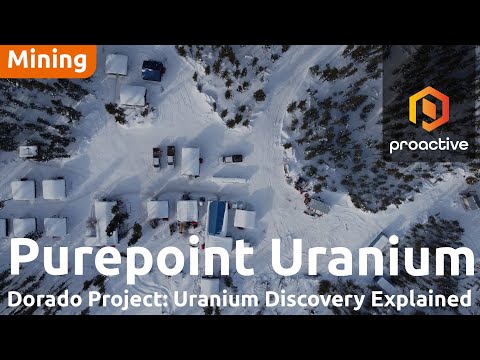
Is that where modelling comes in?
Exactly. You build a model to understand direction and controls. Then you can step out—sometimes hundreds of metres—to see if mineralization continues and refine your targeting.
How does this apply to Dorado?
We made a discovery at the Nova zone, hitting high-grade uranium in a specific area. We drilled four holes and identified a direction of continuity. Now we’re following up with additional drilling, including step-outs, to better understand the system and plan the next phase.
Quotes have been lightly edited for style and clarity