
Lumos Diagnostics Holdings Ltd (ASX:LDX, OTC:LDXHF) is moving into a pivotal phase, with its flagship FebriDx test gaining the regulatory clearance needed to unlock a vastly expanded US market — and potentially reshape how frontline clinicians diagnose respiratory infections.
The company’s latest investor presentation and recent MST Access research highlight a clear inflection point: the granting of a CLIA waiver alongside existing FDA 510(k) clearance. Together, these approvals dramatically broaden where FebriDx can be used, shifting it from a niche diagnostic tool into a scalable, point-of-care solution across primary and urgent care settings.
That shift comes at a time when healthcare systems are under increasing pressure to improve diagnostic speed, reduce unnecessary antibiotic use and manage rising patient volumes more efficiently.
Solving a persistent diagnostic gap
At the core of Lumos’ strategy is a well-established clinical problem: distinguishing between viral and bacterial respiratory infections.
Symptoms often overlap, leading clinicians to prescribe antibiotics as a precaution — even when they are unlikely to be effective. Around 40% of antibiotic prescriptions for acute respiratory infections are unnecessary, contributing to antimicrobial resistance and avoidable healthcare costs.

The respiratory infection testing problem (Source: Lumos Diagnostics).
FebriDx is designed to address this gap directly. The finger-prick test delivers results in around 10 minutes and can differentiate between viral and bacterial infections with over 90% accuracy, while ruling out bacterial infection with greater than 99% accuracy.
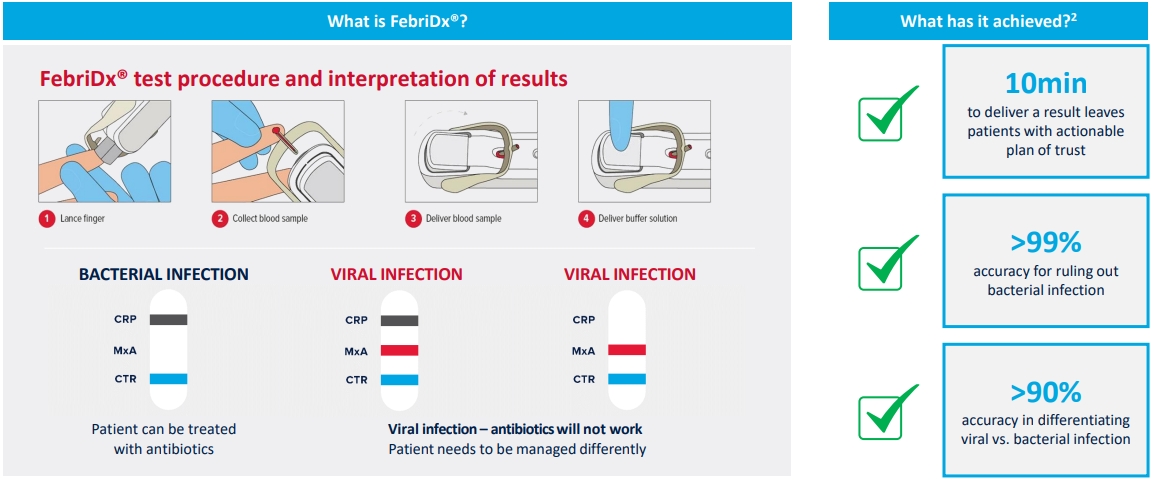
FebriDx® can rapidly identify patients who have a microbial infection and, if positive, determine if that infection is caused by a viral or bacterial pathogen after 10 minutes.
That speed and accuracy position the test as a triage tool — helping clinicians make more informed treatment decisions before prescribing antibiotics or ordering further tests.
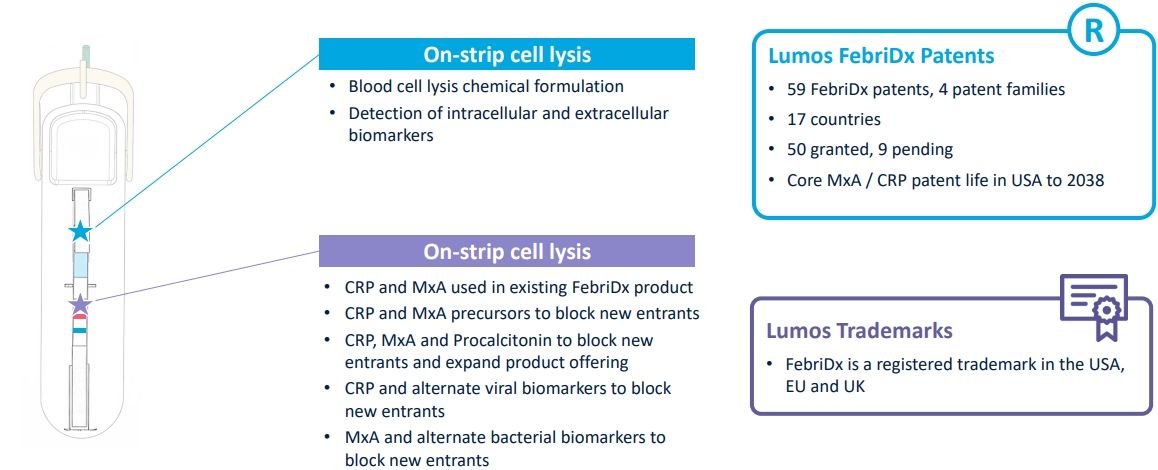
FebriDx® licensing / IP agreements add recurring high-margin revenue.
MST Access notes that demand for rapid, point-of-care diagnostics is rising globally, which could drive adoption.
“The global healthcare system is increasingly prioritising rapid diagnostic solutions, particularly in infectious disease management and antibiotic stewardship,” MST Access senior analyst Chris Kallos wrote.
“LDX’s proprietary technology addresses this need with point-of-care solutions that reduce the time to diagnosis and treatment.”
Regulatory milestone expands addressable market
The CLIA waiver is the key catalyst underpinning Lumos’ near-term growth strategy.
Without it, FebriDx could only be used in moderate-complexity laboratory settings, limiting its reach to around 18,000 sites and roughly 6 million patient interactions annually. With the waiver, that expands to about 270,000 sites and up to 80 million patient interactions — equivalent to a market opportunity exceeding US$1 billion per year.
MST Access describes the milestone as “a significant inflection point” that materially de-risks Lumos’ US commercialisation pathway.
The waiver also enables use in physician offices, urgent care clinics and retail health settings — environments where rapid decision-making is critical and laboratory infrastructure is limited.
For Lumos, this transition from controlled lab environments to frontline care settings is central to scaling adoption.
Commercial model gains traction
To capitalise on the expanded market, Lumos is pairing regulatory progress with a structured commercial rollout.
A key pillar is its exclusive six-year US distribution agreement with PHASE Scientific, which carries a minimum contract value of US$317 million, subject to milestone achievements and delivery volumes.
The deal includes up-front and milestone payments — including those triggered by the CLIA waiver — alongside longer-term revenue tied to product supply.
Beyond distribution, Lumos is building real-world validation through pilot programs. A partnership with WellStreet Urgent Care, for example, is deploying FebriDx across selected sites to generate operational and reimbursement data ahead of a broader rollout across its 142-location network in the US.
Lumos is also targeting a wider pipeline of urgent care and primary care networks, with more than 350 locations under evaluation — providing a pathway to scale adoption across diverse healthcare systems.
Reimbursement and adoption pathways
While regulatory clearance opens the door, reimbursement remains a critical factor in driving uptake.
Lumos has secured Medicare reimbursement for FebriDx at around US$41 per test, with ongoing efforts to expand coverage among private insurers, which represent the majority of US payors.
Early signs are encouraging. The company reports positive reimbursement trends across multiple regions and care settings, alongside structured support programs to manage claims and appeals.
The broader commercial strategy rests on three pillars:
- Clinical benefit: enabling targeted antibiotic use and supporting antimicrobial stewardship
- Economic benefit: aligning reimbursement incentives across providers and distributors
- Operational efficiency: integrating seamlessly into existing workflows, particularly alongside COVID and flu testing
This combination is intended to reduce friction at the point of care — a key requirement for widespread adoption.
Scaling manufacturing and funding growth
To support anticipated demand, Lumos is investing in manufacturing capacity and supply chain improvements.
The company is expanding its California facility, with a 7,500-square-foot build-out expected to be completed in 2026, aimed at increasing production throughput and supporting commercial scale-up.
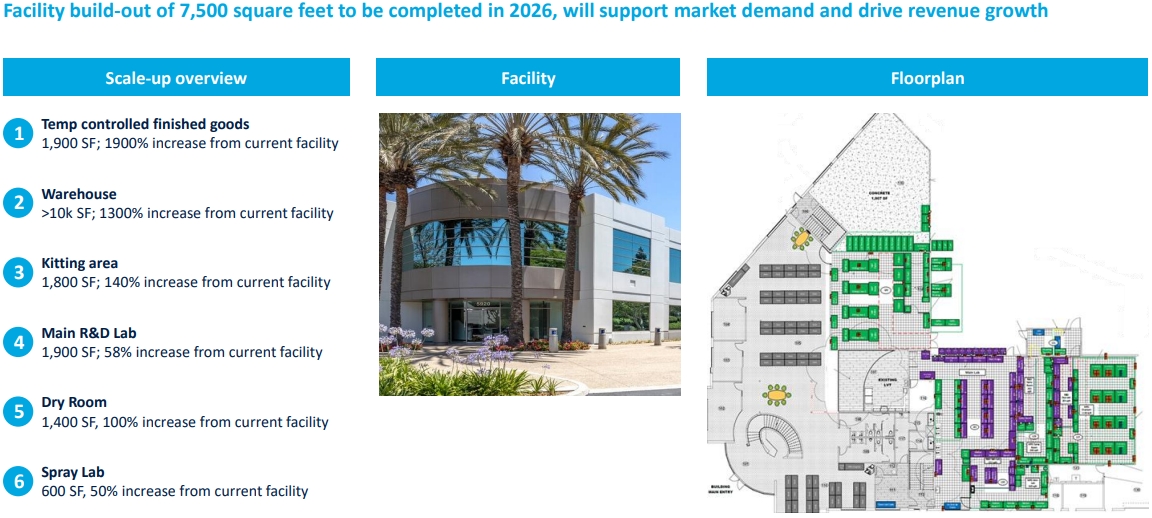
Funding for this expansion is being supported by a recent A$22 million capital raise, which MST Access says will underpin US commercialisation, product development and balance sheet strength.
Pro-forma cash of around US$23 million provides additional flexibility as the company moves through this growth phase.
Revenue momentum and diversification
Financially, Lumos is beginning to show early signs of traction.
The company reported FY25 revenue of US$12.4 million, up 12% year-on-year, with additional upside coming from licensing and intellectual property agreements that generate recurring, high-margin revenue.
FebriDx itself remains in the early stages of commercial rollout, but revenue growth is accelerating, with 1H FY26 sales of US$1.5 million — a sharp increase from the prior corresponding period.
Beyond FebriDx, Lumos’ broader platform includes custom assay development and diagnostic technologies across multiple applications, providing diversification across both proprietary and partner-driven revenue streams.
Catalysts and risks ahead
Looking forward, key catalysts include further US reimbursement wins, expansion into paediatric indications and continued international rollout of FebriDx.
MST Access notes that the company faces familiar risks for a commercial-stage diagnostics business — including execution on distribution agreements, reimbursement variability and competition from larger, better-resourced players.
Regulatory compliance and supply chain reliability also remain ongoing considerations, particularly as Lumos scales production.
A transition to commercial scale
Lumos Diagnostics is shifting from development mode into a more commercially focused business. As MST Access notes, the combination of regulatory clearance, distribution partnerships and growing clinical validation provides a foundation for expansion — but execution will be key.
If adoption follows the trajectory implied by its expanded addressable market, FebriDx could move from a promising diagnostic tool to a widely used frontline test — positioning Lumos at the centre of a broader shift toward faster, more targeted point-of-care diagnostics.