
Astron Corporation Ltd (ASX:ATR, OTC:ATRNF) has completed a Bankable Feasibility Study (BFS) for Phase 1 of its Donald Rare Earth and Mineral Sands Project in Victoria, confirming strong project economics ahead of a targeted final investment decision (FID) in Q2 2026.
The BFS reflects technical and commercial progress made through 2025 and early 2026, positioning the project as a long-life supplier of critical minerals.
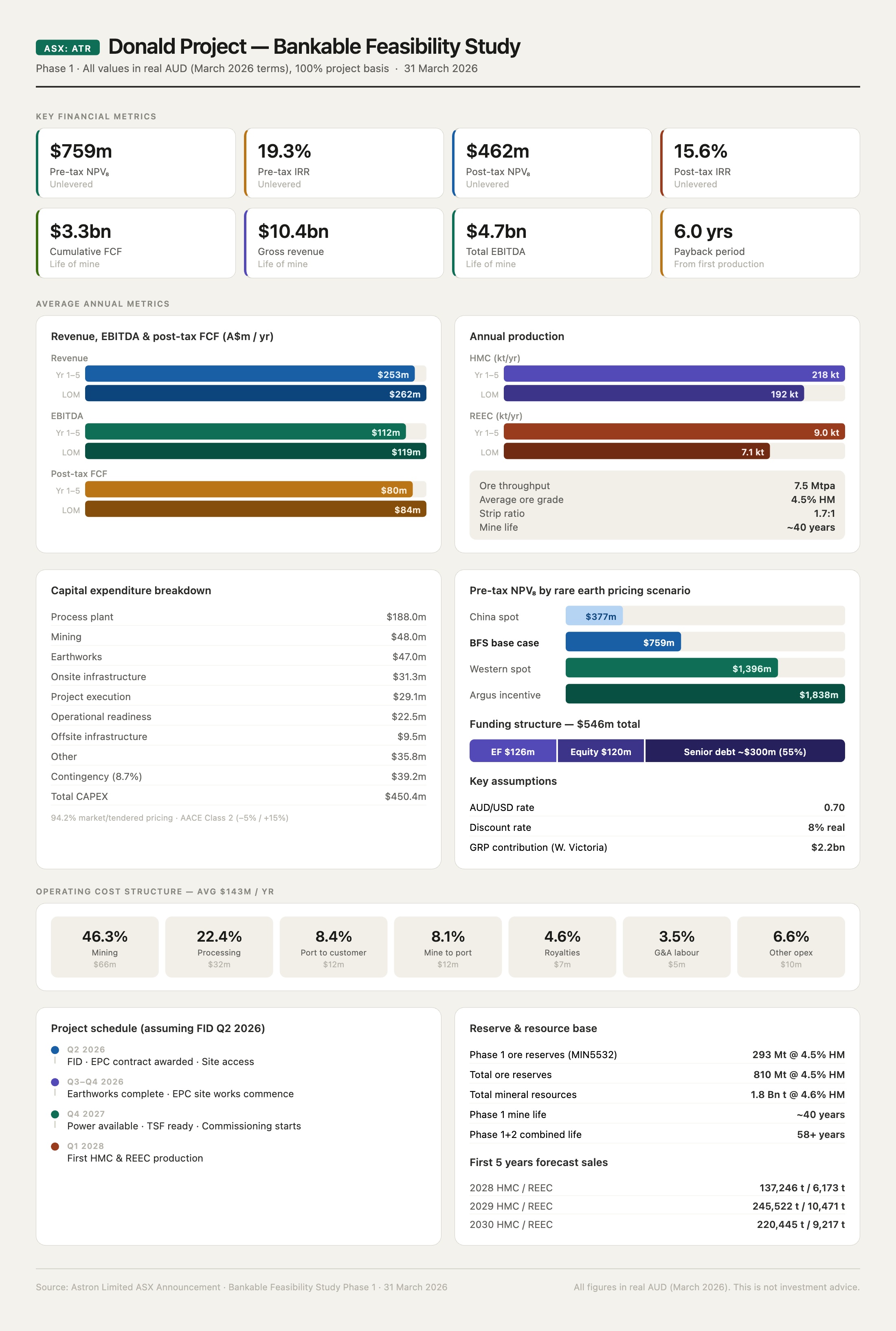
Key numbers:
“The Bankable Feasibility Study highlights the financial and technical viability of a major new Australian source of critical minerals. The Donald Project is at the forefront of a new generation of critical minerals projects. It will deliver rare earth element concentrate, containing light and heavy rare earths, to our Joint Venture partner’s downstream processing facilities as early as Q1 2028. Negotiations with potential lenders are advanced and we look forward to concluding these in advance of the FID which is now planned for Q2 2026,” Astron’s managing director, Tiger Brown said.
Robust economics over 40-year mine life
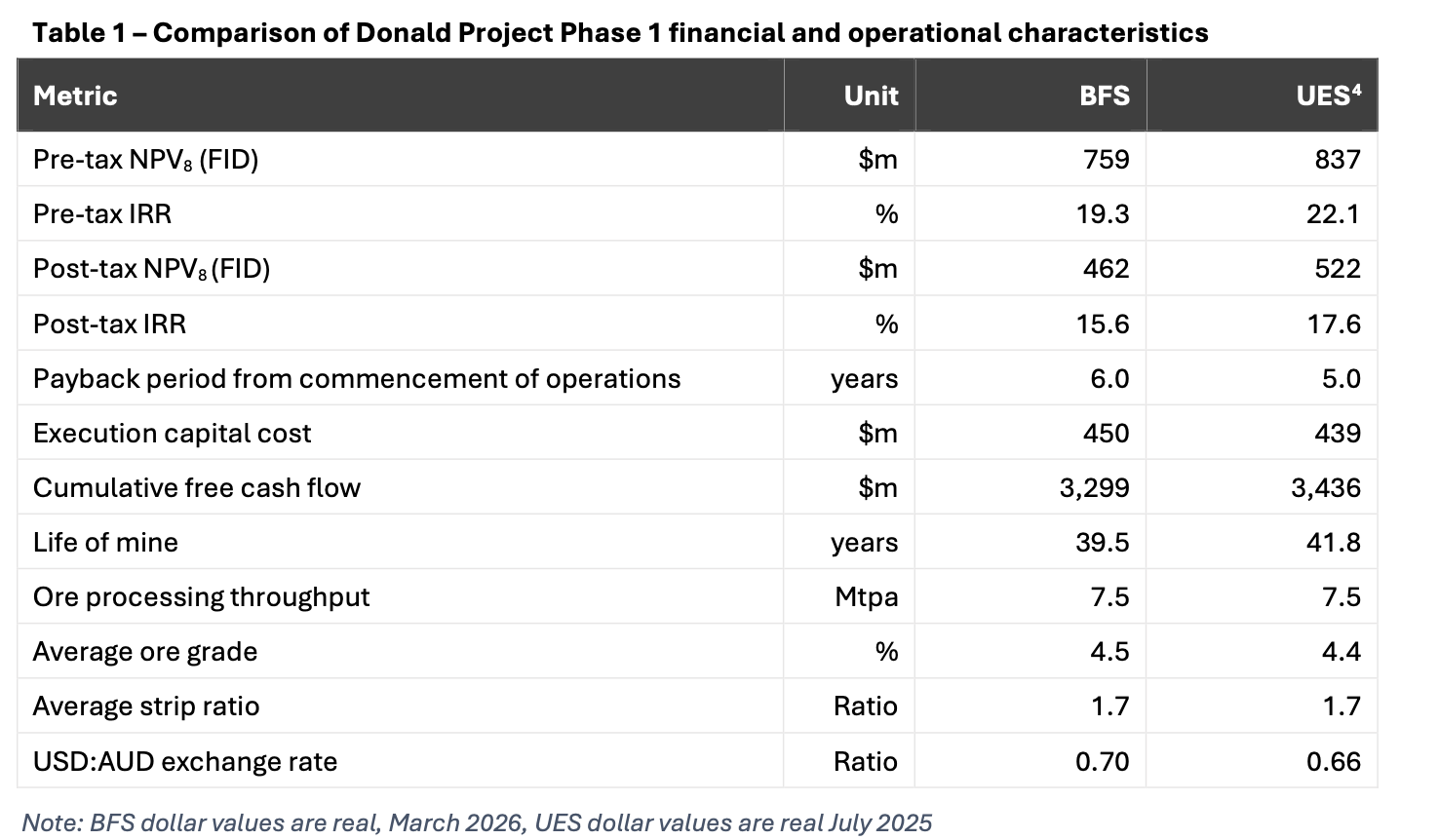
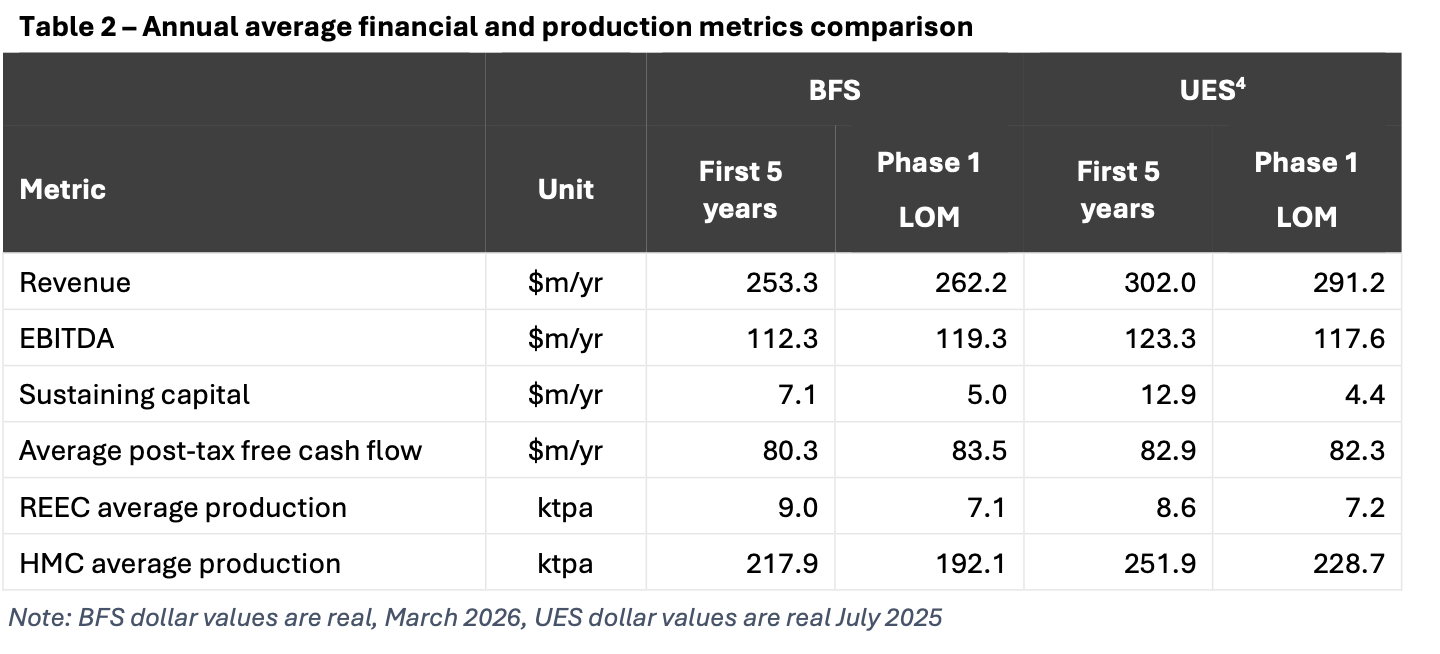
Phase 1 is expected to generate average annual EBITDA of $119 million from average revenue of $262 million over an approximately 40-year mine life.
This underpins a pre-tax NPV8 of $759 million and an internal rate of return (IRR) of 19.3%, with post-tax NPV8 estimated at $462 million and IRR at 15.6%.
Over its life, the project is forecast to deliver $10.4 billion in gross revenue, $4.7 billion in EBITDA and $3.3 billion in free cash flow.
Capital costs and financing progressing
Initial capital expenditure for Phase 1 is estimated at $450 million, including a $39 million contingency, with 94% of costs based on tendered or market pricing.
Negotiations with lenders are well advanced for a project financing package of up to $300 million, with a credit-approved term sheet representing the final milestone ahead of FID.
Project improvements lift economics
Key updates incorporated into the BFS include an updated ore reserve, adoption of a track-mounted in-pit mining unit plant to reduce operational complexity, and enhanced metallurgical outcomes.
Detailed metallurgical work has increased the proportion of high-value heavy rare earth elements in the project’s rare earth element concentrate product.
The study also reflects updated pricing forecasts for heavy mineral concentrate and rare earth element concentrate, as well as a stronger Australian dollar.
The Donald Project is positioned as a globally significant source of rare earth elements, including neodymium, praseodymium, dysprosium and terbium, alongside zirconium and titanium minerals.
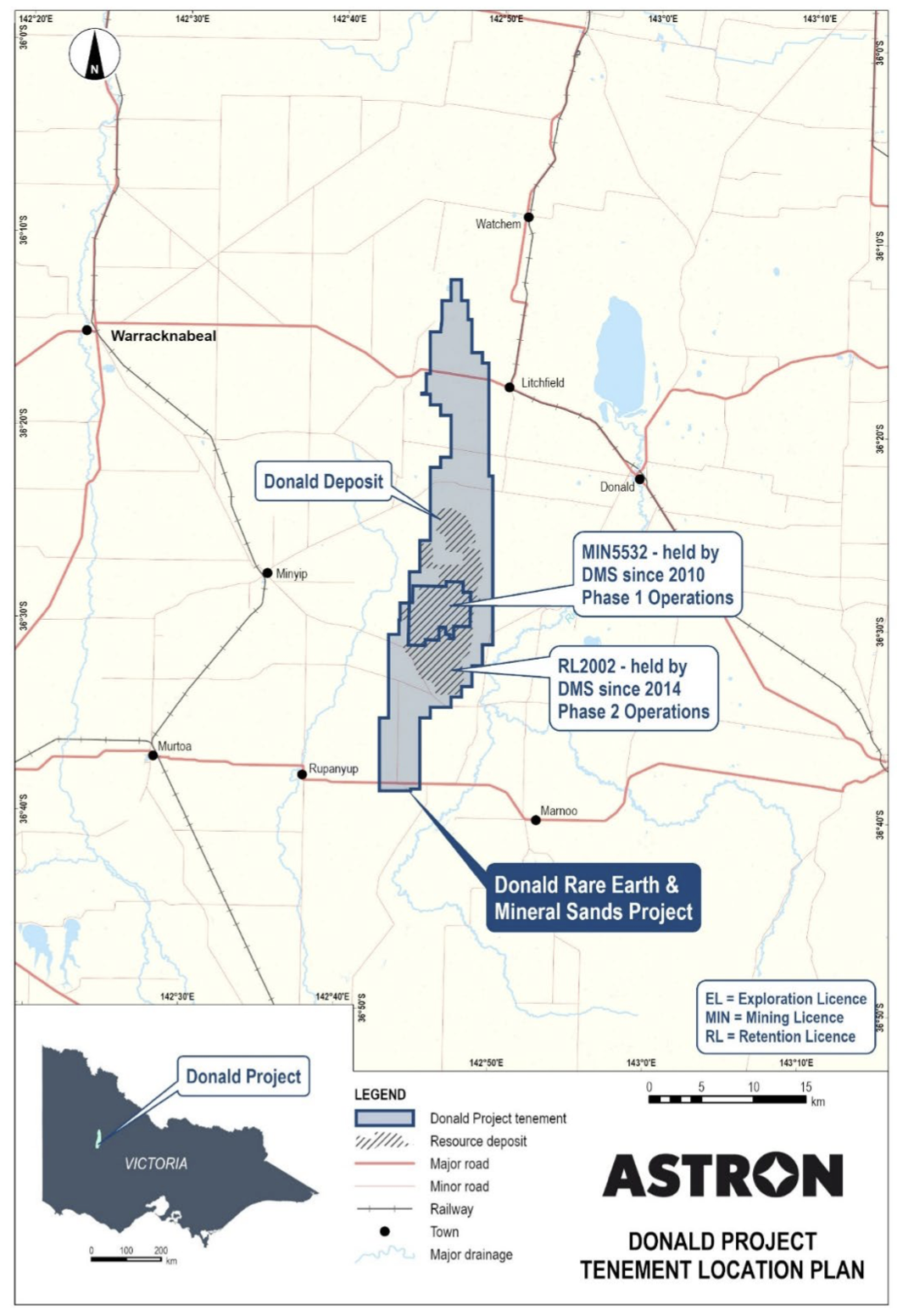
Donald Project tenement location map.
Market conditions are increasingly favourable for key heavy rare earths such as dysprosium and terbium, providing additional upside potential.
Development pathway and joint venture structure
The project has received all major regulatory approvals and is being developed in two phases, with Phase 2 expected to extend mine life to at least 58 years.
Phase 1 production is targeted to begin as early as Q1 2028, supplying rare earth concentrate to downstream processing facilities operated by joint venture partner Energy Fuels Inc.
Astron holds a 51% interest and is project manager, with Energy Fuels earning a 49% stake by funding the majority of Phase 1 equity.