
Replenish Nutrients Holding Corp (CSE:ERTH, OTC:VVIVF, FRA:7KE) is steadily evolving from a small-scale fertilizer producer into an intellectual property–driven platform, with a licensing model that increasingly sits at the center of its growth strategy. While its owned facility in Beiseker, Alberta remains a key operational asset, the company’s long-term value proposition is shifting toward monetizing its proprietary fertilizer technology through partners that fund and operate their own production infrastructure.
At its core, the company is pursuing a hybrid model. Owned production allows Replenish to capture full value chain economics, generating higher revenue per tonne but requiring capital investment and operational execution.
Licensing, by contrast, enables the company to scale without building additional facilities, as partners produce fertilizer under agreement while Replenish earns per-tonne fees for its intellectual property, formulations, and technical support.
Management estimates licensing revenues in the range of roughly $50 to $75 per tonne, with margins approaching 90% due to limited incremental costs. This contrasts with targeted margins of approximately 25% to 30% for owned production. The trade-off is clear: licensing sacrifices some per-unit revenue potential in exchange for capital efficiency, scalability, and recurring income characteristics.
The licensing strategy is no longer theoretical. Replenish has secured agreements with Farmers Union Enterprises in the United States and MJ Ag Solutions in Western Canada.
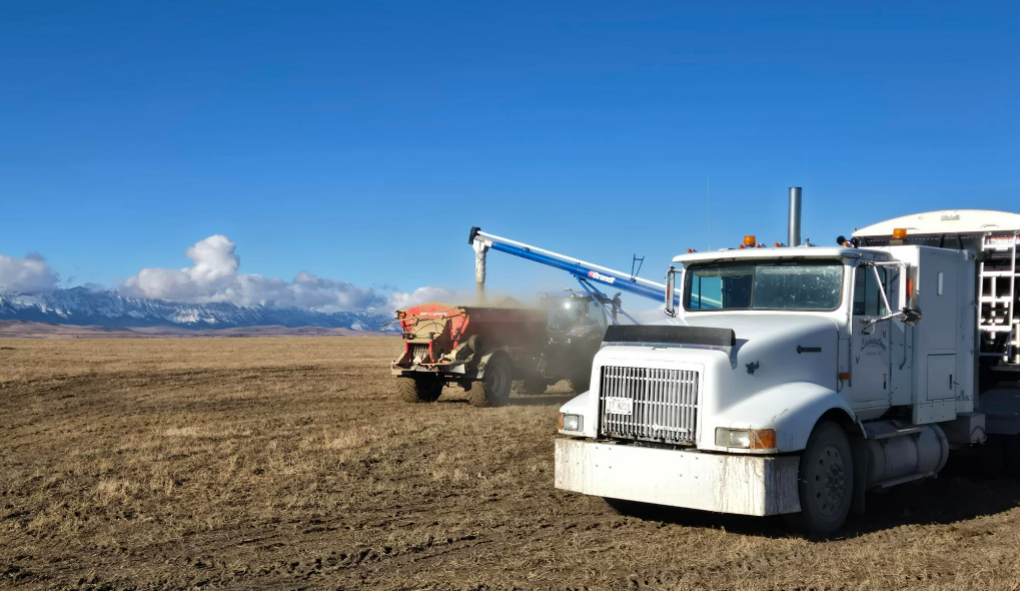
“The scale of what the Farmers Union brings to the table is extremely significant,” Replenish CEO Neil Wiens said. “Getting into the US and into an established cooperative is something that most people simply aren’t able to do.”
These partnerships are structurally distinct, reflecting flexibility in how the company deploys its technology depending on the partner and geography. In the US case, Replenish provides formulations and technical expertise while the partner funds and operates the facility, whereas the Canadian arrangement includes additional involvement from Replenish in material inputs.
The US partnership is particularly significant due to its scale and distribution reach. Farmers Union operates across multiple states and provides access to a large agricultural network spanning tens of millions of acres. The Crookston, Minnesota facility associated with this agreement is under construction and targeted for approximately 50,000 tonnes of annual capacity, with commissioning expected ahead of production ramp-up in 2026.
The strategic importance of this deal extends beyond a single facility. Management believes the cooperative’s footprint could support multiple production sites over time, effectively creating a distributed network of licensees across the US Midwest. This aligns with broader industry dynamics, where fertilizer markets are highly localized and logistics costs play a critical role in determining competitiveness. By enabling localized production, Replenish’s model reduces transportation constraints while improving supply reliability for end users.
From an economic perspective, the licensing model introduces a recurring revenue stream that is less exposed to the seasonality typically associated with fertilizer sales. Facilities operated by partners are designed to run year-round, which allows Replenish to earn consistent per-tonne fees tied to production volumes rather than relying solely on cyclical demand peaks.
Wiens described this as a mechanism that smooths cash flow over time, particularly as US and Canadian growing seasons differ in timing and duration. “Whenever they’re producing, I’m getting paid,” the CEO said.
“These facilities are designed to operate essentially year-round. As a result, instead of relying on the traditional peaks and troughs of spring and fall cash flows, our revenue becomes much more consistent and leveled out.”

Another key feature of the model is distribution leverage. Entering markets like the US Midwest through established cooperatives provides access to entrenched farmer networks that would be difficult to replicate independently. This reduces customer acquisition friction and accelerates market penetration relative to a ground-up expansion strategy. It also expands Replenish’s geographic reach beyond its traditional base in Western Canada without requiring a proportional increase in internal resources.
At a strategic level, Replenish increasingly frames itself as an intellectual property company focused on soil health rather than a conventional fertilizer producer. This distinction matters because it shifts the lens through which the business is evaluated. Instead of being judged primarily on plant utilization and production capacity, the company’s long-term potential depends on its ability to scale licensing partnerships, replicate its technology across multiple regions including the California Central Valley and other countries, and generate predictable, high-margin recurring revenue.
Despite the promise of the model, execution remains a critical variable. The company’s ability to successfully commission partner facilities, maintain consistent product performance, and expand its network of licensees will determine how quickly the licensing engine scales. Wiens has also noted that the organization remains relatively lean, which makes the reliance on external partners an important component of its growth strategy.

Replenish’s approach reflects a broader trend toward asset-light business models that leverage intellectual property to drive expansion. Its owned facility provides a foundation of operational credibility and near-term revenue, while licensing introduces a scalable pathway to growth with higher incremental margins and lower capital intensity.
The central question for investors is whether the company can replicate its initial licensing agreements into a broader network of partners. If successful, the licensing model could evolve into the dominant driver of long-term value, transforming Replenish from a niche producer into a distributed platform embedded across multiple agricultural regions, generating recurring revenue from the adoption of its technology rather than the ownership of physical assets.