
Ilika PLC (AIM:IKA, OTCQX:ILIKF, FRA:I8A) CEO Graeme Purdy talked with Proactive about the successful safety testing of the company’s Goliath solid-state batteries under battlefield conditions, highlighting a key validation from a UK defence agency.
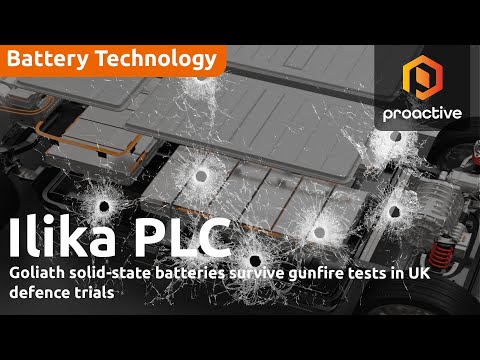
Purdy explained that the batteries were subjected to live-fire testing on a firing range, where they were penetrated by various types of ammunition to assess their response.
The results demonstrated the inherent safety advantages of Ilika’s solid-state battery technology compared to traditional lithium-ion alternatives. As Purdy noted, “they are intrinsically safer because they don't have a flammable liquid electrolyte component,” which significantly reduces the risk of dangerous reactions under extreme conditions.
The interview also explored the growing opportunity within the defence sector. While Ilika originally developed Goliath batteries for electric vehicles and consumer electronics, increasing global tensions and the electrification of military equipment have opened up new demand.
Applications such as drones, communication systems, and intelligence devices are driving the need for safer, high-performance battery solutions.
Purdy highlighted that validation from a UK defence agency is particularly important, given its influence with the Ministry of Defence. The company is now working with partners across the supply chain to convert this interest into commercial agreements and deliver returns on its technology investment.
Proactive: Graeme, very good to speak with you. You've had strong feedback from a UK defence agency following safety tests of your Goliath battery under battlefield conditions. Take us through how they tested?
Graeme Purdy: Yeah, morning Stephen, great to be back. The tests were pretty straightforward. The batteries were put onto a firing range and penetrated by various types of ammunition. The responses of the batteries were measured, and this is what's given us the feedback.
Proactive: So, put simply, what makes those batteries safer than traditional lithium-ion batteries?
Graeme Purdy: This is one of the big advantages of solid-state batteries. If they are put together in the way that we build our Goliath batteries, they are intrinsically safer because they don't have a flammable liquid electrolyte component. If you replace that with a more inert electrolyte, then they can survive these types of penetrations more effectively.
Proactive: Apart from electric vehicles and other applications, you're also targeting defence and drones. How significant is that opportunity?
Graeme Purdy: When we started developing the Goliath technology, it was principally for EVs and consumer appliances. But the defence opportunity is more recent and has become clear. In the face of heightened global tensions and conflicts, there is a need for the UK and NATO partners to reinforce and invest more in defence technology.
Graeme Purdy: The defence sector has become increasingly electrified, from the equipment soldiers carry to communication and intelligence devices and unmanned vehicles. This is driving increased demand for batteries, particularly safe batteries like these, which can be deployed while keeping people safer than with conventional lithium-ion batteries.
Proactive: This sounds like a significant milestone for the company. What needs to happen next to turn it into real commercial deals?
Graeme Purdy: It's great that we're seeing validation from a UK defence agency, which has massive influence with the Ministry of Defence. We're working with other companies in the supply chain to turn this interest into a commercial reality and generate a return on the investment we've put into this technology.
Proactive: Graeme, I hope you'll keep us updated. Thank you very much for your time today.