
A fresh squeeze in global helium markets is sending prices sharply higher and exposing just how fragile the supply chain for the critical industrial gas has become — and why a new generation of dedicated helium producers is starting to attract attention.
Disruptions linked to the closure of the Strait of Hormuz — which has restricted exports from Qatar, one of the world’s largest helium suppliers — have jolted markets and pushed prices from an average of around US$500 per thousand cubic feet (MCF) to above $1,000/MCF in some cases.
Helium shortages have periodically rattled industries ranging from medical imaging to semiconductor manufacturing. But the latest squeeze is highlighting just how dependent global supply remains on a handful of large projects, largely tied to liquefied natural gas (LNG) production.
According to D3 Energy Ltd (ASX:D3E, OTCQX:DNRGF) managing director and CEO David Casey, the structure of the helium market means even short-term disruptions can have outsized consequences.
“The thing about helium is it’s a use-it-or-lose-it commodity,” Casey said.
“Being the second-smallest molecule in the universe, there’s not much that can actually hold it for very long. If supply gets interrupted, you can’t just stockpile it and smooth things out later.”
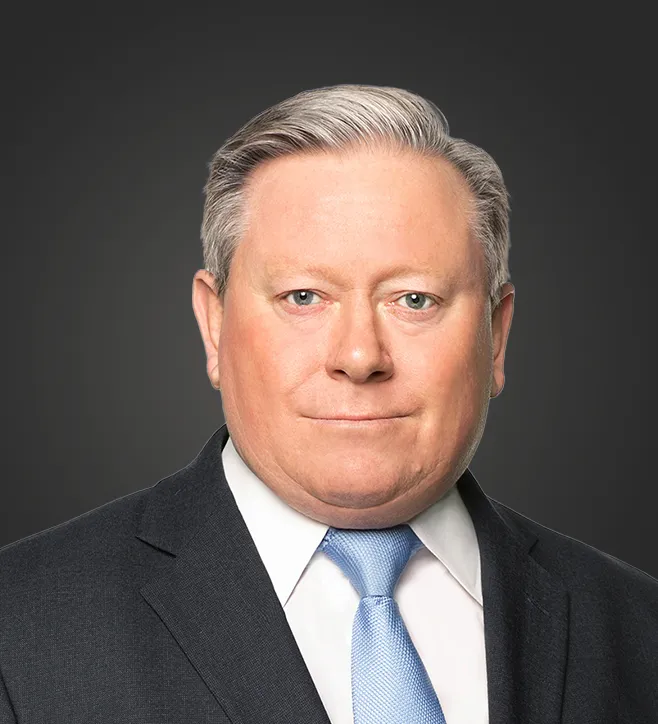
D3 Energy managing director and CEO David Casey
LNG dependency leaves supply exposed
Most of the world’s helium is not produced from dedicated helium projects at all.
Instead, it is typically recovered as a by-product of liquefied natural gas (LNG) production, meaning global supply is tightly linked to the operation of large LNG processing facilities.
That structure works smoothly most of the time. But when disruptions occur, the ripple effects can quickly spread through the supply chain.
“Most of the helium in the world is produced as a by-product of LNG trains,” Casey explained. “If an LNG train goes down, it’s an immediate hit to supply.”
The current disruption is particularly acute because it was unexpected, he said.
Normally, disruptions are manageable because both supply and demand swings tend to be predictable. Even when large producers temporarily halt output, those disruptions are usually anticipated. Casey pointed to US operations run by Exxon Mobil Corp (NYSE:XOM, XETRA:XONA), which can account for as much as 20% of global helium production, where maintenance shutdowns are planned well in advance.
“So, helium can enter the market and exit the market, but it’s planned. This isn’t planned,” Casey said.
“That’s where a bit of the hysteria is coming from at the moment,” he added. “And that won’t abate until the Strait of Hormuz opens up again and you’ve got the flow of helium from Qatar.”
The shock, Casey said, has “highlighted the fragility of helium supply chains”.
Qatar’s outsized role in the market
A major factor is the sheer concentration of global supply.
Qatar alone accounts for around 25–30% of the world’s helium production, making it one of the single most important sources of the gas globally. Disruptions affecting exports from the region therefore have an immediate impact on global availability.
Beyond Qatar and the US, the list of major helium suppliers quickly narrows to a handful of countries including Russia and Algeria, underscoring the geopolitical concentration of the market.
“You can see why if one big producer — and historically a very reliable producer, like Qatar, is disrupted, it would put the whole supply chain into focus,” Casey said.
Rise of dedicated helium producers
Those concerns are helping to drive interest in primary helium exploration and production projects, where helium is the main commodity rather than a by-product, as demand continues to grow across a range of high-tech applications.
Semiconductor manufacturing has emerged as one of the fastest-growing sources of consumption, helping drive predicted helium demand growth up 6-12% year-on-year.
“You can’t manufacture any semiconductor chips, you can’t layer each wafer, without helium — it’s an essential and critical path, basically no helium, no chips,” Casey said. “Everything has a chip today, and with AI in particular, that whole industry is only going in one direction.”
Historically, the largest user of helium was MRI machines, which use the gas to cool superconducting magnets. While newer medical equipment requires less helium than older systems, demand from electronics manufacturing has surged. Casey also pointed to growing demand from the space industry, where helium is used to purge rocket tanks before they’re filled with hydrogen.
South Africa emerging as a new helium region
D3 Energy is targeting helium production through assets in South Africa and South Australia, with the South African projects attracting particular attention because of their unusual geology.
The company has applied for a production right in South Africa that would allow it to commercialise helium and natural gas from the project area.
Only one other onshore helium project in the country currently holds such approval.
“It’s still early days for South Africa as a helium producer,” Casey said, with just D3 and ASP Isotopes (NASDAQ:ASPI), following its acquisition of Renergen, operating there currently.
What makes D3’s production right application unusual is that the helium resource is continually replenished through what Casey called a “unique confluence of geological circumstances”.
Helium is produced by the radioactive decay of uranium and thorium deep underground. In the region where D3 is exploring, that helium is carried towards the surface along large fault systems alongside naturally generated methane.
“That’s led to a very unique situation where we’ve got continually generating helium and, at the same time, this continual generation of biogenic methane flowing through these fault systems where we can capture it,” Casey said.
“So, while it’s still a fledgling industry in South Africa, because of the unique recharge system, the resource base is enormous — one of the largest primary helium resources anywhere in the world.”
Prices surge amid supply squeeze
The tight market has already pushed helium prices sharply higher.
Two decades ago, helium sold for roughly US$70 per MCF. In recent years, prices have climbed dramatically as supply constraints have collided with rising demand from technology sectors, with prices topping $750 per MCF, last year Casey said.
“It’s since come off that high — until this crisis, where prices are back, in some instances, at $1,000 per MCF, and some spot prices even higher than that.”
Casey expects prices to moderate once the Middle East conflict resolves — he sees them leveling off at around $500/MCF — but believes the long-term trend remains upward.
“I think you’ll see a gradual increase in prices as demand increases, primarily on the back of semiconductor demand.”
Supply growth remains limited
The key factor shaping the market over the next decade will be whether new LNG projects — and the helium that accompanies them — enter the picture, underscoring the outsized importance of LNG to helium supply.
“When an LNG train comes on, it does provide a sugar fix of helium, and that’ll supress the market,” Casey said. “But you don’t bring trains on every day; they take years, and if the markets aren’t there for natural gas, people won’t be building additional LNG trains.”
He noted that the “next big LNG train with helium capacity is expected in Qatar around 2027”, adding that with the current conflict that timeline will likely slip. Beyond that, the pipeline of new LNG projects with helium production potential remains thin.
That leaves a gap that smaller, dedicated helium players are increasingly looking to fill between large supply additions, according to Casey — and why the current supply squeeze is drawing renewed attention to their emerging role in the global market.
D3 Energy is one example, with its share price rising more than 20% over the last week as helium prices surged. But Casey instead pointed to the strength of the longer-term price picture, once the current geopolitical volatility subsides.
“It’s nice to see price run,” he said. “But our price — just like the helium price — will normalise.”