
Light Science Technologies Holdings PLC (AIM:LST, FRA:9FD) CEO Simon Deacon talked with Proactive about the company’s recent acquisitions, including the strategic purchase of Injectaclad, and how the deal positions the group for growth in the passive fire protection market.
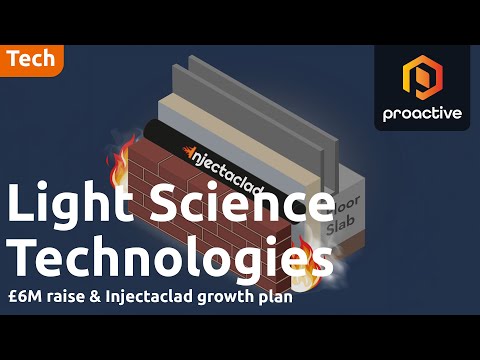
Deacon described the move as transformational for the group, explaining that the acquisitions strengthen the company’s contract electronics manufacturing division while also enabling the expansion of its passive fire protection offering. The Injectaclad technology plays a central role in this strategy, providing a patented graphite sealant material designed to prevent fire and smoke spreading through cavities in high-rise buildings. The material expands significantly under heat, helping seal gaps and maintain fire protection.
The CEO highlighted the scale of the opportunity, noting that thousands of buildings require remediation work following updated building safety regulations. According to Deacon, the acquisition creates an opportunity to address a significant market need while generating strong margins. As he explained during the interview, “we see this as being a really good cash-generative, profitable business, which can be expanded very quickly at a low cost.”
The company recently raised £6 million to fund the acquisitions, invest in research and development, and strengthen the balance sheet to support larger contracts. Deacon also discussed plans to expand in defence and medical electronics markets while scaling the Injectaclad installation network to accelerate revenue growth.
Proactive: Simon, very good to speak with you. Could you tell us more about the acquisition and how it shapes the business?
Simon Deacon: Hello Stephen, good to see you again. It really shapes the business as a group. It is a transformational acquisition. There are three acquisitions we have done, two of which are in contract electronics manufacturing. We are buying the remaining property that we do not own and also the 10% minority of the business that we do not own. This allows us to focus that division on creating a base for the Injectaclad acquisition, including a distribution centre and training facility. It also enables investment into the defence and medical markets.
Proactive: Simon, you have raised £6 million and current shareholders have taken some dilution. Can you explain what the funds will be used for and why the acquisitions are being done now?
Simon Deacon: The funds will be used for the acquisitions, totalling around £5.4 million. Around £3 million will be used on day one for the completion of the Injectaclad acquisition. Around £600,000 is for the building and the 10% minority holding. The rest will go towards research and development, including early warning systems for passive fire protection and sensor development in the agtech division. We are also investing to gain accreditations needed for defence sector work and strengthening the balance sheet to support larger contracts.
Proactive: And how about the dilution?
Simon Deacon: Dilution is obviously not good for current investors and I am one of them. It was a difficult decision but we believe the acquisition opportunity is compelling. The business we are acquiring has significant potential, and the opportunity in the market is substantial.
Proactive: Can you describe the technology and what underpins demand?
Simon Deacon: Injectaclad is a graphite sealant material used in cavity barriers within tall buildings. When exposed to heat, it expands up to 20 times its size, filling gaps and preventing fire and smoke from spreading through cavities. It provides protection for up to 90 minutes and has undergone extensive fire testing.
Proactive: How will you grow market share?
Simon Deacon: Our focus is supporting installers and educating key stakeholders such as architects and fire engineers. Specification is critical. Injectaclad can also be installed without removing the building façade, which saves both time and money compared with traditional remediation methods.
Proactive: How much impact have BSR delays had?
Simon Deacon: There has been a backlog but we are now seeing approvals coming through from the Building Safety Regulator. We expect the pipeline to begin converting into orders as these approvals progress.
Proactive: How do the acquisitions improve margins and cash generation?
Simon Deacon: In passive fire protection we are seeing gross margins above 50%, both in installation and supplying the material. That makes it a strong cash-generative and scalable business.
Proactive: Finally, how will the group achieve mid-term revenues of around £50 million?
Simon Deacon: Growth will come from converting the pipeline in passive fire protection and agtech. For example, one pump installing Injectaclad can generate around £1.5 million in revenue. There are currently 22 pumps in the market, and we plan to expand that to around 80, which could generate more than £100 million in revenue in that division alone.