
Ocean Power Technologies Inc (NYSE-A:OPTT) CEO Philipp Stratmann talked with Proactive about the company’s latest contract award with the US Coast Guard, international expansion into Greece, and new advancements in offshore docking and charging solutions for unmanned surface vehicles (USVs).
Proactive: Alright welcome back inside our Proactive newsroom, and joining me now is Philipp Stratmann, he is the CEO of Ocean Power Technologies Inc. Philipp, it's great to see you again. How are you?
Philipp Stratmann: Doing well, good to be on again.
You've had a couple of pieces of news out, including a substantial award with the US Coast Guard. Tell me about the work and this contract.
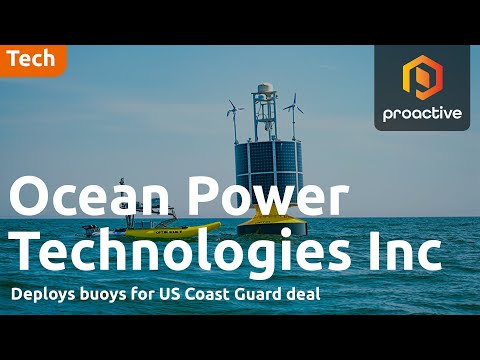
We announced the buoy contract earlier this year. This contract follows that and is to install and deploy these buoys as soon as vessels are available. It shows we are continuing to build backlog and now transitioning that backlog into providing operational assets that the Coast Guard and other customers can use. We're excited about moving to the next phase and highlighting the ability of our systems to provide the data the Coast Guard is looking for.
Recurring business is always great as well.
It’s great when you continue building on what you've secured. You build the backlog and then move it into deployment, because that's where it starts mattering. When assets are deployed, that’s when the data starts streaming and customers start seeing the value in what they've procured. That enables us to expand the business further.
You're expanding internationally as well, including shipping vehicles to Greece.
We’ve been vocal about work in the Middle East and Latin America, and now we’re starting work in the Mediterranean, moving assets to Greece. This shows we continue to build our installed base globally. Alongside domestic US work, we provide commercial solutions worldwide. A larger installed base increases the need for field service and operational services, supporting growth in multiple ways.
You're also advancing technology in offshore docking and charging.
About a year ago, we identified docking and charging as a key opportunity. USVs are becoming more prominent, but they need offshore docking and charging. Buoys naturally fit that role. We're working toward rolling out a commercial docking and charging solution that allows USVs to offload data, recharge, and return to operations. It’s like a gas station for USVs, autonomously enabled in the ocean, supporting persistent and resident autonomy.
Converting backlog into deployed assets is key.
The Coast Guard project is a prime example. We prepare inventory, secure the contract, then deploy the assets. The Greece project is similar — it has shipped, and now we can begin additional services. There can be lumpiness in backlog conversion, but we continue converting and building backlog while managing inventory buildup. We're excited about where things are heading.
Quotes have been lightly edited for style and clarity