
Copper rarely commands the same headlines as lithium, rare earths or even gold. It isn’t marketed as “critical” in quite the same way, nor does it benefit from the policy spotlight that has propelled battery metals over the past decade.
Yet without copper, none of it works.
Every megatrend investors talk about — electrification, grid expansion, AI data centres, electric vehicles, renewable energy, defence spending — is fundamentally a copper story. The metal’s unmatched electrical conductivity, durability and recyclability make it irreplaceable in wiring, motors, transmission lines and electronic systems. There is no large-scale substitute.
What makes copper compelling now is not simply demand growth. It is the widening gap between demand and new supply.
The problem few are talking about
Copper demand is structurally rising. Electric vehicles use roughly three times as much copper as internal combustion engine cars. Renewable power installations require significantly more copper per megawatt than fossil fuel generation. Grid upgrades — long neglected in many developed economies — are accelerating.
“The demand side is heating up through electrification, grids, EVs, data centres — they all need copper with much higher copper intensity than previous industrial applications,” said Mitch Thomas, CEO of Peru-focused copper explorer Solis Minerals Ltd (TSX-V:SLMN, ASX:SLM, OTCQB:SLMFF, FRA:08WA).
“The real issue is supply, which isn’t keeping up due to declining grades and long development timelines. That gap makes new discoveries increasingly important, especially ones with scale.”
Many of the world’s largest copper mines are ageing. Ore grades have declined steadily over the past two decades, meaning more rock must be mined to produce the same amount of metal. New discoveries are rarer, deeper and more complex. Permitting timelines are lengthening, often stretching beyond a decade in major jurisdictions.
The result is a tightening structural backdrop, with analysts increasingly warning of deficits later this decade if meaningful new supply is not brought online.
For explorers, that backdrop is key.
Why copper discoveries are different
Copper discoveries are difficult, capital-intensive and technically demanding. Unlike gold, where smaller high-grade deposits can still be economically viable, large-scale copper systems typically require district-scale geological understanding and significant capital to define.
That is one reason copper-gold systems are attracting renewed attention. These deposits can offer blended economics — gold providing early cashflow or by-product credits, copper delivering long-term leverage to electrification themes.
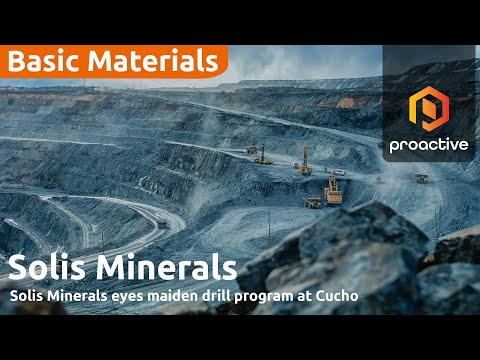
In Peru, Solis Minerals is preparing dual drill campaigns across its Cinto and Cucho projects, targeting large-scale copper systems in a country that remains one of the world’s most important copper producers thanks to its established mining infrastructure and geological endowment.
At Cucho in particular, Thomas says the attraction lies in what has not yet been tested.
“There’s clear copper mineralisation from surface evidenced in the historical 2 kilometres of diamond drilling returning strong copper mineralisation, but a lot of the best geophysical and geochemical targets were never drilled.”
He adds that the project’s location within a proven copper belt, combined with existing infrastructure, strengthens the case for exploration.
“Across the portfolio, we like that we’re testing multiple quality targets, not just relying on one idea.”
For early-stage explorers like Solis, upcoming drilling represents the first real test of geological models built around historical work and surface indicators.
The value of patience
Thomas argues that copper systems are often misunderstood by investors accustomed to faster-moving commodities.
“Most major copper systems take time to understand and define,” he said. “Another misconception is that copper exploration is too slow to be interesting, when in reality the lack of new discoveries is exactly what makes success so valuable.”
Long lead times, declining grades and limited major discoveries over the past decade have combined to heighten concerns about future supply — reinforcing the importance of exploration today.
Jurisdiction and strategic positioning
Another under-appreciated aspect of the copper picture is geopolitical concentration.
Chile and Peru dominate global production, while the Democratic Republic of Congo has grown rapidly as a supplier. That concentration has sharpened investor focus on sovereign risk, permitting frameworks and community relations.
But jurisdiction is not simply about stability — it is also about geology.
Rather than chasing frontier regions, Solis has deliberately positioned itself within established copper terrain.
“We’re very focused on where we explore and why,” Thomas said. “Peru has the geology, infrastructure, and history of big copper mines, so we’re not fighting unnecessary battles. Technically, we spend a lot of time getting the geology and targeting right before drilling, and we like having multiple shots on goal rather than a single-asset story.”
Projects in established belts benefit from existing infrastructure, skilled labour and proven mineral systems — all factors that can materially influence development timelines and capital intensity.
Aruma Resources Ltd (ASX:AAJ) has taken a similar strategic approach in a different jurisdiction, recently expanding into Canada through the acquisition of the high-grade Tillex copper-silver project in Ontario. Canada is not only mining-friendly but increasingly aligned with Western efforts to secure critical mineral supply chains.
High-grade projects carry their own appeal. While scale ultimately drives copper economics, grade can materially improve project viability — particularly at a time of cost inflation across the mining sector.
Aruma’s move into copper also reflects a broader shift among juniors historically focused on other commodities. Diversification into copper is not just thematic — it is strategic.
Australia’s copper opportunity
Australia is better known for iron ore and gold, but it holds significant copper endowment, much of it underexplored relative to South America.
Novo Resources Corp (TSX:NVO, OTCQX:NSRPF, ASX:NVO, FRA:1NOR), long associated with gold exploration across Western Australia and Victoria, has increasingly framed its strategy around identifying standalone gold and copper projects with meaningful development potential.
Projects such as Toolunga in WA, prospective for copper-gold systems, sit alongside Novo’s gold portfolio. The approach reflects a recognition that copper’s long-term fundamentals can complement gold exposure, offering both defensive and growth-oriented leverage.
Riversgold Ltd (ASX:RGL, FRA:RGV, OTC:RVSGF) offers another example of how copper is creeping back into the narrative for junior explorers. At its Tambourah Project in WA, the company has identified a 12-kilometre anomalous copper-gold trend — a system that historic drilling did not fully test.
Large, under-drilled structural corridors are precisely the sort of targets that can deliver outsized discovery outcomes. In copper, scale matters. A broad anomalous trend can be more important than a single high-grade intercept.
Copper is not just an EV story
Perhaps the most persistent misconception about copper is that it is primarily an electric vehicle trade.
EV demand is meaningful — but it is only part of the equation.
Urbanisation in emerging markets continues to drive baseline demand for wiring, plumbing and infrastructure. Renewable energy build-out is copper-intensive. Defence systems and electrified transport networks add further layers of demand.
Even decarbonising existing systems — from industrial machinery to heating — requires more electrification and therefore more copper.
Unlike lithium, where technology shifts could materially alter chemistry and demand profiles, copper’s core role is unlikely to change. There is no viable large-scale alternative that matches its conductivity, malleability and cost profile.
Recycling helps, but recycled copper alone cannot satisfy projected growth.
Capital discipline and the new copper cycle
One of the defining features of the past decade in mining has been capital discipline. Major producers have been cautious about greenfield mega-projects following cost overruns in earlier cycles.
That caution has constrained new supply.
For juniors, this creates both opportunity and challenge. Capital markets remain selective. Investors want scale, jurisdictional credibility and a clear path to development. But in a tightening market, quality exploration stories can re-rate quickly.
Copper cycles tend to be long and capital-intensive. Discoveries made today may not reach production for a decade. That lag underpins the growing focus on exploration now.
Companies like Solis in Peru, Aruma in Canada, Riversgold in Western Australia and Novo across multiple Australian jurisdictions illustrate the diversity of approaches emerging in the junior space — from high-grade historical assets to large structural corridor targets and copper-gold systems.
The metal beneath everything
Gold may dominate safe-haven headlines. Lithium may grab the policy spotlight. Rare earths may attract strategic funding.
But copper underpins them all.
Every renewable installation, every grid upgrade, every EV charging station and every data centre expansion runs on copper. Without sustained new discoveries and development, supply constraints become more than theoretical.
For investors willing to look beyond the obvious, copper is not just another commodity cycle. It is a foundational material in the global transition to a more electrified, digital and infrastructure-intensive economy.
And that makes it anything but ordinary.