
- FTSE 100 falls 59 points to 10,627
- Centrica off 8% after stopping buyback
- Miners back in sick bay
5.05pm: Eyes on Iran
London stocks retreated from record highs on Thursday, with the FTSE 100 down 59 points at 10,627.
Chris Beauchamp, IG chief market analyst, noted that markets were on edge as investors waited for an update on potential US military action in Iran.
“In a quieter period for markets today news, or lack of it, around Iran is the driver for the day,” Beauchamp said. “Each time President Trump sounds more conciliatory the market rallies, while hints of action cause it to weaken.”
1.53pm: Wall Street heads for red
US stock futures fell on Thursday as rising fears of a military strike on Iran pushed oil prices sharply higher, while investors digested cautious signals from Federal Reserve minutes. Contracts on the S&P 500 and the tech-heavy Nasdaq 100 dropped 0.3% and 0.2% respectively, reversing earlier gains, with Dow Jones futures also sliding 0.25% after solid gains across major benchmarks the previous session.
Brent crude climbed above $71 a barrel and West Texas Intermediate neared $66 following a report from Axios, the news website, that the Trump administration is edging toward conflict with Iran, fuelling the biggest daily jump in oil prices since October, while gold rose back above $5,000 an ounce.
Minutes from the Fed's January policy meeting revealed deep divisions over interest rates, with some policymakers floating the possibility of hikes amid persistently high inflation.
Walmart, the retail giant, posted modest fourth-quarter earnings beats under its new chief executive, but shares fell around 3% in premarket trading as investors scrutinised the company's holiday sales performance.
12.57pm: US stock futures slide as Iran fears drive oil higher
London's FTSE 100, known as the Footsie, fell 63 points on Thursday but pulled back from its session lows as rising fears of a US military strike on Iran pushed oil prices sharply higher and investors digested cautious signals from Federal Reserve minutes.
US stock futures also retreated, with contracts on the S&P 500 and the tech-heavy Nasdaq 100 dropping 0.3% and 0.2%, respectively, reversing earlier gains, while Dow Jones futures slid 0.25% after solid gains across major benchmarks the previous session.
Brent crude climbed above $71 a barrel and West Texas Intermediate neared $66 following a report from Axios, the news website, that the Trump administration is edging toward conflict with Iran, fuelling the biggest daily jump in oil prices since October, while gold rose back above $5,000 an ounce.
Minutes from the Fed's January policy meeting revealed deep divisions over interest rates, with some policymakers floating the possibility of hikes amid persistently high inflation.
Walmart, the retail giant, posted modest fourth-quarter earnings beats under its new chief executive, but shares fell around 3% in premarket
11.55am: Bitcoin headed below $60k?
It's been another roller coaster week for investors in Bitcoin, with cryptocurrency off 4.3% amid escalating worries of a US strike on Iran. Year to date, it's off a quarter and has almost halved since its October 2025 high to trade at below $67,000.
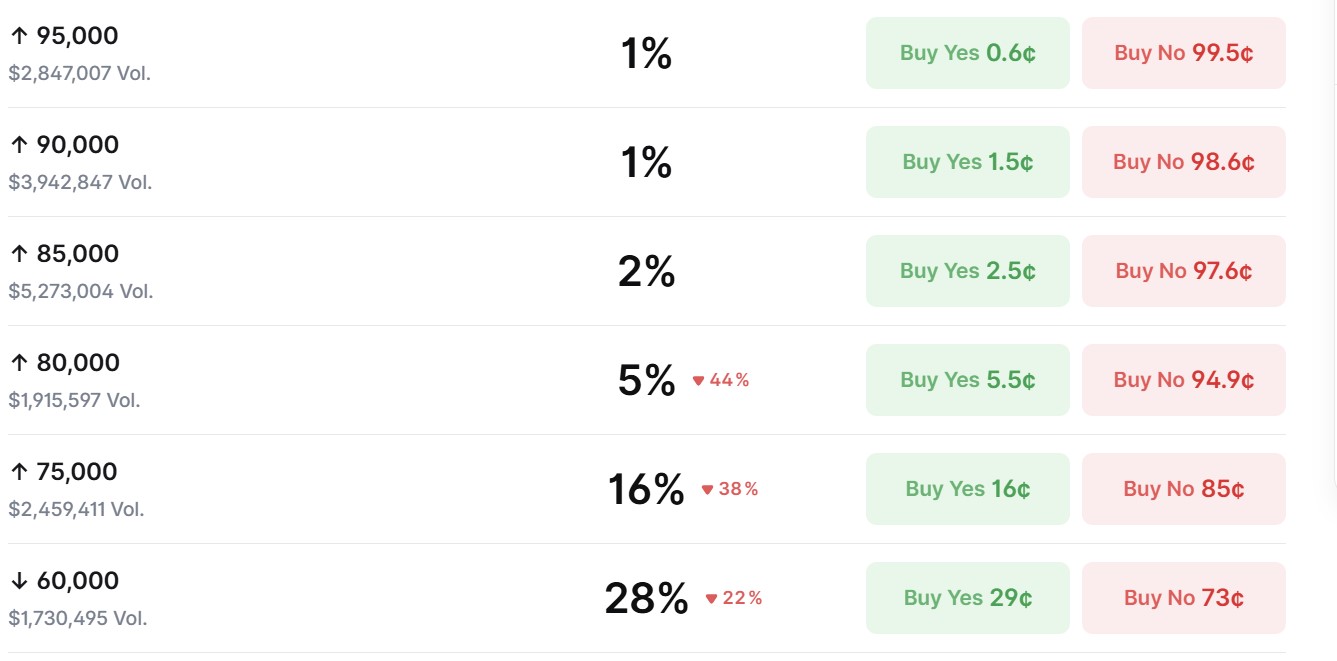
Prediction markets now price a 28% chance Bitcoin falls to $60,000 before the month ends, with recovery above $80,000 given just a 5% probability.
The numbers are stark. Polymarket betting activity suggests the recovery case has essentially collapsed.
What makes the picture particularly telling are the red arrows on the Polymarket page: the $80,000 probability has fallen 44% and $75,000 by 38%, suggesting bettors have been aggressively revising down their expectations as Bitcoin has slid.
10.25: Gloom deepens
The blue-chip index slumped to an almost 70-point loss as traders focused on a full slate of corporate news that was largely negative.
A surprise to the market was Centrica's decision to pause its share buyback, with the funds being diverted into big projects such as Sizewell C.
However, according to analysts at UBS, the real driver of the 5% share fall was the weaker-than-expected assessment of prospects carried in the energy group's prelims.
Mining, money and mandates
The bigger pull on the index was Rio Tinto. And while chief Simon Trott defended independence after failed talks with Glencore, China’s property slump weighed on iron ore and, by extension, the share price. Copper growth, driven by Oyu Tolgoi, remains central.
Packaging group Mondi slashed its dividend as profits slid, while Debenhams Group, parent of Boohoo, raised £40 million at 18p with backing from Frasers Group.
Cinema operator Everyman Media Group is also in focus after shareholder Blue Coast Capital edged closer to the 30% takeover threshold, fuelling bid speculation.
8.15am: Miners and Centrica pull Footsie lower
The blue-chip index got off to a lacklustre start, opening almost 30 points lower and resisting the pull higher from Wall Street and Asian markets.
Centrica's decision to 'pause' its buyback programme hasn't gone down particularly well in the Square Mile with the shares dropping 8% at the open.
However, it was the miners, led by Rio Tinto, which reported flat earnings ahead of the open, that exerted the downward pull on the Footsie.
Ahead of the open
The FTSE 100 is expected to open 26 points higher on Thursday, tracking strength across global equity markets as investors digested upbeat US economic figures and another rally in technology stocks.
Tech counters led advances across Asia after a positive handover from Wall Street. In Seoul, the Kospi jumped more than 3% to a record high on its return from the Lunar New Year break, powered by heavyweight chipmakers.
Investors have rotated into relatively cheaper Asian technology names following two years of AI-driven gains in the US. That shift has left members of the so-called Magnificent Seven under pressure since January, as questions mount over heavy artificial intelligence spending.
Stronger-than-expected US data, including industrial production and housing starts, reinforced the view that the Federal Reserve can afford patience on rate cuts. Minutes from its January meeting showed some policymakers even considered further tightening amid sticky inflation.
Oil prices edged higher after a sharp midweek surge linked to renewed US-Iran tensions, keeping energy markets on alert.