
Percheron Therapeutics Ltd (ASX:PER, OTC:PERCF) has laid out an ambitious — and carefully staged — roadmap for its lead immuno-oncology asset, HMBD-002, as it moves from phase I completion into what management hopes will be a value-defining phase II program in 2026.
In an updated corporate presentation, delivered at the Emergence 2026 Investment Conference, the company positions HMBD-002 as a potential next-generation immune checkpoint inhibitor targeting VISTA — a relatively underexplored checkpoint that has proven difficult for others to drug.
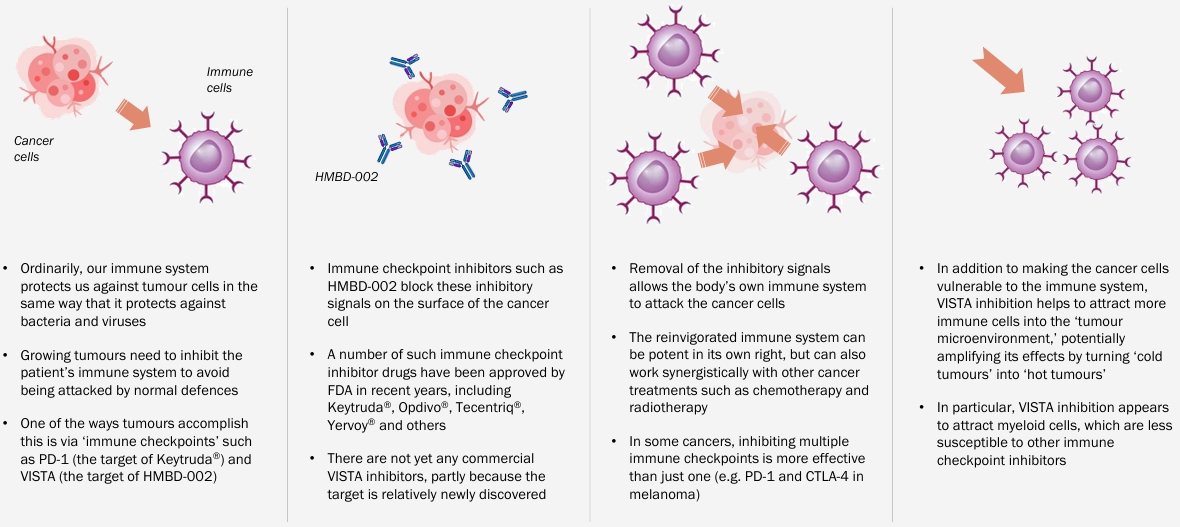
Immune checkpoint inhibitors such as HMBD-002 work by reactivating the body’s immune response so that it can attack the tumour (Source: Percheron).
With a market capitalisation of around $9 million and about $4.5 million in cash as of December 31, 2025, Percheron is operating leanly. But the company argues that the enterprise value largely reflects the acquisition cost of HMBD-002 and imputes little to no value to future clinical data.
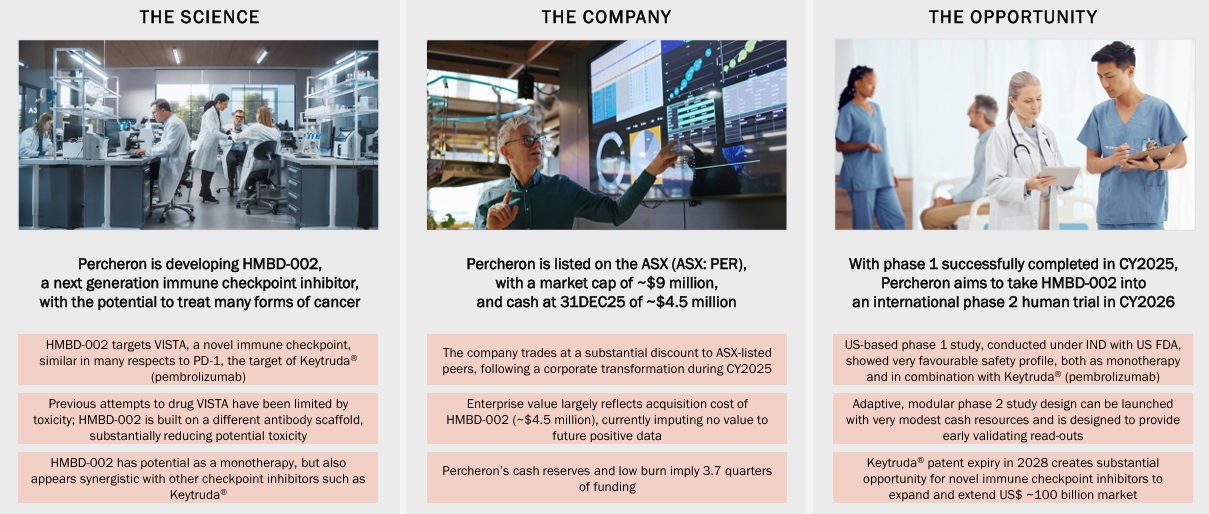
Percheron is developing HMBD-002, a novel, mid-clinical-stage, immuno-oncology therapy with applicability to multiple forms of cancer and high combination potential (Source: Percheron).
Revisiting the VISTA opportunity
Immune checkpoint inhibitors have reshaped oncology over the past decade, with blockbuster drugs such as pembrolizumab (Keytruda®) driving annual immuno-oncology sales to more than US$40 billion globally.
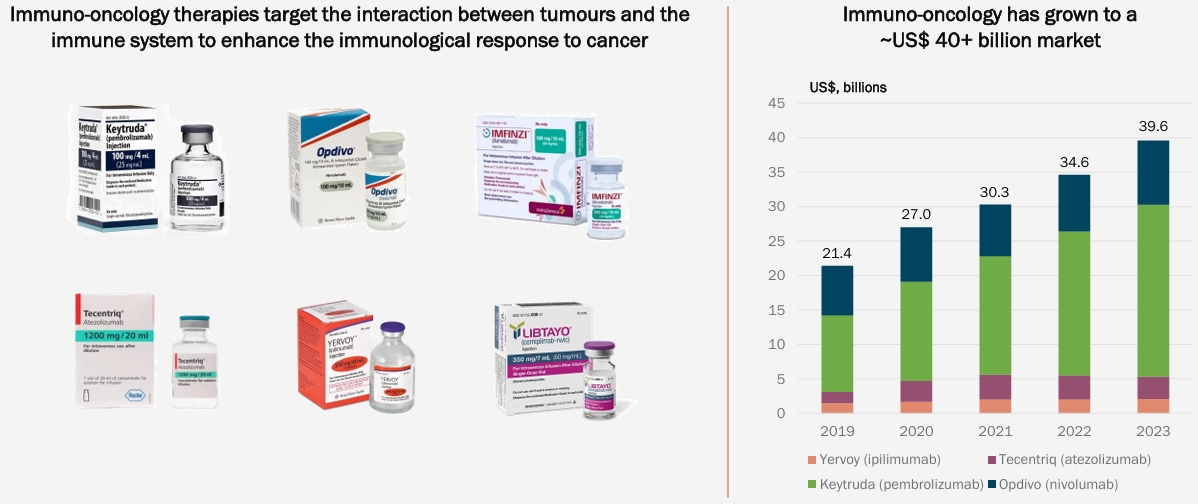
Immune checkpoint inhibitors have been one of the fastest growing classes of medicine in the immuno-oncology field, with more than US$ 40 billion in annual sales (Source: Percheron).
Yet response remains incomplete. Even with PD-1 inhibitors like Keytruda, around 40% of melanoma patients never respond and roughly 30% of responders eventually relapse, highlighting ongoing resistance challenges.
Percheron’s thesis is that VISTA — V-domain immunoglobulin suppressor of T-cell activation — represents a complementary checkpoint that may overcome some of these limitations.
The company notes that VISTA is expressed across a wide range of tumour types and that high VISTA expression correlates with worse prognosis and resistance to PD-1 inhibition in certain settings. That biology underpins the strategy of combining HMBD-002 with pembrolizumab, as well as exploring its activity as a monotherapy.
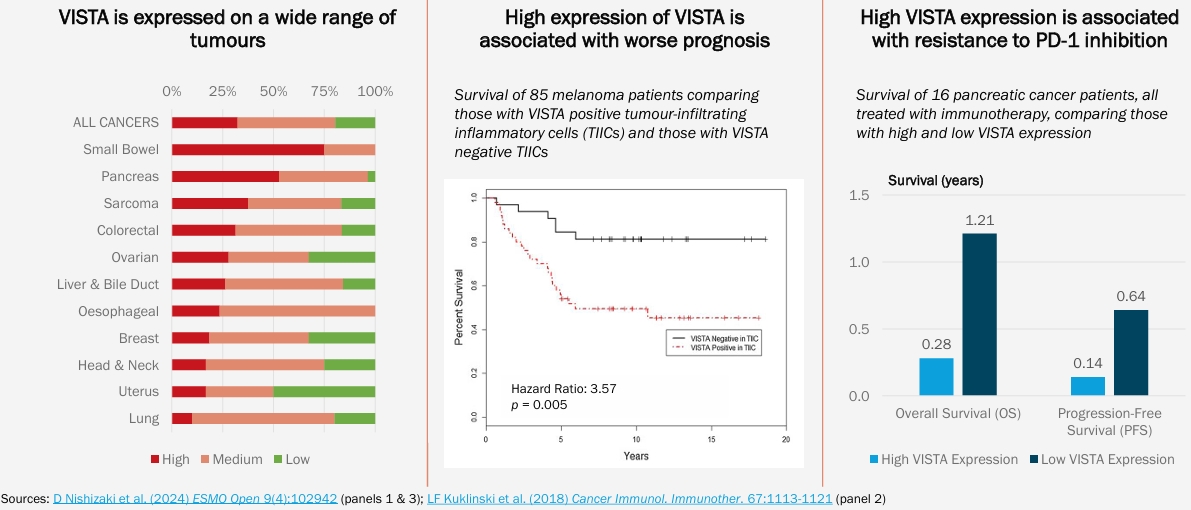
VISTA is a highly attractive target for novel oncology therapies, showing high expression on many tumours and clear correlation with prognosis (Source: Percheron).
Differentiation in a troubled class
Several companies have previously attempted to develop VISTA-targeting antibodies, but most programs were discontinued in early-phase development, with toxicity a central issue.
As Percheron has outlined, HMBD-002 is built on an IgG4 scaffold rather than the IgG1 format used in most prior VISTA antibodies. IgG1 antibodies can activate antibody-dependent cellular cytotoxicity (ADCC), potentially driving cytokine release and other immune-mediated toxicities.
HMBD-002, by contrast, is designed to block VISTA signalling without necessarily depleting VISTA-positive cells. Management suggests this may reduce the risk of severe immune-related toxicity.
The phase I study, conducted in the United States under an open IND with the FDA, enrolled 48 advanced cancer patients across monotherapy and pembrolizumab combination cohorts. The company reports a favourable safety profile in both settings.
Signals from phase I
While early-phase oncology trials are not powered for efficacy, Percheron highlights several patients who achieved tumour shrinkage or prolonged stable disease despite being heavily pre-treated.
In the dataset presented, patients included those with metastatic triple-negative breast cancer, non-small-cell lung cancer and head and neck squamous cell carcinoma. Some remained on therapy for extended periods, including one patient treated for 53 weeks.
The company notes that overall response rates (ORR) in phase I are often modest for targeted or cytostatic therapies, particularly in late-stage populations, and that stable disease can be a meaningful early signal.
Importantly, HMBD-002 demonstrated combination feasibility with pembrolizumab, supporting the broader strategy of checkpoint pairing.
Modular phase II design
Percheron’s next step is an adaptive, multi-arm phase II trial expected to commence in calendar 2026.
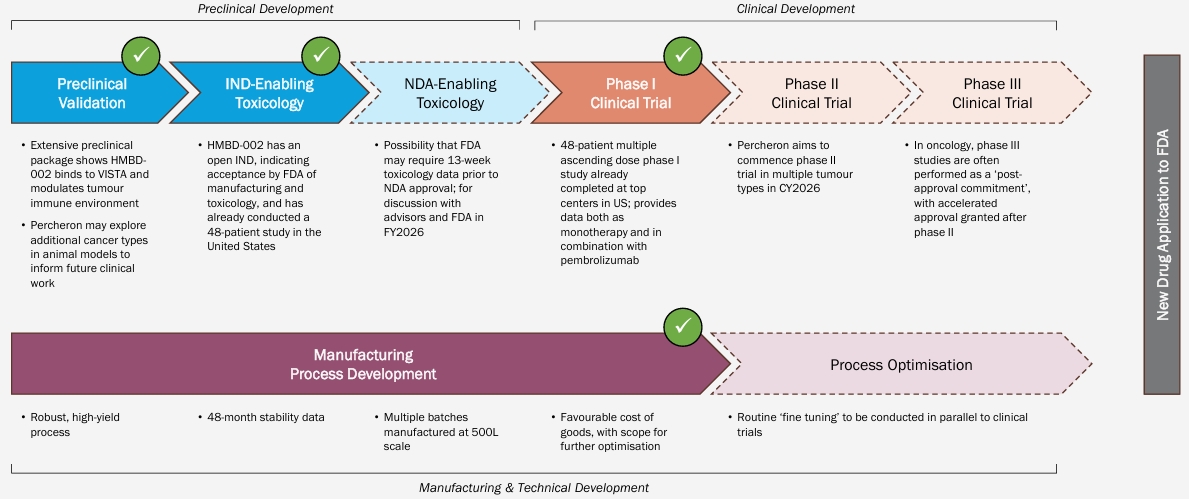
HMBD-002 is well-advanced in clinical development, with a clear path towards commercialisation (Source: Percheron).
Rather than running entirely separate studies, the company plans a modular platform structure, in which each “arm” effectively resembles a standalone study in a defined tumour type but shares infrastructure and oversight.
Each arm may initially enrol around 20–30 patients in an open-label exploratory stage, before potentially expanding into a randomised confirmatory stage of 40–100 patients. The decision to graduate an arm is at the company’s discretion.
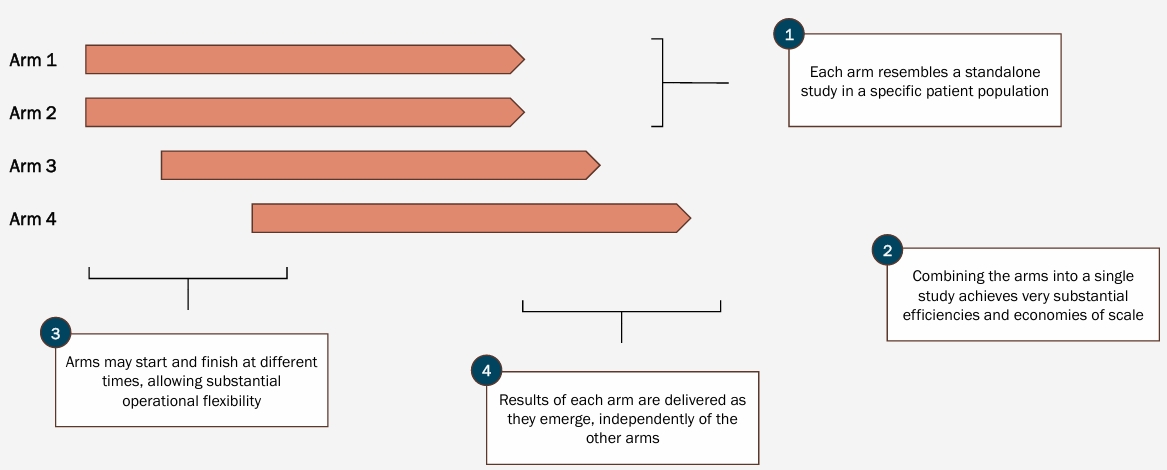
The phase II study will commence in one tumour type, but will have the ability to expand to additional tumour types at the company’s discretion (Source: Percheron)
This design aims to conserve capital while generating earlier read-outs. The company estimates an industry-wide cost of roughly US$150,000 per patient, with an exploratory stage costing around US$3.0–3.5 million per arm before any R&D tax rebate impact.
Four priority indications have been identified:
- Triple-negative breast cancer (TNBC)
- EGFR-mutant non-small-cell lung cancer
- HER2-negative oesophageal adenocarcinoma
- Endometrial cancer
Management anticipates selecting the first arm in the second quarter of 2026.
Commercial and partnering lens
Beyond the clinical roadmap, Percheron is framing HMBD-002 as a potentially significant commercial asset if phase II data deliver. Using conservative assumptions around incident cases, treatment duration and pricing, the company outlines multi-billion-dollar annual addressable markets across its proposed indications.
It also points to comparable immuno-oncology licensing deals involving early- and mid-clinical assets that attracted substantial up-front payments and milestone packages, reinforcing the potential partnering pathway if phase II data prove compelling.
With Keytruda’s patent expiry approaching in 2028, management suggests a window may open for next-generation checkpoint inhibitors that can expand or extend the market.
Lean model, heavy focus
As of December 31, 2025, Percheron reported a cash balance of $4.5 million and an estimated runway of 3.7 quarters. Management highlights its “ultra-lean” operating model, with the bulk of expenditure directed to research and development rather than corporate overhead.
Despite completing phase I and outlining a phase II program for 2026, the company trades at a material discount to many ASX-listed oncology peers on a market capitalisation basis.
With first patient in targeted next year and initial phase II data potentially emerging thereafter, the coming 12 to 24 months are likely to be decisive in determining whether HMBD-002 can shift Percheron into a new valuation bracket.
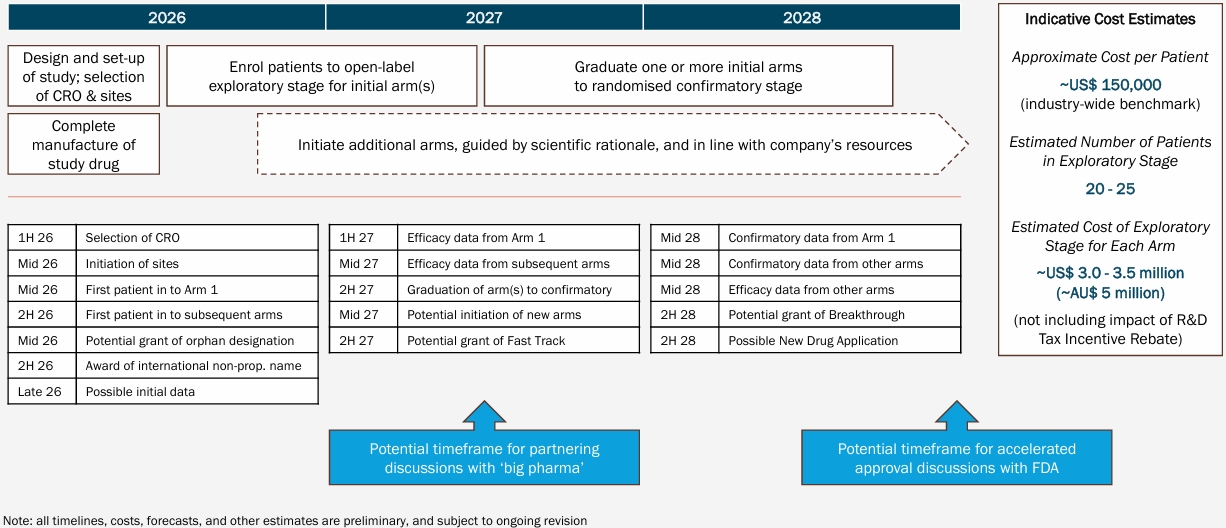
The plan provides the potential for significant news flow from CY2026 onwards (Source: Percheron).