
In a graphite market still dominated by Chinese supply, International Graphite Ltd (ASX:IG6, FRA:H99) is quietly assembling a vertically integrated processing strategy that spans Western Australia and Europe — with a deliberate emphasis on capital efficiency and staged growth.
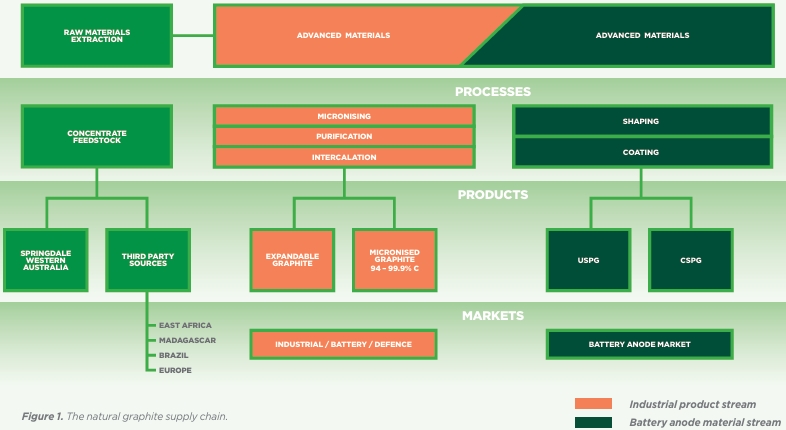
While many junior graphite companies remain focused on exploration or upstream development, International Graphite is pushing further down the value chain. Its ambition is not just to mine graphite, but to process, purify and upgrade it into high-value industrial and battery materials — positioning itself as a diversified supplier outside China.
With land secured in WA’s Collie Light Industrial Area, a European joint venture advancing and purification partnerships in place, International Graphite is moving beyond concept and into execution — targeting more than 10,000 tonnes per year of finished materials by 2027.
Building the Collie processing hub
At the heart of the strategy sits Collie, where the company is developing what it describes as Australia’s first commercial-scale micronised graphite production facility targeting industrial, defence and advanced manufacturing markets.
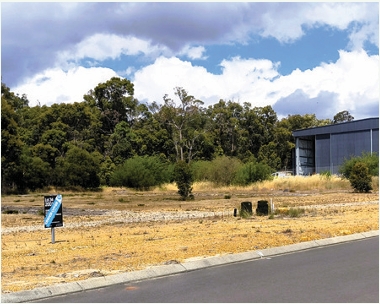
New plant development site.
During the December quarter, International Graphite secured development approval from the Shire of Collie and completed settlement on three lots of land totalling around 6,000 square metres in the Collie Light Industrial Area. The site sits directly opposite its existing R&D and qualification facility.
That positioning is strategic.
The qualification plant is already producing sample material for domestic and international customers, allowing the company to refine product specifications before committing to full-scale commercial output. Jet milling and classifying equipment is scheduled to be added, supported by Western Australian government funding through the Collie Industrial Transition Fund.
Deposits have been paid for the first line of micronising equipment, and power supply has been confirmed by Western Power — removing two key development risks.
Production at the Collie commercial facility is targeted for 2027. Crucially, the facility is designed to service industrial markets first — a segment that offers nearer-term cash flow potential compared with the longer qualification timelines typical in battery supply chains.
That sequencing matters. Industrial graphite processing is expected to generate earlier revenue while the company builds out its battery materials capability.
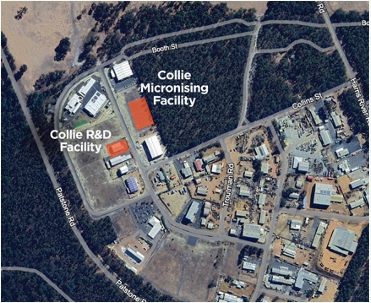
Collie Light Industrial Area.
Europe: A staged expandable graphite play
Parallel to Collie, International Graphite is advancing a European expandable graphite facility structured as a 50:50 joint venture with Arctic Graphite AS.
Expandable graphite is used in fire retardant and thermal insulation applications — markets where European demand is solid but domestic production remains limited.
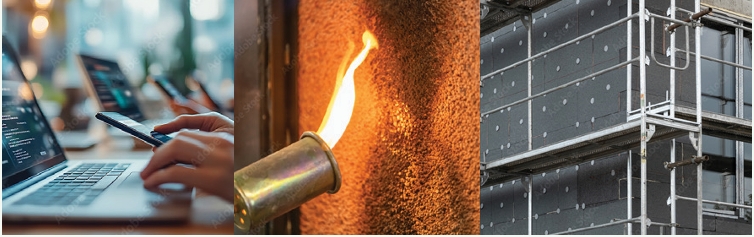
Expandable graphite is used in many products for fire retardance and thermal insulation.
The December quarter saw the company secure access to proven intellectual property and processing technology for use in feasibility work and commercial licensing — reducing technical risk. Process test work is underway on multiple concentrate feedstocks.
A published techno-economic evaluation outlined a reference case facility producing approximately 4,200 tonnes per year of expandable graphite.
Key headline metrics on a 100% basis included:
- Capital cost estimate: ~A$11.2 million
- Annual net average operating cashflow: ~A$7.6 million
- Pre-tax NPV10 over 25 years: ~A$57.9 million
- Pre-tax IRR: 66%
On International Graphite’s 50% share, that equates to roughly A$5.6 million in capex exposure and A$29 million in NPV.
For investors, those numbers suggest a relatively modest capital outlay compared with many greenfield mining developments — reinforcing management’s stated focus on capital-efficient execution.
Production start-up is targeted for the second half of 2027, aligning with the Collie timeline.
De-risking purification and battery anodes
A notable development in the latest quarter was International Graphite’s non-binding Letter of Intent with Italian chemical specialist ALKEEMIA SpA.
Rather than immediately constructing its own purification plant, International Graphite has secured access to third-party toll-treatment capacity at ALKEEMIA’s 200-tonnes-per-year facility, with up to 50% of start-up capacity allocated to IG6.
Graphite purification is essential for producing high-purity (>99%) products required in expandable graphite and battery anode markets. By leveraging external capacity, the company lowers upfront capital intensity while retaining the ability to scale as demand grows.
ALKEEMIA is targeting expansion to 20,000 tonnes per year by 2030 — offering potential long-term capacity without IG6 having to fund that infrastructure itself.
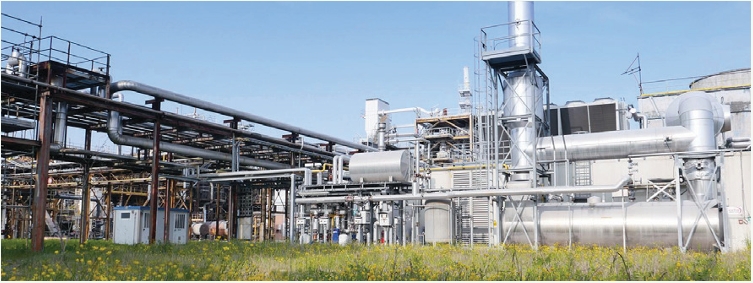
ALKEEMIA’s plant in Porto Marghera, Italy.
On the battery side, International Graphite has entered into a pilot program with CarboPhite Pty Ltd to test carbon coating technology for lithium-ion battery anode materials. Graphite samples have been supplied for half-coin-cell and full-coin-cell evaluation, with electrochemical testing conducted at the University of Melbourne.
Battery anode markets are larger and potentially more lucrative than industrial graphite — but qualification cycles are longer and customer requirements more stringent. By pursuing coating validation now, the company is laying groundwork while prioritising nearer-term industrial cash flows.
Springdale: Upstream optionality
All downstream ambition ultimately depends on secure feedstock.
International Graphite’s Springdale Graphite Project in Western Australia remains a key potential source of concentrate for both its Collie and European facilities. Planning is under way for further resource, exploration and hydrological drilling, alongside ongoing land access discussions.
Importantly, the company’s processing strategy also contemplates third-party concentrate sources, including Madagascar and Brazil. That diversification reduces reliance on a single asset and supports its broader supply chain narrative.
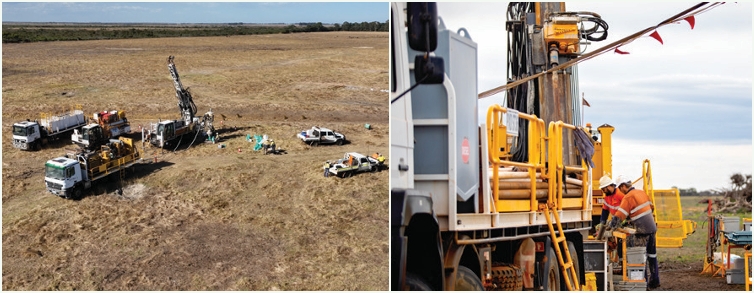
Drilling operations at Springdale.
Funding runway and capital structure
As of December 31, 2025, the company held A$1.4 million in cash. However, when combined with unused financing facilities — including a funding agreement with US-based Pioneer Resource Partners — total available funding was reported at about A$3.85 million.
Based on current outgoings, the company estimated around 14.9 quarters of funding runway.
Key financing elements include:
- A secured R&D loan facility (16% interest)
- The investment agreement with Pioneer Resource Partners for up to $3 million in funding
- Western Australian government grant funding
While grant timing remains a variable — with final instalments of a federal Critical Minerals Development Program grant due before February 2026 — management has indicated alternative funding sources would be pursued if required.
A graphite company beyond mining
Rather than positioning itself purely as a resource developer, International Graphite is aiming to become a processor and manufacturer of advanced graphite materials — servicing industrial, defence and battery markets from Australia and Europe.
The sequencing is deliberate:
- Build industrial micronising capacity in Collie.
- Advance expandable graphite production in Europe via JV.
- Leverage third-party purification to unlock higher-value products.
- Progress battery anode development once technical validation is complete.
In a critical minerals landscape increasingly shaped by geopolitical supply chain concerns, International Graphite’s push to establish diversified processing capacity outside China is aligned with a broader shift among industrial and battery customers seeking alternative supply.
The next phase is about delivery — translating feasibility work, joint ventures and pilot programs into operating plants and recurring revenue as the 2027 milestones approach.
What is emerging is a graphite business designed to operate well beyond the mine gate: integrated, geographically diversified and focused on higher-margin downstream products. If execution continues on its current trajectory, International Graphite’s strategy could position it as a meaningful processor in a market still heavily concentrated elsewhere.