
Critical Resources Ltd (ASX:CRR, FRA:9S70) has been accepted as an industry member of the US Centre for Solid-State Electric Power Storage (CEPS), a National Science Foundation-backed Industry–University Cooperative Research Centre.
The company said CEPS membership will support its evaluation pathway for next-generation solid-state lithium-ion battery technologies, following CRR’s exclusive option with the South Dakota School of Mines & Technology covering five granted US patents and one pending application.
CRR highlighted CEPS’s network across multiple US universities and its industry membership base, naming Honda, Mercedes-Benz and Nissan among collaborators, alongside access to research teams and testing facilities.
Advantages
- Alignment with optioned IP: Participation in CEPS allows CRR to assess next-generation solid-state battery technologies designed to offer safer operation, higher energy density and stronger performance than conventional liquid lithium-ion systems.
- Access to leading facilities and expertise: CEPS provides low-cost access to specialist solid-state research teams and testing infrastructure, helping accelerate prototype development while reducing cost and technical risk.
- Milestone-based validation: The CEPS platform supports CRR’s staged evaluation of solid-state battery IP from SDM, alongside future sponsored research into high-performance solid-state electrolytes and advanced cathode technologies.
- Supporting vertical integration: CEPS advances CRR’s strategy to pair critical minerals supply with solid-state battery innovation, enabling end-to-end value creation from resource development to energy storage solutions.
- Resource-to-market alignment: CEPS links CRR’s Mavis Lake lithium project with a global network of automotive, grid and technology groups seeking secure, battery-grade lithium supply, positioning CRR across the value chain from resource development to advanced solid-state technologies.
- Faster pathway to safer, high-performance outcomes: The solid-state systems under review aim to improve safety, lift energy density and enhance cycle reliability, targeting demand from data centres, defence, mining and other high-temperature, high-reliability applications.
"Joining CEPS positions Critical Resources within a coordinated solid-state research environment that provides the specialised capability we need to rigorously evaluate the advanced technologies optioned from South Dakota Mines. This platform gives us direct access to world-class research teams, analytical tools and federal-grade infrastructure, creating a clear and credible pathway to validate performance, reduce technical risk and progress these designs toward early-stage prototype development," Critical Resources managing director Tim Wither said.
"CEPS brings together leading US universities, laboratories and industry partners working at the forefront of solid-state science. Being part of this network ensures our evaluation program is benchmarked against global standards and aligned with the requirements of automotive, defence, grid-storage and high-reliability sectors seeking safer, higher-performance battery technologies.
"Just as importantly, CEPS strengthens the strategic connection between our Mavis Lake lithium resource and downstream solid-state innovation. As global battery manufacturers increasingly seek secure, traceable supply of battery-grade lithium, our involvement in CEPS positions Critical Resources across a broader section of the value chain — from resource development through to next-generation energy storage technologies."
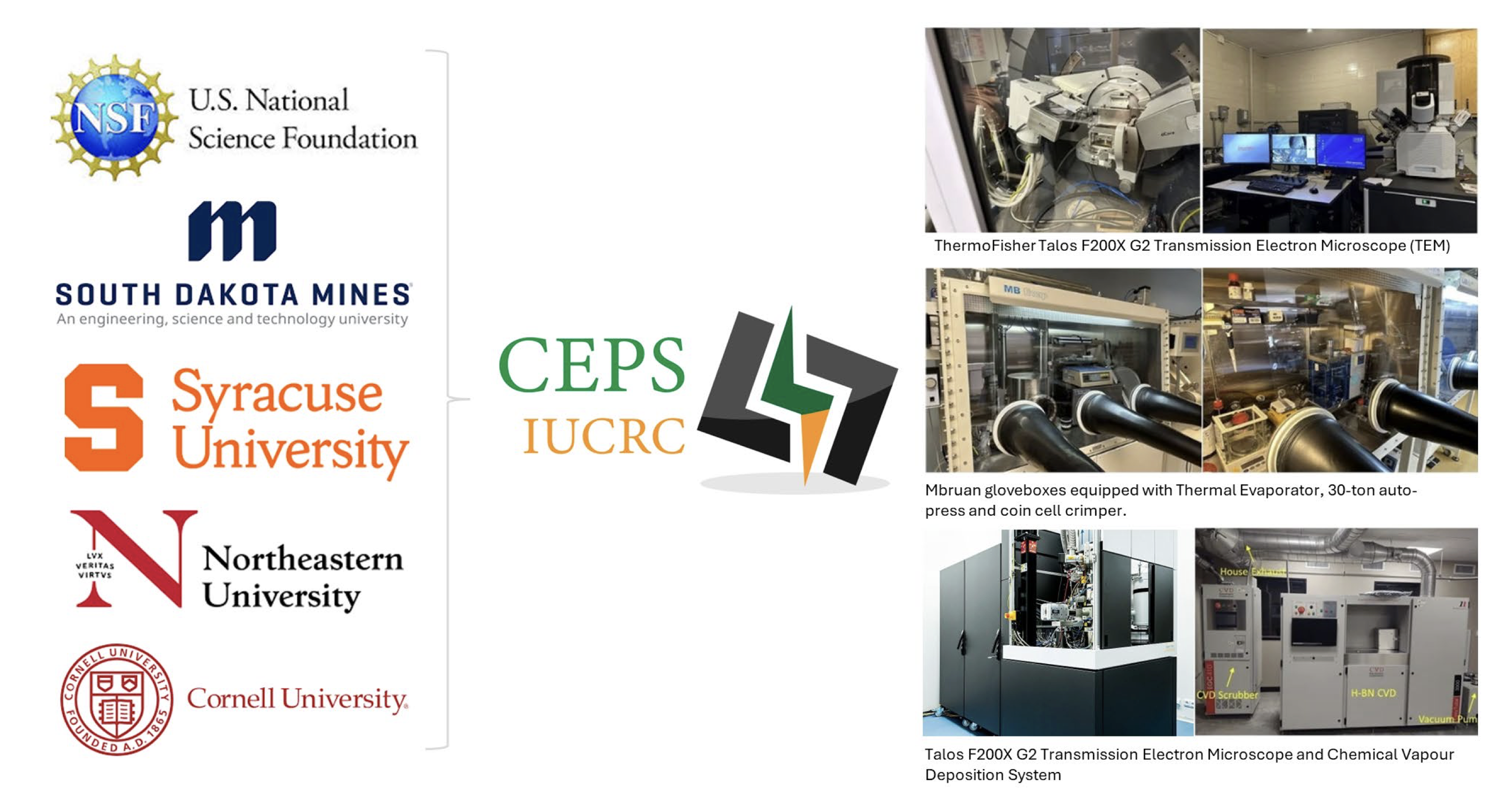
CEPS enables Critical Resources to access a multi-university research network and advanced federal laboratory infrastructure supporting solid-state battery validation, prototyping, and development.
Why CRR says solid-state matters
CRR pointed to the battery sector’s focus on solid-state designs that replace flammable liquid electrolytes with solid electrolytes, which it says can reduce fire and thermal runaway risk, while also supporting recyclability and lower use of hazardous materials.
The company's exclusive evaluation option with the South Dakota School of Mines & Technology (SDM) provides a direct pathway to assess advanced, non-sulphide solid-state electrolytes and next-generation lithium-metal architectures aimed at improving safety, energy density and high-temperature performance.
The SDM technologies target core constraints of conventional liquid lithium-ion batteries by extending safe operating temperature ranges and maintaining efficiency under thermal stress. That combination is attracting interest from automotive, grid and data centre operators seeking alternatives to liquid-electrolyte systems.
Importantly, the technologies under evaluation also support more sustainable, scalable manufacturing. Solvent-free approaches reduce reliance on hazardous chemicals, enable cleaner processing and support designs that are inherently more recyclable and environmentally responsible. Together, these factors position CRR to participate in the shift toward safer, cleaner and higher-performance solid-state energy storage solutions.
- High-temperature solid-state electrolytes open new markets: Elevated-temperature electrolytes are designed to maintain performance in heat, supporting safer and more reliable storage for data centres, defence, mining and heavy industrial settings where temperature, cooling cost and uptime are critical.
- Safer, higher-performance architecture: Non-flammable solid electrolytes replace liquid electrolytes, reducing fire risk while enabling higher energy density and longer cycle life.
- Cleaner, scalable manufacturing pathways: Solvent-free, sulphur-free electrolyte and cathode processes reduce hazardous inputs, lower emissions and align with tightening regulatory expectations — improving the technology’s appeal to future global manufacturing partners.
- Faster, more efficient prototype and cell development: Simplified solid-state construction supports quicker prototyping and more consistent component quality, accelerating performance validation and progression toward prototype cells.
Next steps – evaluation stage
Through CEPS, Critical Resources gains access to specialist research capabilities and collaborative expertise intended to accelerate performance validation via prototype battery cells incorporating advanced solid-state electrolytes and interface architectures. The work is intended to support the development of safer, more efficient and more environmentally responsible energy storage solutions.
In parallel, CEPS’s focus on critical metals, battery recycling and environmentally responsible lithium extraction may create future opportunities to link CRR’s lithium assets at Mavis Lake in Canada with downstream solid-state battery technologies. Over time, this could provide optionality to pursue integrated value chains spanning resource development, advanced materials, cell architectures and end-of-life recovery.
CRR is finalising the detailed scope of work under the CEPS research project framework, with the initial program expected to be confirmed shortly. The program will prioritise milestone-driven validation activities, including solid-state electrolyte testing, interface engineering and cathode prototyping, establishing a structured technical pathway toward next-generation solid-state battery prototypes.
The company said its SDM evaluation option focuses on non-sulphide solid-state electrolytes and lithium-metal architectures targeting improved safety, higher energy density, longer cycle life and performance at elevated temperatures.
CEPS participation will provide access to multidisciplinary research across materials, manufacturing, cell characterisation and design, as well as US Department of Energy facilities for detailed analysis of solid-state battery materials and prototype cells.CRR is finalising the scope of work under the CEPS research framework, with an initial program to be confirmed shortly, prioritising milestone-driven validation including solid-state electrolyte testing, interface engineering and cathode prototyping.